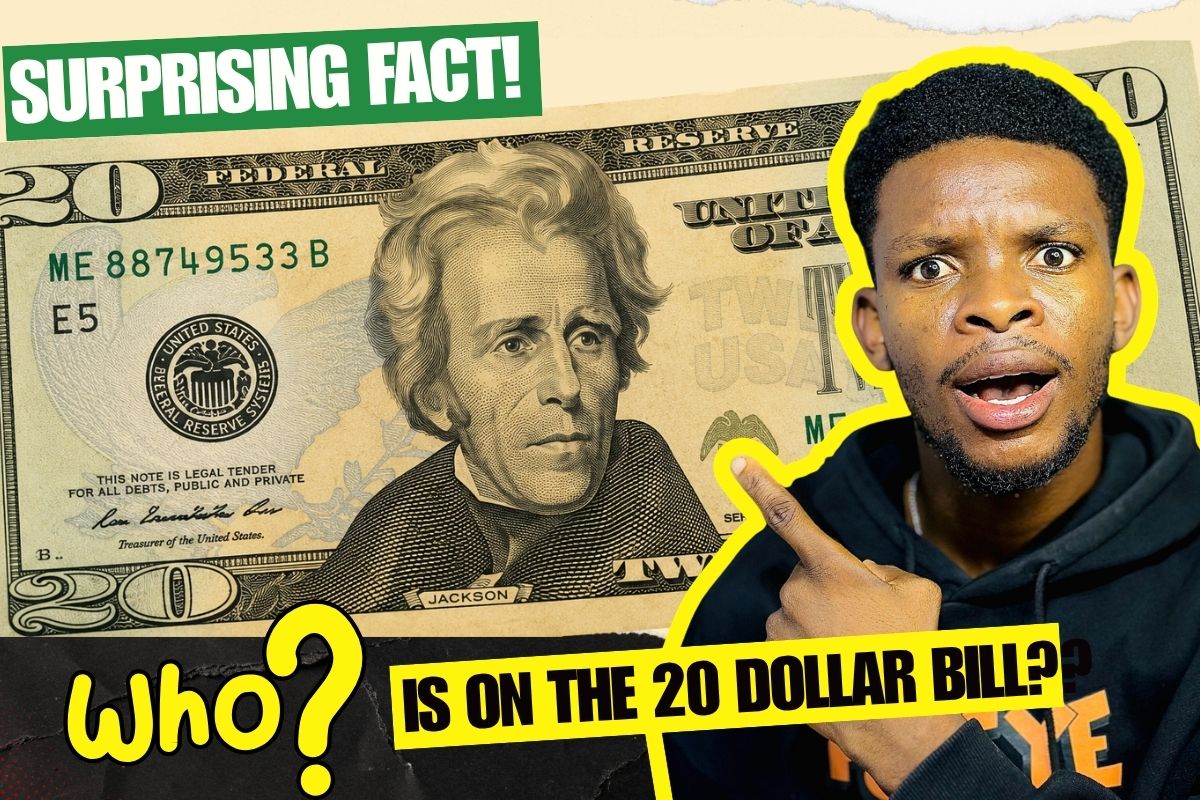
When’s the last time you actually looked at your $20 bill? Like, really looked at it? Most of us just swipe, tap, or hand it over without a second glance.
It has a grumpy-looking guy on the front. He’s got one of the wildest, most contradictory origin stories of anyone on American currency. So, who is on the 20-dollar bill? This rabbit hole goes deeper than you’d think.
- Andrew Jackson has been the face of the $20 since 1928, replacing Grover Cleveland.
- Not a single person at the Treasury Department can fully explain why he was picked.
- Harriet Tubman was officially chosen to take his spot back in 2016.
- That redesigned bill still isn’t coming until at least 2030.
- Jackson spent his whole presidency fighting against paper money. His face is now on paper money. You can’t make this stuff up.
Who is on the $20 Dollar Bill?
Andrew Jackson, the seventh president, war hero, and political bulldozer, has been on the front of the $20 bill since 1928. As per Currency History, his portrait is based on an 1835 painting by artist Thomas Sully, and flip the bill over, and you’ll see the north side of the White House.
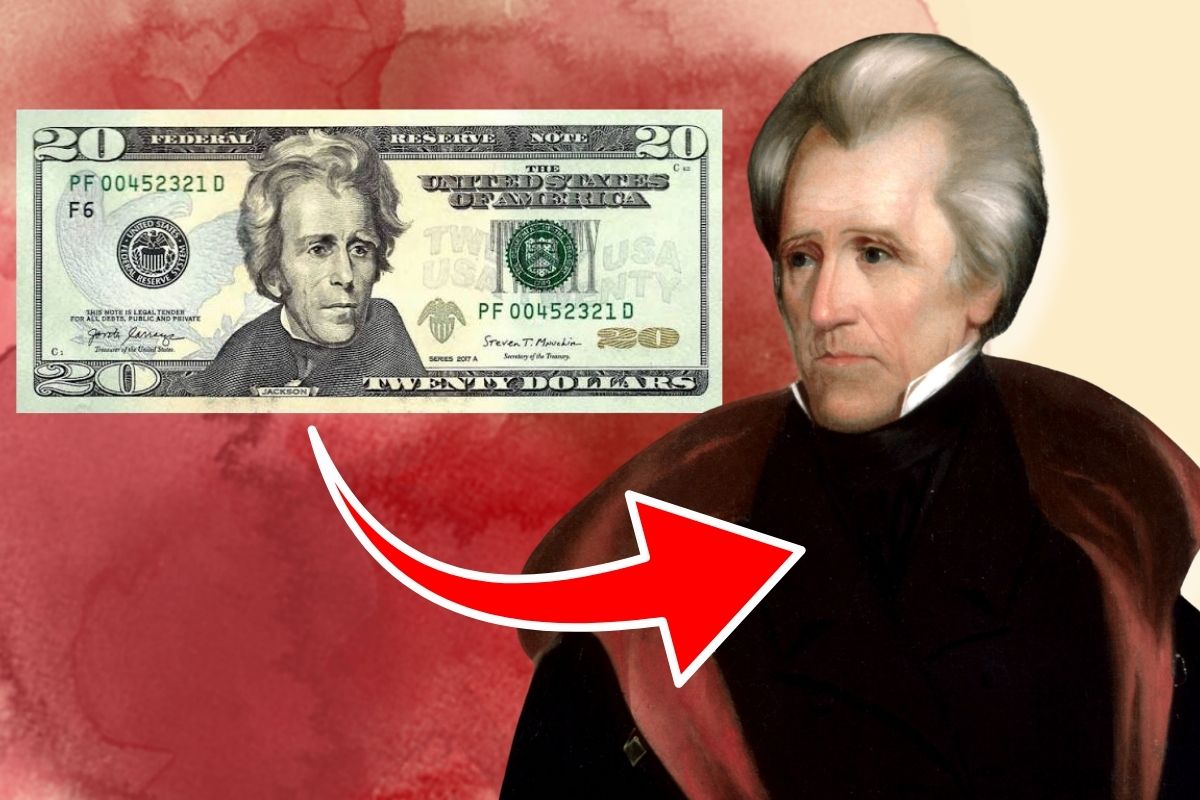
Jackson spent a huge chunk of his presidency absolutely despising paper money. He preferred gold and silver, declared all-out war on the Second Bank of the United States, and when the bank’s president, Nicholas Biddle, pushed back, Jackson made it his personal mission to destroy the institution entirely.
As the Washington Post put it, Jackson himself would probably hate the fact that his face is on a paper bill. And yet, there he is. On billions of paper bills. Printed every single day. Living his worst nightmare.
Also Read – What Currency Does Italy Use?
Nobody Actually Knows Why Jackson is on the $20
When the U.S. government shrank all currency to its current size in 1928 and handed Jackson the $20 slot, nobody left behind a clear explanation for why. Not one memo. Not one solid record.
The Treasury Department’s own website admits its historical records “do not suggest” why specific portraits ended up on specific bills. Howard J. Kittell, CEO of the Hermitage museum dedicated to Jackson’s legacy, told the Washington Post that even after serious digging, “The Treasury Department doesn’t have clear documentation”.
Daniel Feller, a history professor at the University of Tennessee and editor of The Papers of Andrew Jackson, also found no answers. The official Treasury line? They picked faces the public would recognize. That’s genuinely it. No grand symbolism. No secret meaning.
What historians do know is that in 1928, Jackson’s reputation was at its peak. Feller explained that for much of the 19th and early 20th centuries, Jackson was considered the guy who stood up to powerful banks and spoke for everyday people. Franklin D. Roosevelt was a fan. The Trail of Tears barely got a mention in major biographies of the era. Times were, obviously, very different.
The Chapter of Jackson’s Story That Changed Everything
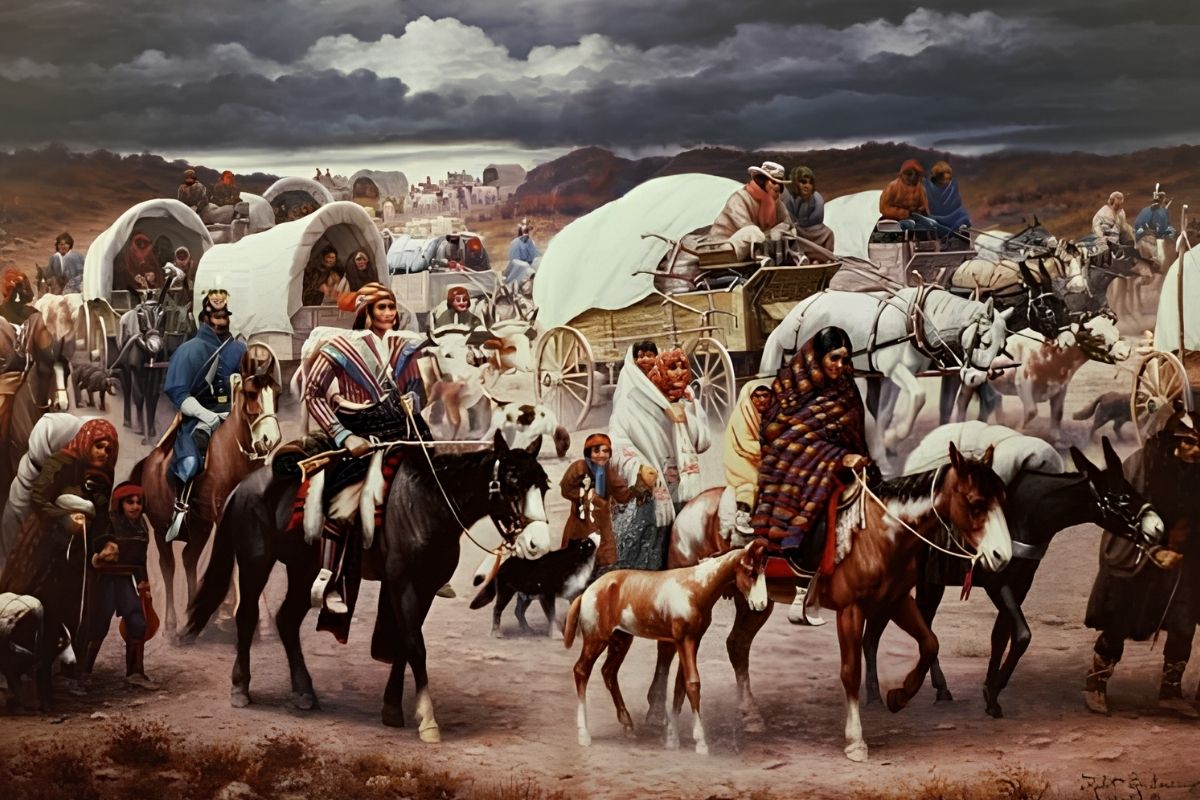
Jackson’s enforcement of the Indian Removal Act caused the Trail of Tears, one of the darkest chapters in American history. Thousands of Native Americans were forcibly relocated from their homelands and died in the process.
He was also a slaveholder who, at the time of his death, had 150 enslaved people working his Tennessee plantation. According to Wikipedia, enslaved people were essentially used as currency in Jackson’s world, described at the time as “the chief security, the most salable, and the major part of all agricultural property.”
These aren’t minor footnotes. They’re central to who Jackson was and why more and more people have been asking, “Why is this man still on our most commonly used bill?”
Also Read – History of Sicily
Harriet Tubman’s Long-Overdue Moment
In 2015, a campaign called Women on 20s surveyed over 600,000 Americans about who should replace Jackson on the $20. More than 118,000 of them chose Harriet Tubman, an abolitionist, Underground Railroad conductor, and women’s rights activist, ahead of Eleanor Roosevelt, Rosa Parks, and Wilma Mankiller, the first female chief of the Cherokee Nation.
Treasury Secretary Jack Lew made it official in April 2016. Tubman was on the front, Jackson was bumped to the back. She would become the first African American woman ever featured on U.S. currency, and the public was largely thrilled.
Then came the delays. Then more delays. The first Trump administration stalled the project, with Treasury Secretary Steven Mnuchin saying there were “more important issues”.
The Biden White House said it would speed things up, but a 2022 internal message from Treasury Secretary Janet Yellen confirmed the redesigned note wouldn’t debut until 2030. The Bureau of Engraving and Printing has been clear: the new $20 was never going to be ready by 2020, despite what early announcements suggested
Your $20 is Hiding More Than You Think
While we’re all waiting for that redesign, your current $20 is actually packed with details most people walk right past. The U.S. Currency Education Program points out there are three separate eagles printed on the bill: one in the Federal Reserve seal, a blue eagle to Jackson’s left clutching arrows and an olive branch, and a smaller metallic green eagle to his right.
What are those scattered yellow numbers on the back? That’s the EURion constellation, a pattern, first identified by German computer scientist Markus Kuhn in 2002, that tells photocopiers and scanners to refuse to copy the note.
There’s also microprinting invisible to the naked eye, color-shifting ink, and a security thread embedded in the paper that glows green under UV light, all added and refined since the early 1990s.
According to History Facts magazine, the $20 is the second most counterfeited bill in America, right behind the $100, which explains why it gets so much attention every redesign cycle.
Each bill lasts about 7.8 years in circulation before it’s worn down and pulled out of use. Right now, there are over 8 billion $20 bills floating around the world, more than the entire global human population.
Also Read – When Was Italy Established As A Country
FAQs
- Who is on the 20 dollar bill?
Ans: Andrew Jackson, the seventh U.S. president, has been on the front of the $20 since 1928. He replaced Grover Cleveland when the government standardized bill sizes that year.
- Why is Andrew Jackson on the $20 bill?
Ans: Genuinely, no one knows for certain. The Treasury Department’s own records don’t explain the decision. The official reasoning was simply that his face was familiar to most Americans at the time.
- Who is on the American 20-dollar bill on the back?
Ans: The back of the $20 features the north side of the White House. It shows its main entrance, iconic columns, and the view familiar to anyone who’s walked past on Pennsylvania Avenue.
- Who is replacing Jackson on the $20?
Ans: Harriet Tubman, an escaped slave, Underground Railroad leader, and suffrage activist, was officially chosen in 2016 to take the front of the redesigned $20 bill.
- Is the Harriet Tubman $20 bill out yet?
Ans: Not even close. Despite the 2016 announcement, the new bill isn’t expected to enter circulation until around 2030, thanks to ongoing security redesign requirements.
- Was Jackson really against paper money?
Ans: He fought against central banking throughout his presidency and pushed hard for gold and silver over printed notes. His face ending up on the most widely circulated paper bill in America is one of history’s great ironies.
Sources & References:
- Wikipedia – Enslaved people were used as currency during the Andrew Jackson period.
- Currency History – Andrew Jackson’s portrait on the $20 bill was painted in 1835 by artist Thomas Sully.
- The Washington Post – The Treasury Department doesn’t have clear documentation.
- History Facts – The $20 is the second most counterfeited bill in America.