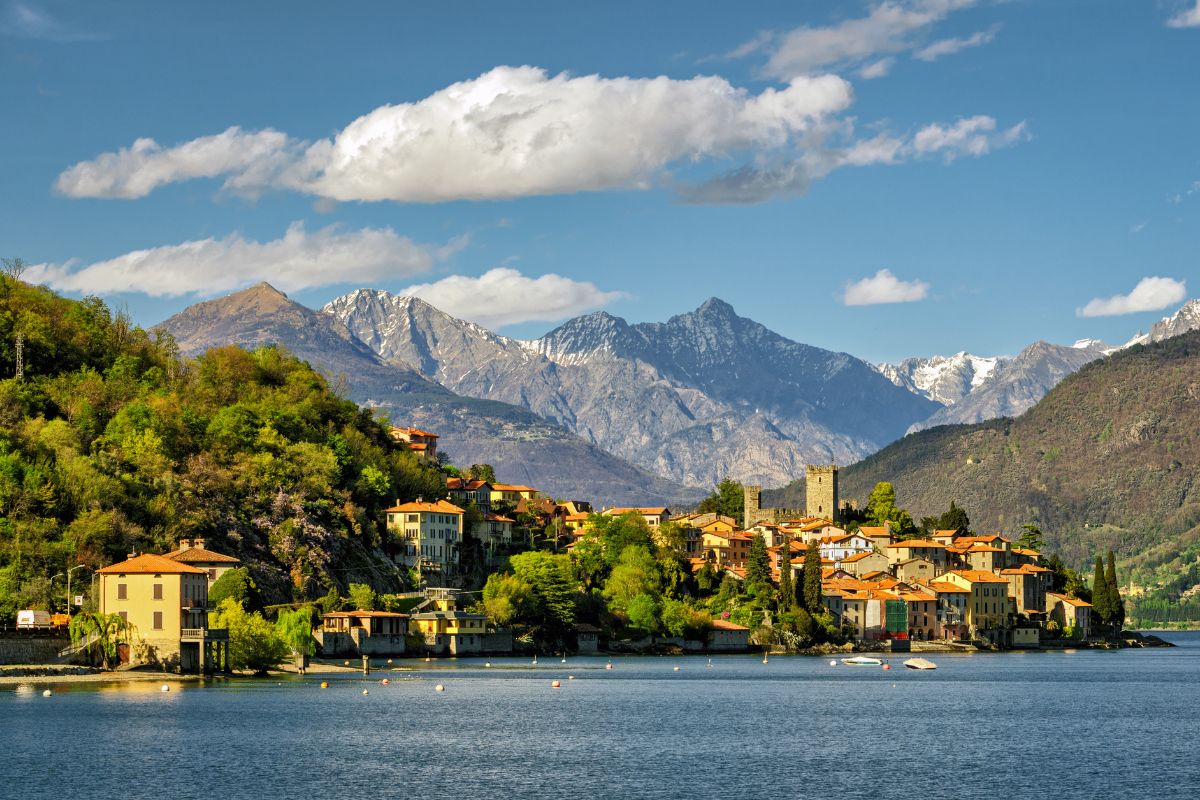
If you look at the global map of luxury, few pinpoints carry as much weight as Lake Como. It’s not just a body of water in Northern Italy; it’s a sovereign asset class. By February 2026, the cost of entry here has reached a level that defies standard real estate logic. While other luxury hubs fluctuate with the market, Como stays locked in a permanent upward trajectory. The question of why Lake Como is expensive isn’t answered by looking at the view alone.
Plenty of lakes have mountains. The reality is a brutal mix of geographical physics, iron-clad legal protections, and a social hierarchy that treats the shoreline like a closed-door club. For the world’s elite, the lake is a “trophy destination” where the barriers to entry are intentionally and structurally insurmountable for most.
The Geography of Inaccessibility: Land as a Finite Asset
The main reason behind the Lake Como luxury cost is simple and physical: there just isn’t much land to work with. This isn’t one of those long, flat Mediterranean coastlines where construction can keep moving outward. Lake Como cuts deep into the landscape in a Y-shaped glacial basin, with the Rhaetian Alps rising sharply around it. The buildable strip between the water and the mountains is thin, and most of it was taken long ago by historic villas, palaces, and small lakeside towns that aren’t going anywhere. Then there’s the rulebook.
Even if someone wanted to build fresh, it’s not straightforward. Preservation offices watch closely for changes, and approvals are difficult to get. As of 2026, the Soprintendenza, which oversees cultural and heritage preservation, maintains stringent regulations throughout the region. New construction is the rare exception and not the norm. In reality, nearly all such projects are about fixing up or repairing older buildings, not breaking new ground, and that typically leads to higher costs and longer timelines.
Put those two pressures together—limited space and tight regulation—and prices don’t have much room to fall. That’s a big reason the area keeps appearing on rankings of the most expensive places in Italy. A lot of prime waterfront homes are sold quietly, without ever being publicly listed. As of early 2026, typical lakefront prices hover near €4,200 per square meter, while top-tier pockets like Moltrasio can reach around €7,000 per square meter and sometimes more.
Also Read: Inside the Most Exclusive Secret in Fashion – The VIP Client List of Giorgio Armani
The “Clooney Effect” and the Psychology of Prestige Pricing
The social makeup around the lake really started changing in the early 2000s, and by 2026 that shift had settled into something steady rather than flashy. Big-name property owners are no longer a novelty headline—they’re part of the baseline economy now. When well-known residents, from film stars like George Clooney to tech billionaires and old European business families, plant roots there, the effect is constant visibility.
It’s like an ongoing, unpaid ad campaign for the area. That feeds straight into what market folks call prestige pricing psychology. At the very top end, a higher price doesn’t scare buyers off — it signals status and scarcity. For that crowd, cost is part of the appeal. When a billionaire buys a villa in Laglio or Cernobbio, it’s not only about square footage or lake views. It’s about being in a circle where the neighbors operate at the same level.
Because of that pull, exclusive destinations Italy such as Bellagio and Tremezzina, keep showing up at the top of global wish lists. Demand doesn’t cool off the way it might in regular resort towns. The local business ecosystem has adjusted to match the clientele — people who value discretion, history, and craftsmanship more than bargains. That’s why you see strong demand for private security teams, speciality restoration architects, and artisans who can repair centuries-old frescoes properly. Even the support services run at a premium tier.
The Anatomy of the Luxury Ecosystem: 5-Star Villas and Boat Culture
The lake’s hospitality sector is still run by the old heavyweights — places like Villa d’Este and the Grand Hotel Tremezzo — and that matters more than people think. These aren’t just luxury stays with good photos. They’re properties with long histories, repeat guests, and service habits built over decades. You can feel the difference when you walk in. Newer resorts can look sharp, but they can’t fake that kind of legacy.
That said, 2026 has brought even more high-end competition, with boutique names like the Lake Como EDITION opening doors and the Corinthia brand growing its footprint in Menaggio. A lot of the real cost around the lake also comes down to how people actually get around. Boats aren’t a side activity here.
They’re basic transport. The classic Riva-style runabout is still treated as the gold standard on these waters. Plenty of high-end homes sit in spots you simply can’t reach by car, which means private water taxis and custom wooden speedboats are part of normal logistics, not flashy extras. Living that boat-based lifestyle adds another layer of ongoing expense. Typically, it includes:
- Private Docks: A property with a permitted dock usually sells at a noticeable premium, often around 30% higher than similar homes without one.
- Specialized Lakefront Maintenance: Older piers and shoreline structures need skilled stonemasons and dive teams to keep them safe and intact.
- Exclusive Access: Seasonal mooring fees in the central lake zone rank among the highest in Europe, and the best spots are rarely cheap or easy to secure.
The Luxury Delta: Lake Como vs. Italian Peers (2026 Data)
| Feature | Lake Como | Lake Garda | Lake Maggiore |
|---|---|---|---|
| Avg. Prime Sqm Price | €8,000 – €12,000 | €5,000 – €6,500 | €4,500 – €5,800 |
| 5-Star Hotel Inventory | ~15 Properties | ~28 Properties | ~12 Properties |
| Luxury Inquiry Share | 27% of global total | 8% of global total | 7% of global total |
| Barrier to Entry | Extremely High (Finite Land) | Moderate (Sprawling Shore) | Moderate (Industrial Mix) |
| Primary Demographic | Ultra-HNW / Global Elite | European Families | Old Money / Quiet Luxury |
The Structural Reality of Limited Supply vs. Global Demand
At the core, why is Lake Como expensive comes down to a simple supply-and-demand squeeze. There is just not that much top-tier accommodation to be had. And even in 2026, the total number of rooms at real five-star properties on and around the lake is a surprisingly modest figure when you stack it up against places like the French Riviera or other global luxury hotspots.
- Limited Accommodation Supply: Less than a dozen ultra-luxury hotels truly meet the criteria, and many of them intentionally maintain a relatively small footprint. Those boutique scales help maintain high standards, but they also mean availability is tight.
- Seasonal Price Spikes: From May through September, demand surges well past what the lake can comfortably host. On busy weeks, there might be ten serious inquiries for every available high-end room. That’s why standard suites can regularly top €3,000 per night during peak season without much resistance from the market.
- Global Wealth Influx: Current property outlook reports show the lake draws roughly 27% of worldwide interest in luxury lakefront homes while holding only about 15% of the actual inventory. Lots of buyers, not many options.
All of that built-in scarcity keeps luxury travel Italy in this region firmly in the premium bracket. The tightness of supply also explains why certain properties — especially villas with direct lake access and private helipads — trade in a category of their own. You can’t easily recreate them, so their value tends to stand apart from normal pricing logic.
Also Read: The Old-School Italian Cures Making a Massive Comeback in 2026
The Insight: Lake Como as a Cultural Fortress
Lake Como doesn’t carry high prices just because it looks good on a postcard. Plenty of places are beautiful. What really drives the cost is that the area has held on to its old-world character while many other luxury spots have turned into lookalike resorts. In the 2026 luxury market, the thing buyers chase most isn’t gold or crypto or stocks. It’s provenance — a place with a real, documented past.
Putting money into Lake Como means buying into history you can’t copy somewhere else. The towns, the villas, the shoreline layout — all of it grew over centuries and can’t simply be recreated on another coast. There’s a certain weight to standing in locations tied to earlier eras, with mountain borders that physically limit growth and preservation laws that slow down change. For ultra-wealthy buyers, the higher cost is part of the appeal, not a warning sign. It signals stability and long-term protection. The view is likely to stay the same. The neighborhood won’t suddenly fill with glass towers. The character holds. That’s the core reason why Lake Como is the definitive benchmark for exclusive destinations in Italy — not hype, but continuity.
FAQ: The Luxury Economics of Lake Como
Why is Lake Como more expensive than Lake Garda or Lake Maggiore?
For as stunning as Garda and Maggiore are, Lake Como has more historic, lake-level villas than either of its neighbors, and a longer-standing “social pedigree”. And because it is closer to Milan, it is also more accessible to the rich, which has helped push up land prices.
Is it possible to find “affordable” luxury on Lake Como?
By 2026, the ‘affordable’ areas have migrated to the eastern shore (Lecco side) and far north, like Dongo. However, for the quintessential “Lake Como experience” that one envisions in the central lake (The Golden Triangle), prices remain at a premium.
How does the 2026 real estate market look for investors?
It’s the “stickiness” of prices in this market. Because ultra-wealthy owners are always present, distressed sales are rare. This helps keep prices stable and high, strengthening the lake’s position as a resilient asset class.
Sources & References
- Investropa: Housing Prices in Lake Como (2026) — Published January 26, 2026.
- EDITION Hotels: The Lake Como EDITION Opening Details (2026) — Accessed February 16, 2026.
- Dreamer Real Estate: Luxury Living on Water: 2026 Real Estate Trends — Published January 10, 2026.
- Citalia: Italy’s Top Luxury Travel Trends for 2026 — Accessed February 16, 2026.
- Travel Weekly: Corinthia Resort Coming to Italy’s Lake Como — Published February 10, 2026.