Look, I’ve spent enough time in Italian kitchens to know that if you sneeze twice, someone’s grandma is going to materialize out of thin air with a clove of garlic and a very stern look. For a long time, we tucked these “nonna remedies” away in the cabinet of nostalgia, right next to the dusty porcelain dolls. But something shifted recently.
Maybe it’s the skyrocketing cost of healthcare or just a general exhaustion with synthetic everything, but as of early February 2026, Italy’s herbal medicine market has exploded to nearly $300 million. We aren’t just talking about old ladies in the countryside anymore. Gen Z in Milan and Rome are ditching the ibuprofen for sage tea and bergamot oil. There’s a full-blown “Nonna Movement” happening on social media, where viral icons like Graziella and Teresa from Antico Forno Santa Caterina are teaching millions how to heal their bodies using nothing but what’s in the pantry.
I recently caught a segment on CNN about these two—they’re in their late 80s and early 90s, and they’ve become the “Queens of Altamura” by showing people that authenticity beats a lab-grown pill any day. It’s wild to see, but honestly? It makes perfect sense. These Natural remedies Italians still use today aren’t just folklore; they’re actually backed by a surprising amount of new science.
The “Canarino” and the Science of the Gut
In Italy, “digestion” is not just a biological function; it’s a public obsession. If you overeat or eat a heavy meal, you don’t reach for an antacid. You make a Canarino.
It’s referred to as the “Canary” due to its bright yellow hue. You simmer bay leaves (Laurus nobilis) in water with a fresh lemon peel. That’s it. No sugar, no frills. I can still recall my first experience with it, after a particularly aggressive seven-course Sunday lunch in Tuscany. My stomach felt like a lead balloon. Ten minutes after finishing the tea, the bloating was just… gone.
The crazy part? A 2025-2026 study recently highlighted how fennel seeds and bay leaves actually inhibit intestinal contractions. It’s not just a “feeling”—the compounds in these plants are physically forcing your gut to relax. In rural spots like Abruzzo, they’re even using sun-dried pomegranate skin to fix more serious digestive “emergencies.” It sounds primitive until you realize pomegranate is packed with tannins that act like a biological astringent for the intestines.
Also Read – Why Italy’s Winter Menu is Actually a Pharmacy in a Bowl
Sweating Out the Fever: The “Vin Brulé” Defense
Now, let’s discuss the cold. If you catch a fever in the Italian Alps, they are not going to dole out a lukewarm compress. They are going to give you Vin Brulé.
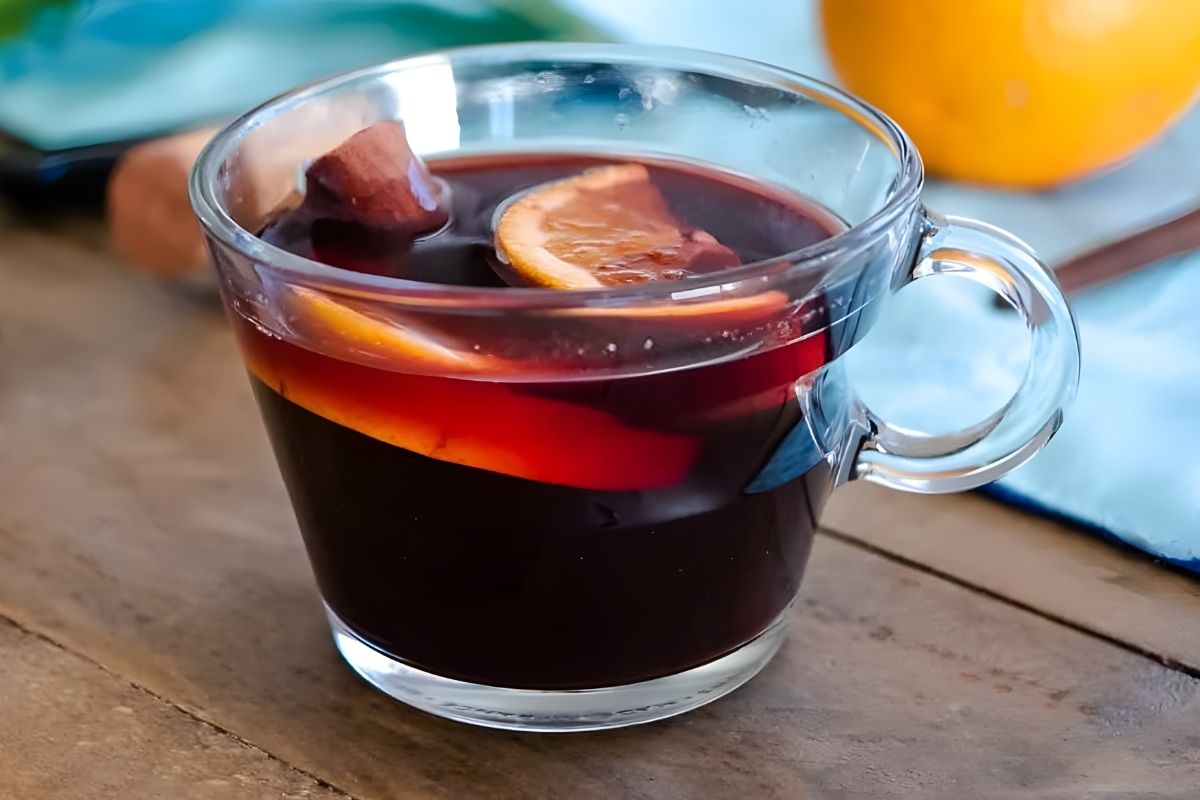
It’s really a warm red wine with cloves, cinnamon, and orange rinds. The concoction is meant to be consumed hot, before retreating under four wool blankets to “sweat it out”. The first time I tried this, my eyes watered for two days solid, mostly from the heat, yet I woke up the next morning feeling like a new person.
Science is beginning to catch up in this domain as well. Researchers have been looking at resveratrol—the stuff in red wine—as a legitimate anti-inflammatory. When you combine that with the antimicrobial punch of cloves, you’ve got a cocktail that actually helps the body fight back. Plus, in Sicily, they’ve modernized this with “Orange & Ginger Shots.”
They take those world-famous Sicilian blood oranges, squeeze them fresh, and add enough ginger to make your throat tingle. It’s a massive hit of Vitamin C and a natural anti-inflammatory boost that puts those fizzy pharmacy packets to shame.
The Legend of the “Colpo d’Aria”
You can’t talk about Italian health without mentioning the Colpo d’Aria—the “hit of air.” It is the ultimate Italian boogeyman.

Even in 2026, you’ll see people wearing silk scarves in 80-degree weather because they’re terrified a stray breeze will give them a stiff neck or a cold. It sounds like a total myth, right? But here’s the thing: keeping the neck and joints warm prevents the muscles from seizing up, which actually does reduce the risk of tension-related pain.
For the skeptics, look at what’s happening in Calabria. A massive ethnographic study published in Frontiers in Sociology (2025) recently validated how locals use Achillea millefolium (Yarrow) for chronic wounds. They make these green “poultices” out of the plant and apply them to diabetic ulcers that won’t heal with traditional meds. The results were so strong that doctors are actually starting to take notice. It turns out “Nonna” wasn’t just guessing—she was practicing high-level botany without the PhD.
Also Read – The Real Winter Food Scene in Italy Right Now
Why Is This Happening Now?
The resurgence is not simply about the herbs; it’s about the Experience.
I speak with many people who are tired of being “Patient #402.” They want the connection. You’re not just, say, treating a cold when you rub raw garlic on toasted bread dressed with olive oil (which releases allicin, a natural antibiotic). You’re emulating a ritual that’s thousands of years old.
According to market data from Market Research Future (2026), almost 70% of Italians are now seeking these natural alternatives. They are signing on for the “Peasant Cooking” (cucina povera) trend, which has made its way from kitchen to medicine cabinet. Even “Grandmother’s Soup” is now being taken seriously nowt. An MDPI systematic review from July 2025 found that chicken-and-herb soups can, in fact, decrease levels of inflammatory markers like IL-6 and TNF-α.
Basically, the soup your grandma made you when you were six? It was literally medicine.
Common Questions About Italian Remedies
Is it safe to use these remedies alongside modern medicine?
Mostly, yes, though you should always check with a pro. For instance, Bergamot oilis fantastic for your skin, but makes you super sensitive to the sun! You’re not supposed to be slathering it on and then hitting the beach in Amalfi.
Does the “Canarino” actually work for everyone?
It’s a game-changer for gas and bloating. But if you have an ulcer or chronic acid reflux, boiling lemon peels could exacerbate the problem. Use common sense.
Why do Italians rub garlic on bread instead of just eating it?
The “rubbing” that you do on toasted bread is sufficient to break down the garlic cells and release the allicin without burning it. Besides, when you add some extra virgin olive oil, it actually tastes excellent.
Also Read – 8 Secret Italian Towns You Need to See in 2026
A Final Thought from the Kitchen
In the end, these natural remedies Italians still use today are more than just “fixing” a problem. They’re about a philosophy of prevention and slow living.
We live in a world that demands an instant remedy for everything, but sometimes the best cure is no more than a steaming cup of bay tea and a nap. It’s about being in charge of your health instead of merely reacting to it. So the next time you feel a scratchy throat coming on, maybe skip the drugstore for at least one night. Go to the store, get fresh sage and honey, and see if Nonna was right all along.
Worst-case scenario? You’ve had a really nice cup of tea. Best case? You’ve just discovered a $300 million secret that’s been sitting in your kitchen the whole time.
Sources & References
- Ethnographic Research: Frontiers in Sociology: Herbal Medicine and Wound Healing in Calabria (2025)
- Market Insights: Market Research Future: Italy Herbal Medicinal Products Growth 2026
- Pharmacological Overview: MDPI: Traditional Herbal Remedies for Anxiety and Insomnia in Italy
- Clinical Data: Mordor Intelligence: Global Herbal Medicinal Products Market Size and Share (2026 Forecast)
- Folk Traditions: Casa Mia Tours: Essential Italian Nonna Remedies and Folk History
Recommended