Listen, if you’ve ever been to a piazza in Milan or the backstreets of Florence in early February, you’ll know that “Italian winter” can be pretty far from sun-dappled hills and Aperol Spritzes. The damp, bone-chilling cold pierces your bones. But here’s the thing that sets me off every time: you never see the local residents covering their heads and huddling over a desk with a box of tissues. Why? For, in Italy, that real pharmacy is not the green neon sign on the corner: it’s the kitchen.
As I stand here in February 2026, I understand that Italians are experts in the art of “eating defensively.” Italians don’t just eat seasonal foods because it’s a trendy term for food blogs; they do it because their grandmothers would have been horrified to see them eating such a bland winter tomato in the dead of winter. The menu pivots when the mercury hits zero. The menu shifts from light salads to more robust dishes infused with immune-boosting compounds.
If you’re trying to figure out what to eat in Italy’s cold months to avoid seasonal illness, you basically need to learn to eat like a Nonna. Here is the blueprint for staying upright when everyone else is calling out sick.
The “Cucina Povera” Shield: Hearty Soups as Medicine
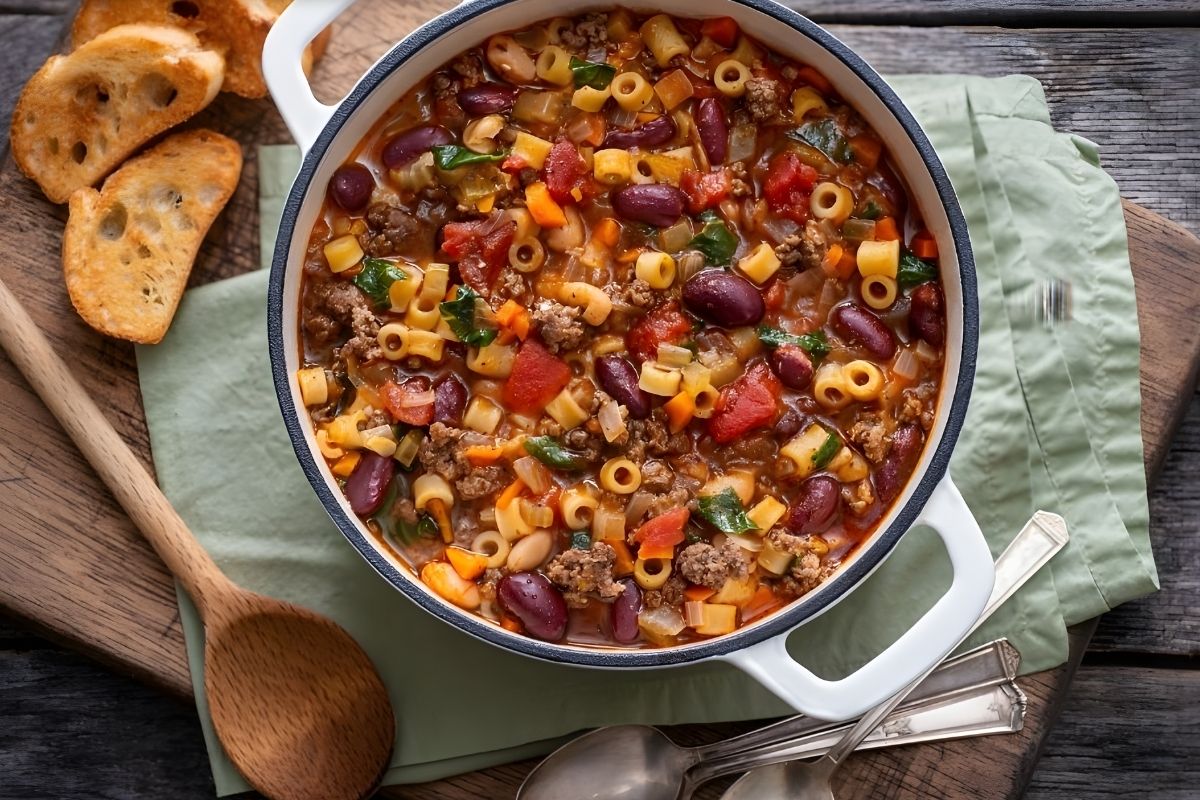
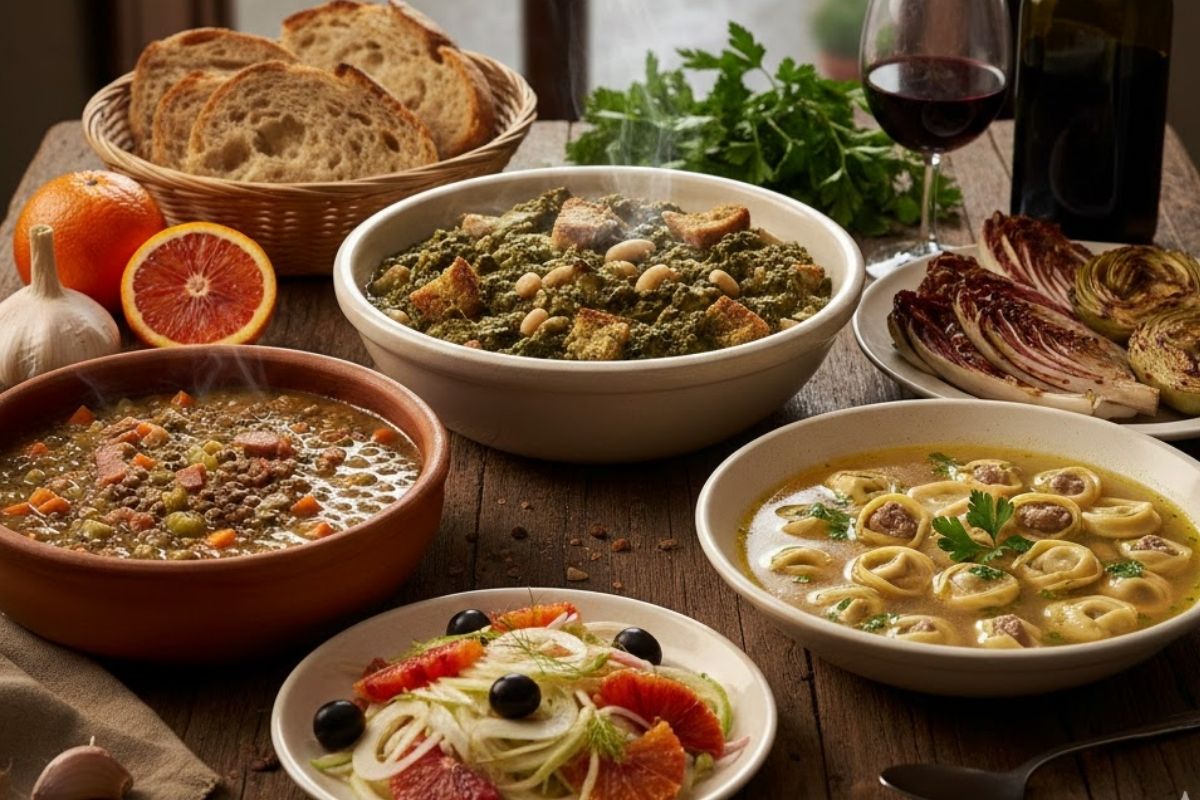
The undisputed heavyweight champ of winter wellness is Ribollita. Really, this Tuscan bread soup is a miracle in a bowl. It’s the apotheosis of cucina povera (poor kitchen), in which nothing — not even a rock-hard hunk of day-old bread — goes to waste.
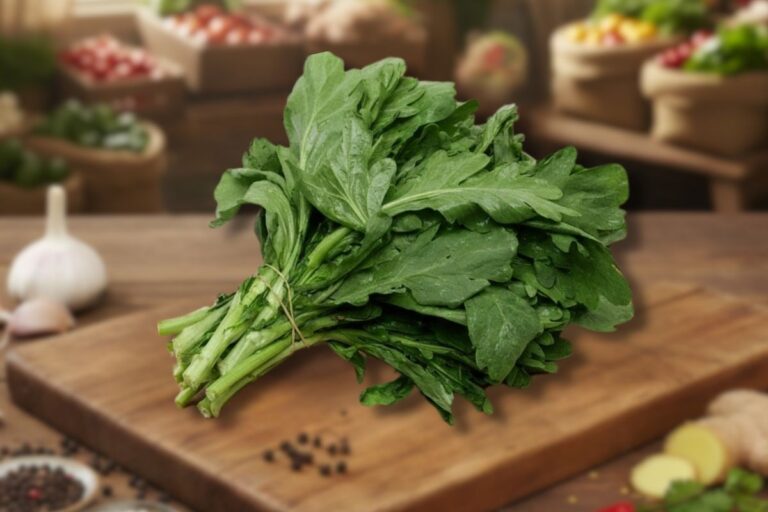
As a 2025 feature in Gambero Rosso explains, Ribollita is not just comfort food; it’s a nutrient bomb. The dish is essentially built around cavolo nero (Tuscan kale). This stuff is dark and crinkly, almost bitter, but it’s big on Vitamin C, Vitamin K, and antioxidants.
According to the winter health strategies from Aventino Medical Group for 2025, it’s crucial to consume enough vitamin C, as low temperatures can negatively impact immune cells. When you simmer that kale with cannellini beans and onions, you’re getting a huge dose of fiber and protein that will keep your energy from cratering when the sun goes down at 4:30 pm.
And then there is Tortellini in Brodo. In the Emilia-Romagna region, this dish is considered the benchmark. It’s simple: little meat-stuffed rings that come in a steaming, rich broth, made from capon or beef. The hot fluid hydrates and the steam breaks up your congestion, plus the minerals from the bone broth (like magnesium and potassium) can actually heal and repair your gut lining. It’s basically Italian penicillin.
Also Read – The Real Winter Food Scene in Italy Right Now
The Lentil Secret: Iron and Energy
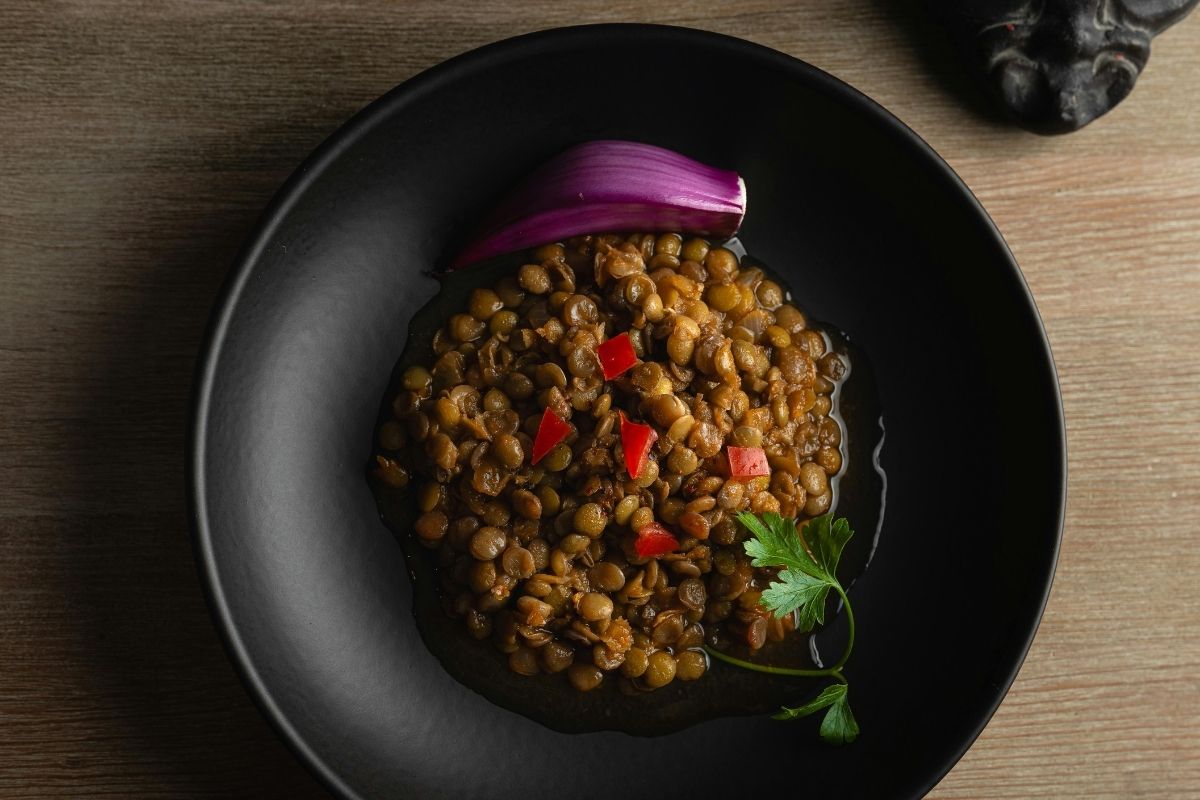
Here’s one most people overlook unless it’s New Year’s Eve: Lentils (Lenticchie). In Italy, lentils are synonymous with luck and money, but in the damp weeks of February, they’re really about survival.
A 2024 study pointed out how legumes, like lentils, are critical to the maintenance of stable iron levels, and this recipe is just what you need to guard yourself against that ‘winter fatigue’ that renders you more vulnerable to bacteria. Italians typically cook lentils in a pot with celery, carrots, and a hint of pancetta.
The result is a dish of heavy, earthy stew that provides long-lasting energy. Unlike a candy bar with a 20-minute high, lentils keep your blood sugar steady for hours. It’s the slow-burn fuel that helps keep your internal thermostat at a constant temperature on days when it’s freezing outside.
The Sicilian Citrus Shield
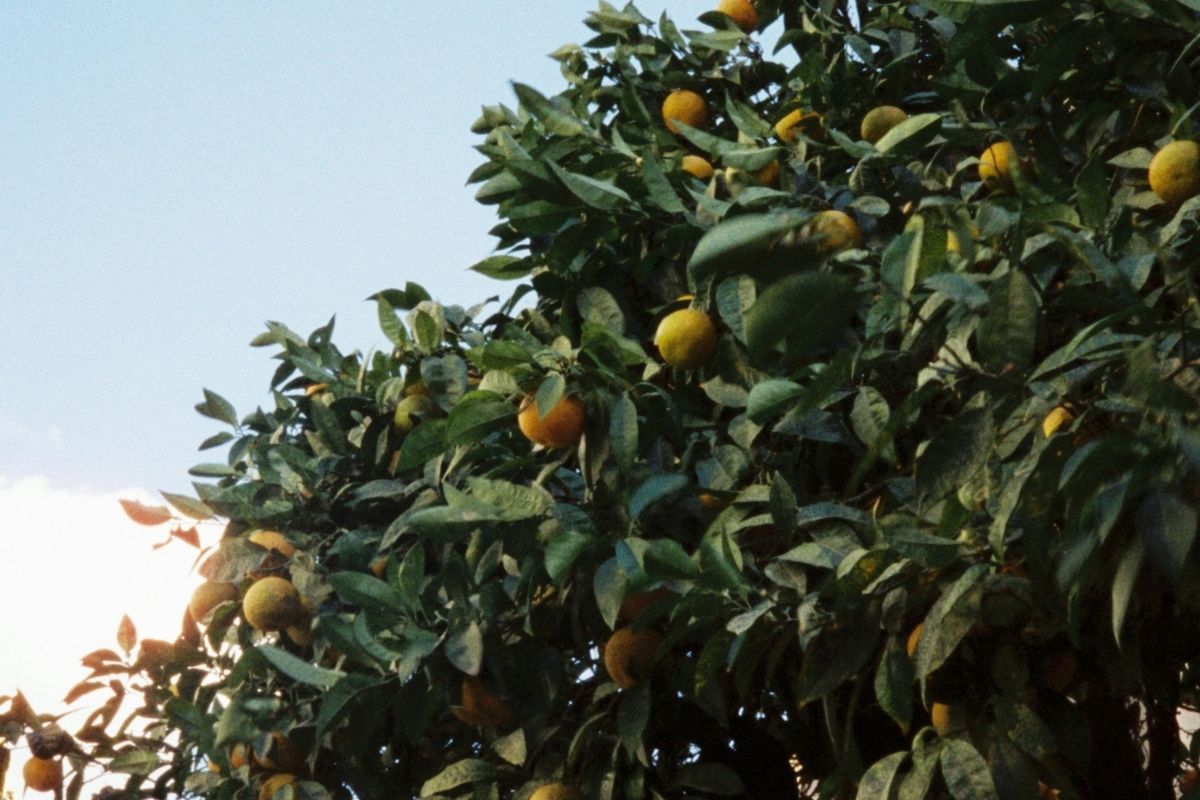
While the North is shivering, Sicily is throwing a party in the form of citrus season. From January through March, Italian markets are a sea of Blood Oranges (Arancia Rossa di Sicilia), clementines, and lemons.
Italians don’t just eat these as a snack; they make it a ritual. Go to any local bar at 8:00 AM, and you’ll see guys in suits downing a spremuta d’arancia—freshly squeezed orange juice. As noted by SIAL Paris in their 2026 nutrition outlook, citrus remains the primary source of proactive health for Mediterranean populations.
But here’s a pro tip: try the Insalata di Finocchi e Arance (Fennel and Orange Salad). The fennel is a digestive powerhouse—essential when you’re eating heavier winter meats—and the orange provides that antioxidant kick to keep your immune system from waving the white flag.
The Bitter Truth: Radicchio and Artichokes
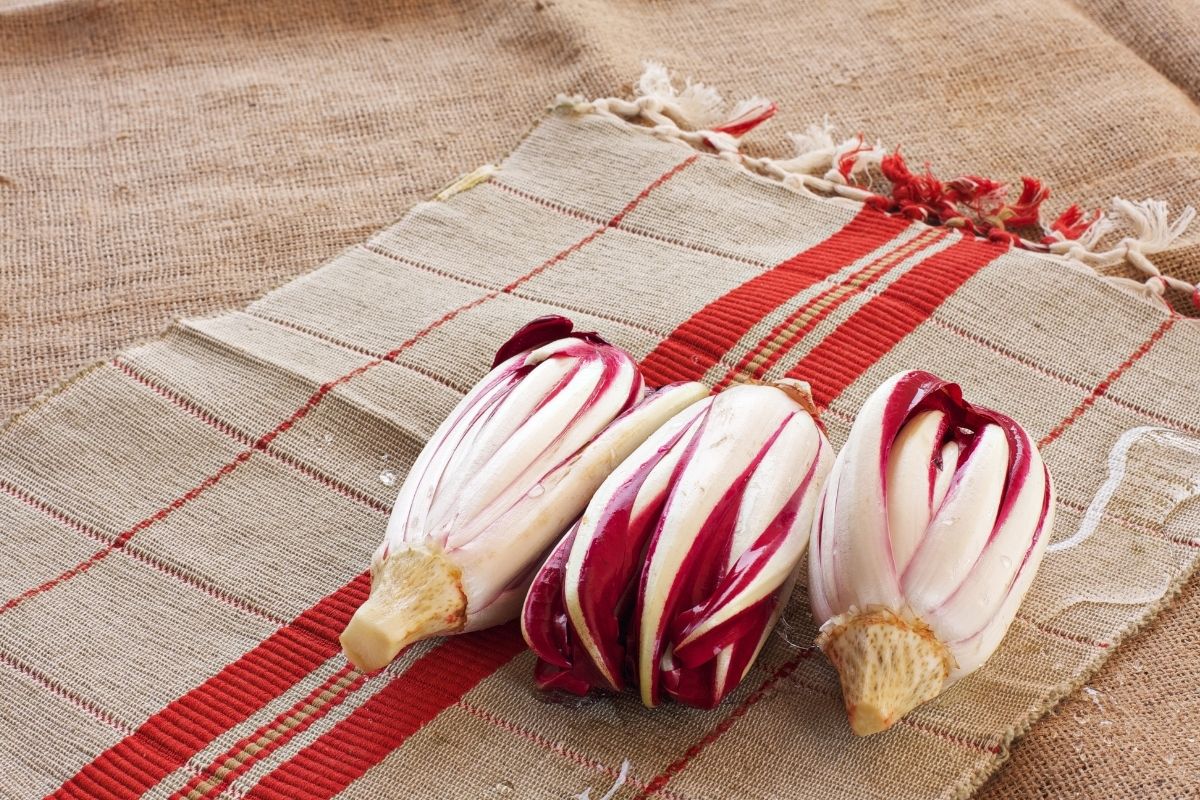
In Italy, if you’re going to dodge the flu, you’ve got to learn to love the bitter. Winter means prime time for Radicchio di Treviso and artichokes (Carciofi).
Having deep purple leaves with white veins, radicchio is rich in polyphenols that tamp down inflammation. You’ll find it grilled, in risotto, or even raw and shredded with some aged balsamic.
Then there are the artichokes. The “violet” varieties can be found in Rome as early as January. Artichokes are legendary for supporting and detoxifying the liver. They aid your body in digesting the heavier fats from all that winter cheese and ragù, which is key for keeping your system clear of toxins that make you feel sluggish.
Also Read – 8 Secret Italian Towns You Need to See in 2026
Traditional Winter Superfoods: 2026 Immunity Check
| Food Item | Key Benefit | Traditional Dish |
|---|---|---|
| Cavolo Nero | Vitamin C & Antioxidants | Ribollita |
| Blood Oranges | Massive Immunity Boost | Spremuta / Salad |
| Lentils | Iron & Sustained Energy | Zuppa di Lenticchie |
| Radicchio | Polyphenols & Heart Health | Risotto al Radicchio |
| Garlic/Onions | Natural Antimicrobials | Bagna Cauda / Brodo |
The “Invisible” Ingredients: Olive Oil and Wine
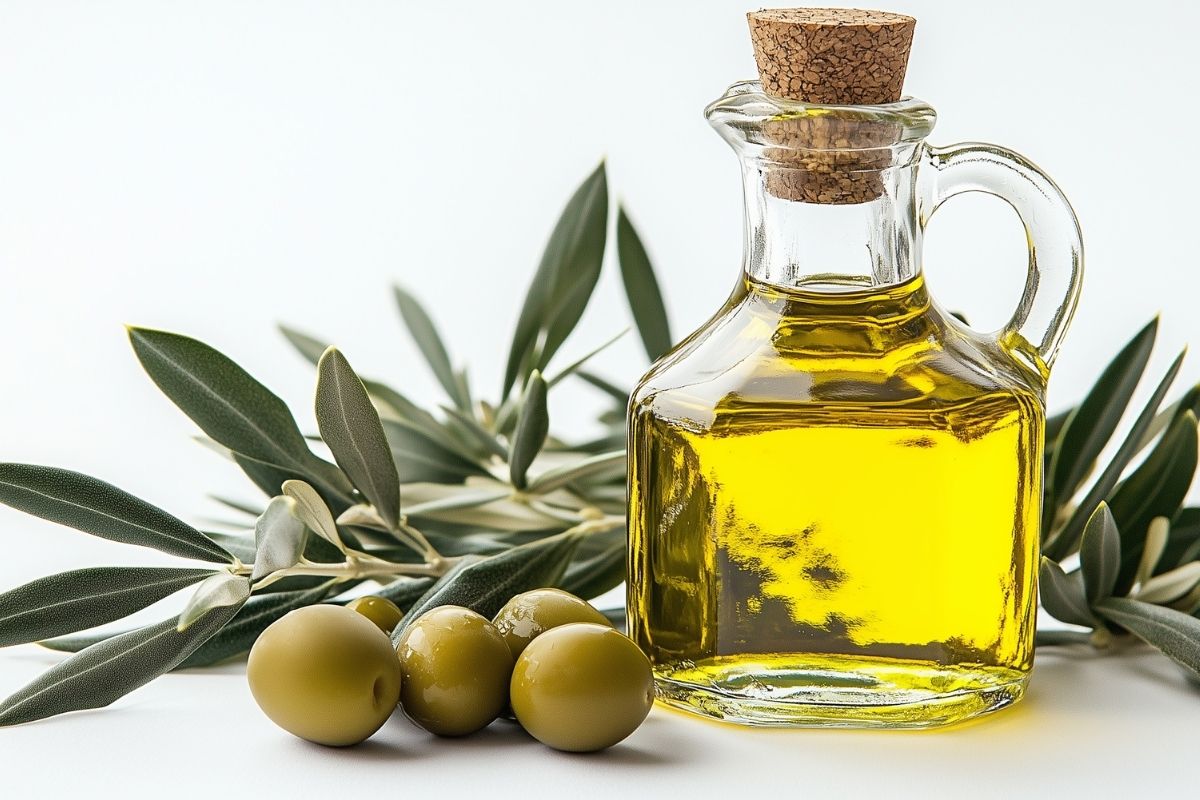
You cannot talk about Italian health without Extra Virgin Olive Oil. In winter, Italians use “new oil” (olio nuovo). It’s pungent, it’s peppery, and it has very high polyphenol levels. A drizzle of olive oil over a bowl of bean soup isn’t just for flavour—as it turns out, those healthy fats are actually needed in your body to help absorb the vitamins you get from your vegetables.
And yeah, a glass of red wine. Whether it’s a Barolo from the north or a Chianti from Tuscany, the resveratrol in red wine is a legit antioxidant. The key is moderation. Italians drink with the meal to help digestion and, let’s be honest, to keep the winter blues from settling in.
Three Rules for Survival This Season
- Skip the Tomatoes: If you see a “fresh” tomato salad in Rome in February, run. It’s imported, flavorless, and has zero nutritional value compared to the winter greens.
- Wait for the Frost: My neighbor, who is from Lombardy, insists that Savoy Cabbage only becomes healthy and sweet after it has been hit three times by frost. That’s when you also eat Cassoeula — a dish of heavy pork and cabbage stew that’ll keep you warm for three days.
- Drink the Broth: Don’t just eat the pasta. The broth is where all those minerals from the simmered vegetables ended up. It’s liquid gold.
Also Read – What to See in Venice, Italy
Winter Wellness FAQ
What is the best Italian meal for a sore throat?
Go with Tortellini in Brodo. The warmth of the broth feels wonderful, and the salt is effective at reducing inflammation in your throat as well as keeping you hydrated.
Are there any Italian superfoods for a quick boost?
Yes. The best are with garlic and Cavolo Nero. Garlic is widely known as a “natural antibiotic” in rural Italy; one bowl of kale soup can fill your quotient for daily quota for Vitamin C.
Why should I avoid out-of-season fruit?
Produce grown out of season is usually picked early and transported long distances, meaning the nutrient density is much lower than local, winter-hardy crops like citrus and root veggies.
So, are you going to keep ordering that sad winter salad, or are you ready to grab a spoon and start eating like your life depends on it? Honestly, the Ribollita is waiting.
Sources & References
- Prevention Strategies: A Winter without Illness: Seasonal Nutrition Focus – Clinical advice on using Vitamin C and seasonal diets to fight respiratory infections.
- Market Trends 2026: Gambero Rosso: February Fruit and Vegetable Guide – The latest on what to buy at Italian markets to stay healthy right now.
- Nutritional Science: SIAL Paris: Winter Nutrition Trends and Resilience 2026 – Exploring the shift toward natural ingredients and immunity-boosting superfoods in 2026.
- Traditional Cooking: Casa Mia Tours: 10 Italian Winter Dishes for Health – A breakdown of historical “cucina povera” recipes and their health benefits.
- Ingredient Deep-Dive: I Love Italian Food: The Science of Artichoke Properties – Research on the liver-protecting and detoxifying power of winter artichokes.
Recommended