The strange thing about Italy is that we think of it as an ancient museum, but as a country, it’s pretty much a teenager compared to its neighbors. If you arrived in 1850 in one of Florence’s taverns and started calling somebody an “Italian”, the guy would very likely get mad at you. “I am a Florentine,” they would say, or perhaps simply a subject of the Grand Duchy of Tuscany.
To those doing the imagining, “Italy” was no more than a beautiful idea or, as the contemptuous Austrian diplomat Metternich sniffed of it, a “geographical expression”. It was a mix of kingdoms, duchies, and papal lands that were less interested in ennobling each other than in bickering among themselves.
So, when was Italy established as a country? That depends on whom you’re asking and which “birth certificate” you want to peer at. In 2026, we are inhabiting a country that has formally been “Italy” for 165 years but the ink on that particular document had taken a decade to dry.
The Big One: March 17, 1861
If you’re taking a history quiz, this is your answer. This was the day the Kingdom of Italy was officially born. It didn’t happen in Rome, though. It happened in Turin, the chilly, industrial heart of the north.
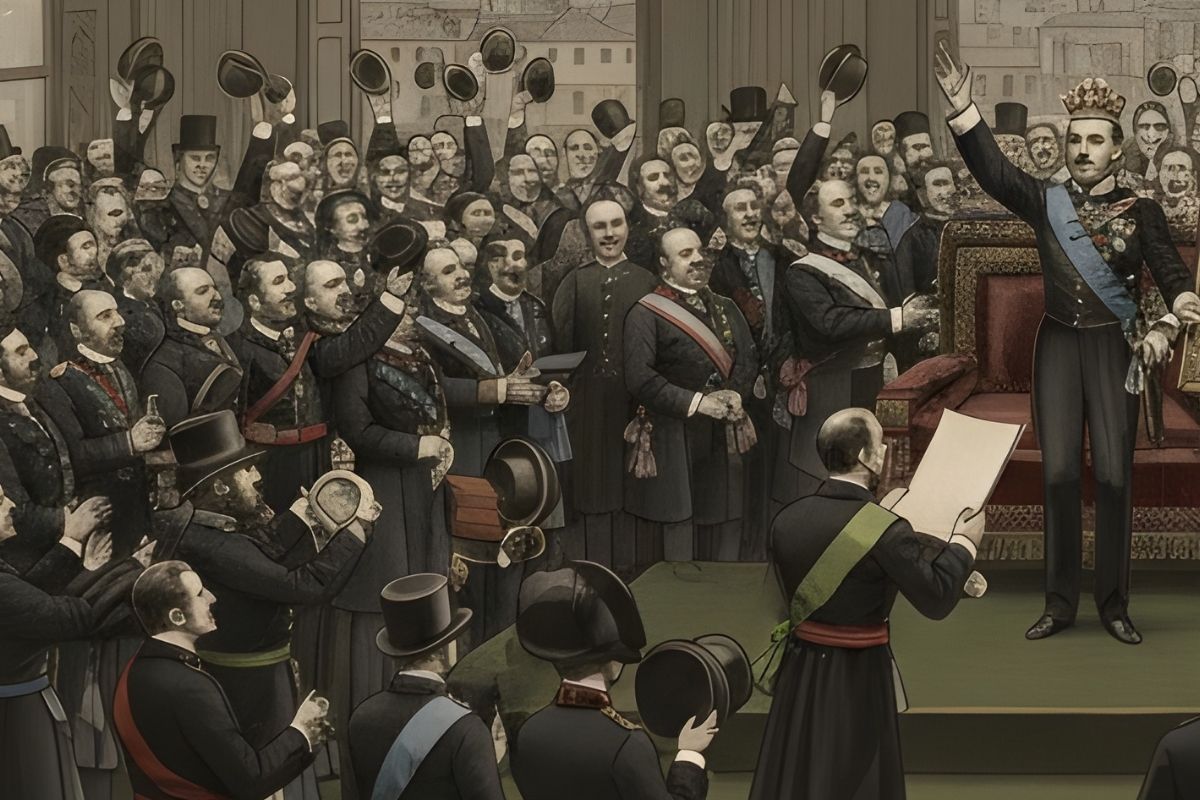
The Parliament of the Kingdom of Sardinia promulgated a law legally, No. 4761, claiming Victor Emmanuel the King of Italy, “by the grace of God and by the will of the nation”.
But here’s the thing: To call oneself king of Italy in 1861 was the equivalent of claiming ownership of a house whose former tenants were still locked inside the kitchen and master bedroom. Rome was still under the Pope, and Venice was stuck under the Austrian thumb. The “country” as such hadn’t taken a proper form.
Also Read – What to See in Venice Italy
The Trio of Dreamers and Doers
Italy wasn’t just the result of a law. It took place, we believe, because three very different men who frequently could not stand one another cajoled it into being.
- Mazzini (The Heart): Giuseppe Mazzini was the revolutionary dreamer. He lived in exile, writing manifestos and founding “Young Italy”. He wished to have a republic and not a kingdom. He was the spiritual force, the guy who convinced people that being “Italian” was worth dying for.
- Cavour (The Brain): If there is or was a political chess player, it’s Count Cavour. He was the prime minister who did not pay a lot of attention to flowery speeches but paid very close attention to railroads, taxes, and making secret arrangements with the French. He did the dirty, behind-the-scenes work to make unification possible.
- Garibaldi (The Sword): Giuseppe Garibaldi was the rock star. Consider him a 19th-century analogue of a dissident hero. With his “thousand” of volunteers in their famous red shirts, he sailed south and actually conquered the Kingdom of the Two Sicilies. When he greeted the King at Teano in 1860, he famously gave half a peninsula away to realise the vision of a united Italy.
Fixing the Map: 1866 and 1870
The 1861 declaration had been a beginning, but the map was not yet complete.
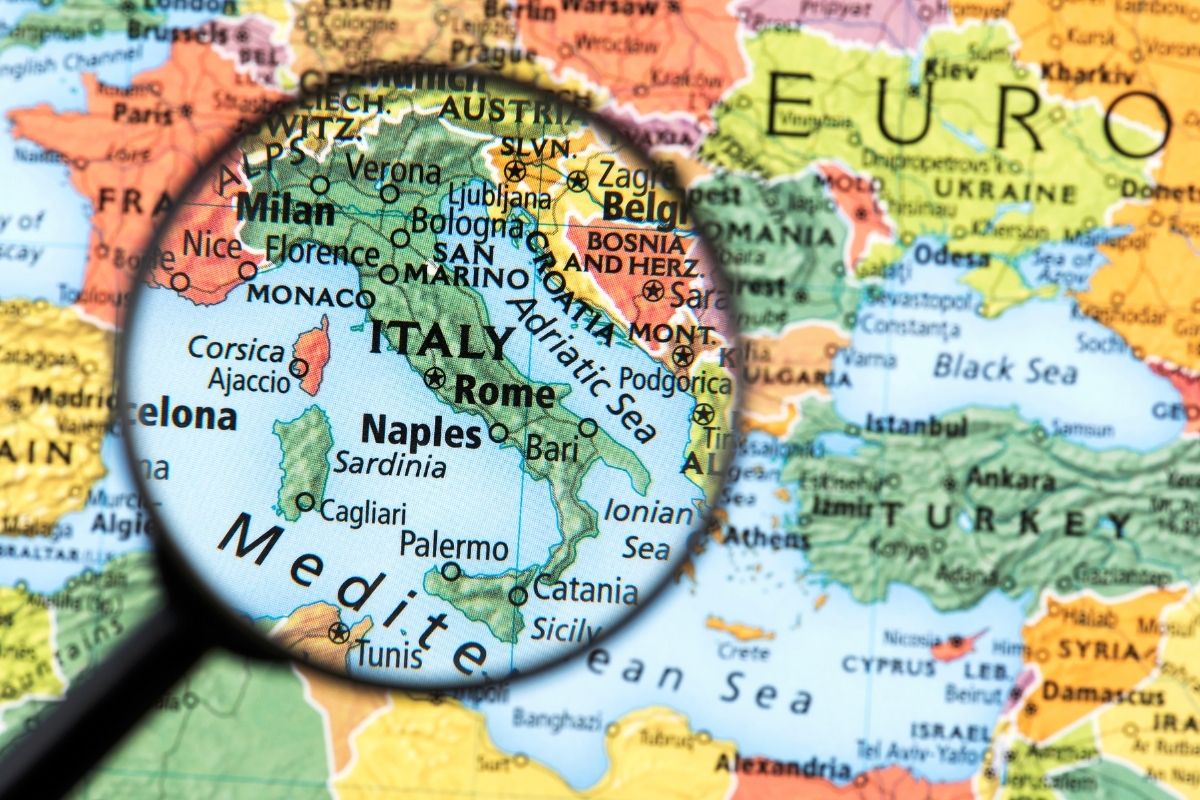
In 1866, a messy war between Prussia and Austria finally handed Venice to Italy. The Italians had actually lost most of their battles, but since their Prussian allies were victorious, Italy won the “participation trophy” prize of the Veneto region.
Then the final piece: Rome. The French army protected the Pope for decades. But then, in 1870, France became embroiled in a war with Prussia (the Franco-Prussian War), and they had to retreat their troops. The Italian army didn’t wait. They knocked a breach in the constraining walls at Porta Pia on September 20, 1870, and marched into the ancient city.
By 1871, Rome was officially the capital. The body finally had its heart.
Also Read – Is Italy Becoming The Luxury Travel Capital Of 2026
The Pivot to the Republic: June 2, 1946
But there is a “second” birth of Italy that is arguably just as crucial. After World War II’s disaster and the fall of the Fascist regime, Italians faced a very different future. Did they want to remain a kingdom with the House of Savoy as the head, or did they want to be a republic?
On June 2, 1946, they proclaimed a plebiscite. Italian women voted for the first time. The Republic was triumphant, and Umberto II, or “May King”, went into exile after only 34 days on the throne, which is why, each June 2, Italy celebrates Festa della Repubblica. It’s the birthday of the Italy that we know today, modern, democratic Italy.
Why This Still Matters in 2026
I’ve spent a lot of time in small Italian villages where the elderly men sit in the piazza and argue about politics. Even now, in 2026, you can feel the tension between the “regions” and the “nation.” An Italian from Milan and an Italian from Naples might speak the same official language, but their souls are tied to their specific dirt.
This is what Italians call campanilismo, the idea that your identity is tied to the sound of your local church bell (campanile).
So, when was Italy established as a country?
- March 17, 1861, for the title.
- September 20, 1870 for the map.
- June 2, 1946 for the modern government.
It’s a country that was born three times, and honestly, it’s still figuring itself out. It’s a young nation living in a very old house.
The next time you’re sipping an espresso in a Roman piazza, look at those walls. They were there long before the “Kingdom of Italy” was even a whisper. It makes you realize that while borders change and kings come and go, the spirit of the place is what actually sticks around.
Anyway, that’s the short version of a very long, very loud story. Does it make sense why Italians are so proud of their specific regions now? If your country only officially became “your country” a few generations ago, you’d probably hold onto your local roots pretty tightly, too, wouldn’t you?
Also Read – Italy’s Population Right Now
FAQ
Why is 1861 often referred to as the big year?
March 17, 1861, is, in short, the day that ”Italy” became official. Until then, it was a collection of various kingdoms and territories that never got along very well. This was when Victor Emmanuel II, who at the time still did not have Rome, stepped forward and said, “I’m the King of all this.
Who actually “built” the country?
It was a three-man job from guys who likely wouldn’t have followed one another back on social media today. You had Cavour (the clever politician), Mazzini (the chap with the dream), and Garibaldi (the general who did most of the fighting). They all desired a single Italy but wasted half their time squabbling about how to get it.
Why is 2 June a greater holiday than in the year of birth?
Italians mark June 2 not as the date when they became a republic, but when, in 1946, they finally waved goodbye to their monarchy. Having experienced the nightmare of World War II, the people voted to form a republic and sent the royal family packing. It’s a second birthday, and it wasn’t just some king’s crown they were celebrating, but freedom and democracy.
In 2026, how old is Italy exactly?
It depends on how you count. If you count from the first unification in 1861, the country is 165 years old this year. But if you mean the modern Republic, the one we have now, it’s turning 80 this June.
Sources & References
- U.S. Department of State (Office of the Historian): A Guide to the United States’ History of Recognition: Italy. This is the gold standard for verifying the 1861 recognition and early diplomatic ties.
- Senato della Repubblica (Official Archive): Proclama del Regno d’Italia – Legge n. 4761. Direct link to the primary legislative document that created the Kingdom in 1861.
- Encyclopedia Britannica: Risorgimento | Italian History. A comprehensive peer-reviewed overview of the entire unification timeline from 1815 to 1871.
- The Italian National Institute of Statistics (ISTAT): Historical Population and Territorial Changes. Excellent for data-backed evidence on how the borders shifted during the 1866 and 1870 annexations.
- The Treaty of Vienna (1866): Official Records of the Third War of Independence. The legal proof behind the “indirect” transfer of Venice from Austria to Italy via France.