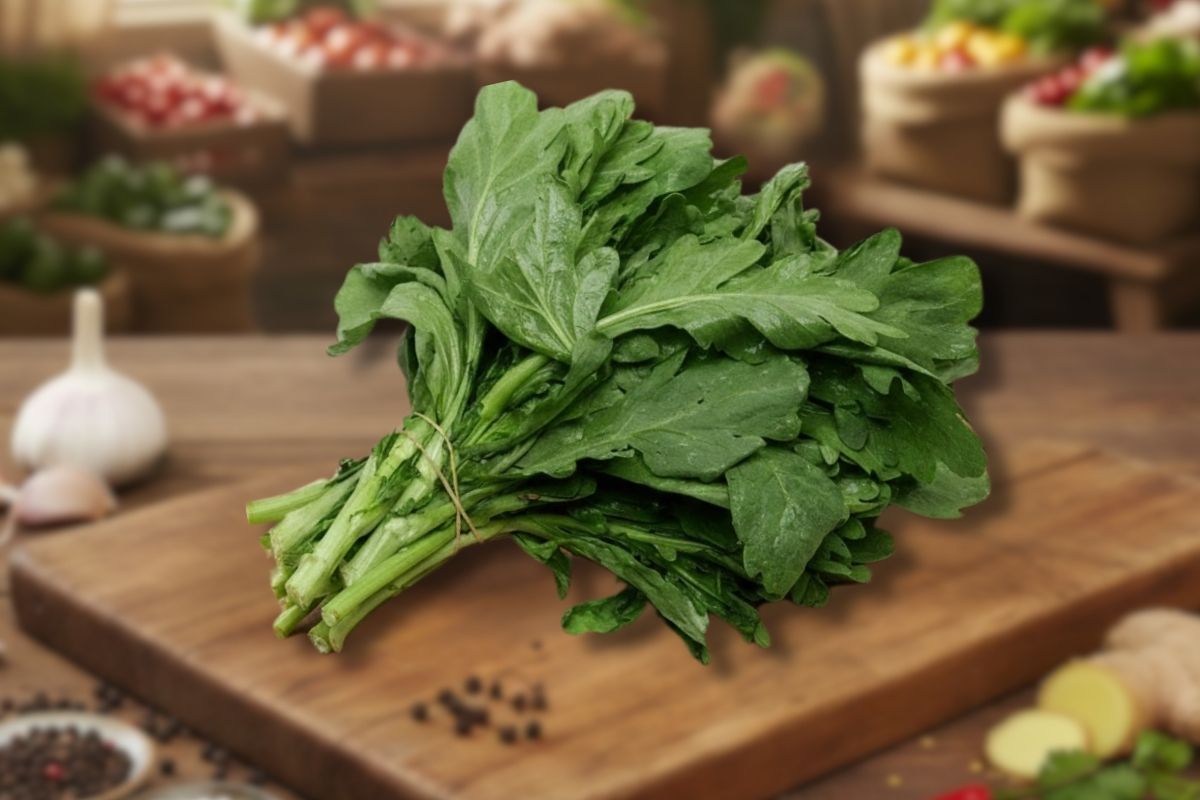
You’re in the middle of a busy H-Mart, the air thick with the smell of roasted sesame and fresh ginger. Your basket is already laden with paper-thin slices of ribeye and blocks of silken tofu, but you’re eyeing the produce aisle for one particular item. You pass the baby bok choy. You ignore the Napa cabbage. Then, you see it. A crate spilling over with jagged, deep-green leaves resembling an ornamental garden plant more than something you might eat for dinner.
That’s Tonghou.
If you grew up in a house where “cooling” foods were the answer to every ailment from a sore throat to a bad mood, you know exactly what this is. But for everyone else? This leafy green—often called Garland Chrysanthemum or Crown Daisy—is the latest “it” vegetable taking over farm-to-table menus and late-night hot pot sessions. It’s herbal. It’s slightly peppery. And frankly, if you cook it one second too long, let me tell you: it’ll complain about it with a punch of bitterness that will make your eyes tear.
I’ve spent a considerable time wandering around the back alleys of San Francisco’s Chinatown and sitting at bubbling broth tables. And I have discovered that Tonghou is more than a side dish. It’s a cultural bridge. It’s a vegetable with so commanding a personality that it deserves its own rules. More recently, as many people have escaped the kale-is-king era of the 2010s, this aromatic green has had a huge second act in 2026’s wellness-focused kitchens.
Summary Table for Quick Reference
| Feature | Details |
| Alternative Names | Tong Hao, Shungiku, Garland Chrysanthemum |
| Vitamins | High Vitamin K, A, and C |
| Best Used In | Hot Pot, Soup, Stir-fry |
| Taiwan Trail | Tonghou Traversing Trail (Wulai) |
| TCM Property | Cooling aids digestion |
The Plant That Smells Like an Ancient Garden
Walk into any high-end grocery store in late February 2026. You’ll notice a trend. Shoppers are gravitating toward “functional” produce. Greens that do more than just provide fiber. According to a 2026 retail trend report by The Food Institute, consumers are obsessed with hydrating, nutrient-dense items. They want “functional positioning.”
That’s Tonghou in a nutshell.
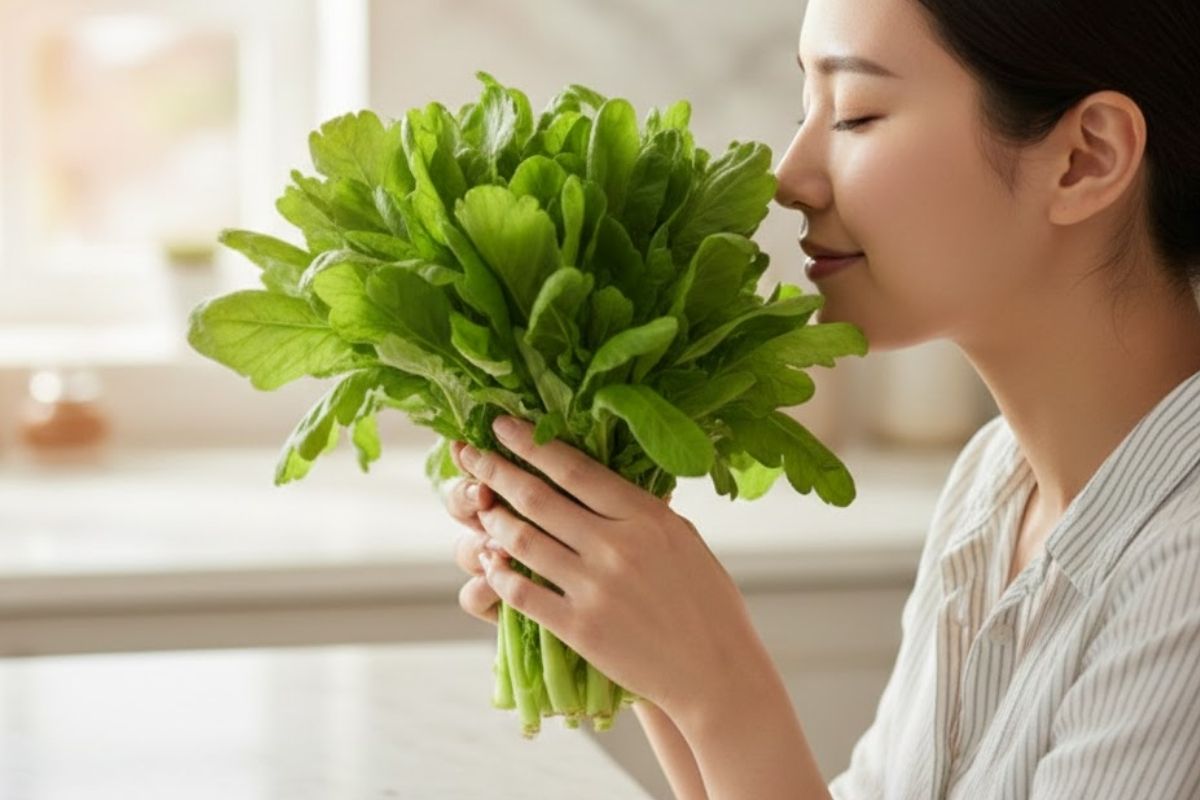
Scientifically, it’s Glebionis coronaria. It is a member of the daisy family. But unlike the chrysanthemums you would buy for a bouquet, this kind has been bred for the plate. You rub the leaves between your fingers, and you get this amazing, very sharp floral smell. It’s distinct. Others describe it as parsley on steroids. Others say it smells like a pine forest after rain. That distinct smell is why it’s so polarizing. Either you want that herbal “kick,” or you find it to be too much. There’s really no middle ground.
Also Read – Why Italy’s Winter Menu is Actually a Pharmacy in a Bowl
The Hot Pot Rule: “Dip and Go”
If you’d like to pick a fight at a dinner table in Chengdu or Taipei, simply let the greens soak too long in the soup.
The leaves are so delicate. They have a “sweet spot” of 30 to 45 seconds in boiling broth. Any longer? The cell walls collapse. They release a wave of tannins that makes the entire pot taste bitter. The first time I made it was at a family gathering. I threw a handful into the spicy Sichuan broth and got distracted by a piece of shrimp. By the time I fished out those greens, they were a soggy, dark mess. My grandmother didn’t say a word. She simply waved her chopsticks at the pot and gave me “the look.”
Lessons learned. Now, I give it a quick dip. You want the stems to have a slight snap. You want the leaves to be bright and vibrant. This vegetable is a sponge for flavor. If you’re using a rich bone broth or a numbing peppercorn base, the greens will hold onto that liquid like their life depends on it.
Is It Medicine or a Meal?
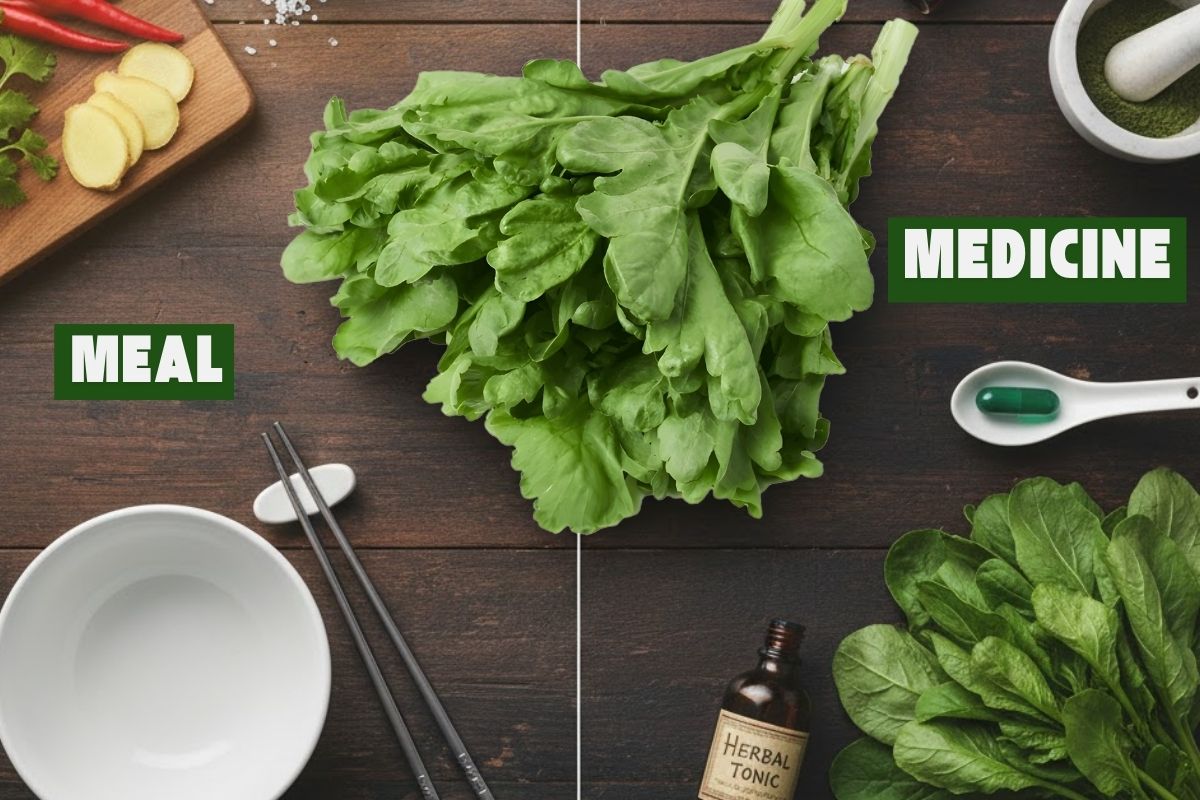
In traditional circles, Tonghou has always walked the line between a grocery item and a pharmacy staple. In Traditional Chinese Medicine (TCM), it’s famously a “cooling” food. If you’ve been eating too much fried chicken or spicy BBQ, you eat these greens to “clear the heat”.
But the modern science backing this up is actually pretty impressive. A nutritional analysis from the B4FN database shows it is absolutely loaded with potassium (about 555 mg per 100 g) and high levels of vitamin A.
The wild part is the antioxidant profile. It contains specific phytochemicals that studies, such as a 2026 review in the Journal of Natural Remedies, suggest may help with everything from regulation of blood pressure to anti-inflammatory responses. Frankly, the data makes kale seem like a bit of a lightweight.
Also Read – The Real Winter Food Scene in Italy Right Now
Beyond the Soup: The 2026 Stir-Fry Revival
While hotpot is the classic move, the way people are using this green in 2026 is shifting. I’ve started seeing it in “fusion” salads. The younger, smaller leaves are served raw with a heavy ginger-miso dressing. The herbal punch of the raw leaf works surprisingly well with something sweet, like sliced pears or roasted beets.
But my favorite way? The “Quick Garlic Snap.”
Get your wok screaming hot with some neutral oil. Throw in six cloves of smashed garlic. Add the greens, and keep them moving. A drizzle of light soy sauce and a few drops of toasted sesame oil at the end. The entire process takes 90 seconds, maybe.
The end result is this silky, aromatic pile of greens that tastes like you spent an hour prepping. It’s the end-all be-all “I’m too tired to cook” meal that does, in fact, make you feel better in the end.
The Cultural Connection: The Trail and the Table
There’s a beautiful duality to this name. Although most people know it as a vegetable, in Taiwan, the name is associated with one specific walking path: the Tonghou Traversing Trail.
It’s this gorgeous hike snaking through the verdant, misty mountains. There’s something poetic about it. The trail is known for its purity and the way it connects different local cultures. Much like how the vegetable connects various East Asian cuisines. Whether it’s called Shungiku in a Japanese sukiyaki or Ssukgat in a Korean stew, it’s the same plant bringing the same herbal soul to the dish.
FAQs: Everything You’re Scared to Ask at the Market
What if I can’t find it labeled as Tonghou?
Search for “Chrysanthemum Greens” or “Crown Daisy”. On Japanese markets, it’s nearly always “Shungiku.” If you spot a bunch of greens that resemble flat-leaf parsley but have way more serrated edges, that’s probably it.
Can you eat the stems?
Yes! But treat them differently. If the stems are thick, add them to the pot about 30 seconds before you add the leaves. They are very crunchy, with a milder flavor.
Is it safe for everyone?
Generally, yes. But it’s chock-full of Vitamin K. If you take certain blood thinners, consult your doctor before going on a three-day bender.
How do I store it?
It wilts fast. Like, really fast. Wrap it in a damp paper towel and store it in a perforated bag in the crisper drawer. Its use-by date is two days; otherwise, it will turn into a sad yellow puddle.
The Final Word
After all, at its most basic level, food is about curiosity. We eat the same four vegetables, over and over again, for safety. But the reason Tonghou is getting hugely popular now is that people are fed up with safe. They want flavor. They want a vegetable that fights back a little bit.
So next time you’re at the market, and you see those gnarly, spiky leaves, don’t pass them by. Grab a bundle. Go home. Boil some broth. It may taste odd and bitter at first, but that’s part of the fun. It’s a sample of something authentic.
And hey, if you overcook it and it gets bitter, don’t say I didn’t warn you. My grandmother is probably out there somewhere shaking her head at you already.
Ready to try the garlic stir-fry, or are you strictly a hot pot traditionalist?
Sources & References
- Primary Reference: * First Love Yourself (2025): “Tonghou: A Traditional Leafy Green with Deep Culinary Roots.” This source details the 1,000-year history of cultivation in China and its spread to Japan and Korea.
- Wikipedia: “Glebionis coronaria.” Providing taxonomic classification and worldwide distribution data.
- Funky Moves (2024): “Tonghou: A Cultural Exploration of a Unique Asian Term.” This article explains the “dual meaning” of Tonghou—as a vegetable in the kitchen and as a famous trail in the wilderness.
- The Woks of Life: “Tong Hao (Chrysanthemum Greens) Guide.” A definitive guide on selecting, cleaning, and preparing the vegetables for authentic Asian dishes.
- Technical References: * NIH / National Institute of Health: “Vitamin K Health Professional Fact Sheet.” Used to cross-reference the importance of leafy greens in blood clotting and bone health.
- SITCM (Sydney Institute of Traditional Chinese Medicine): “13 Everyday Ingredients Used in TCM.” Explains the concept of “Qi” and “Yang” foods, providing context for why Tonghou is used to balance “internal heat.”
- Parkbus Taiwan (2022): “Tonghou Traversing Trail – 桶後越嶺步道行.” Details the 19km route, river crossings, and its expansion during the Japanese colonial era.
- Taiwan Forest Recreation: “Tonghouyueling Trail Official Portal.” Provides official elevation data ($450$ to $730$ meters) and difficulty levels.
Recommended