
The air of the Basilicata hills doesn’t merely feel still; it feels weighed down by the absence of people who haven’t been there for sixty years. As Rome grapples with the madness of 2026 tourism, there’s another type of movement taking place in the country’s “ghost towns”. They’re no longer just ruins for photographers. They have settled into a bizarre, high-stakes experiment in what happens when a government attempts to sell dead Italian villages to an analog-obsessed world.
Italy’s forgotten villages are proving to be the epicenter of a massive cultural and investment trend. But the distance between the glossy brochures and dusty reality is huge. From the crumbling tufa cliffs of Lazio to the sun-scorched hills of Sicily, these towns are like cross-breeds of open-air museums and experimental living quarters where time was left around a half-century ago.
The 2026 Snapshot: What’s Actually Happening
- Active Investment: The €1 house scheme is still operational in over 50 towns, though renovation costs have spiked to roughly €40,000 minimum due to current labor rates.
- The “Smart Village” Pivot: Towns like Santa Fiora are now fully wired with high-speed fiber, specifically targeting remote workers who want to trade city noise for stone silence.
- Rogue Communities: Places like Bussana Vecchia continue to operate in a legal gray zone, surviving as artist colonies despite decades of government eviction threats.
- Event-Driven Survival: Historic centers are now using “experience” events—like the Ghost Egg Hunt happening this week in Celleno—to fund basic structural repairs.
Italy’s Forgotten Villages Where Time Literally Stopped
The High-Risk Beauty of Craco
Craco is arguably the most famous ghost town in the world, and by April 2026, it’s also one of the most restricted of Italy’s villages. Perched on a cliff in Basilicata, it was abandoned in the 1960s after a series of landslides demonstrated to its residents that the ground was literally moving out from under their feet.
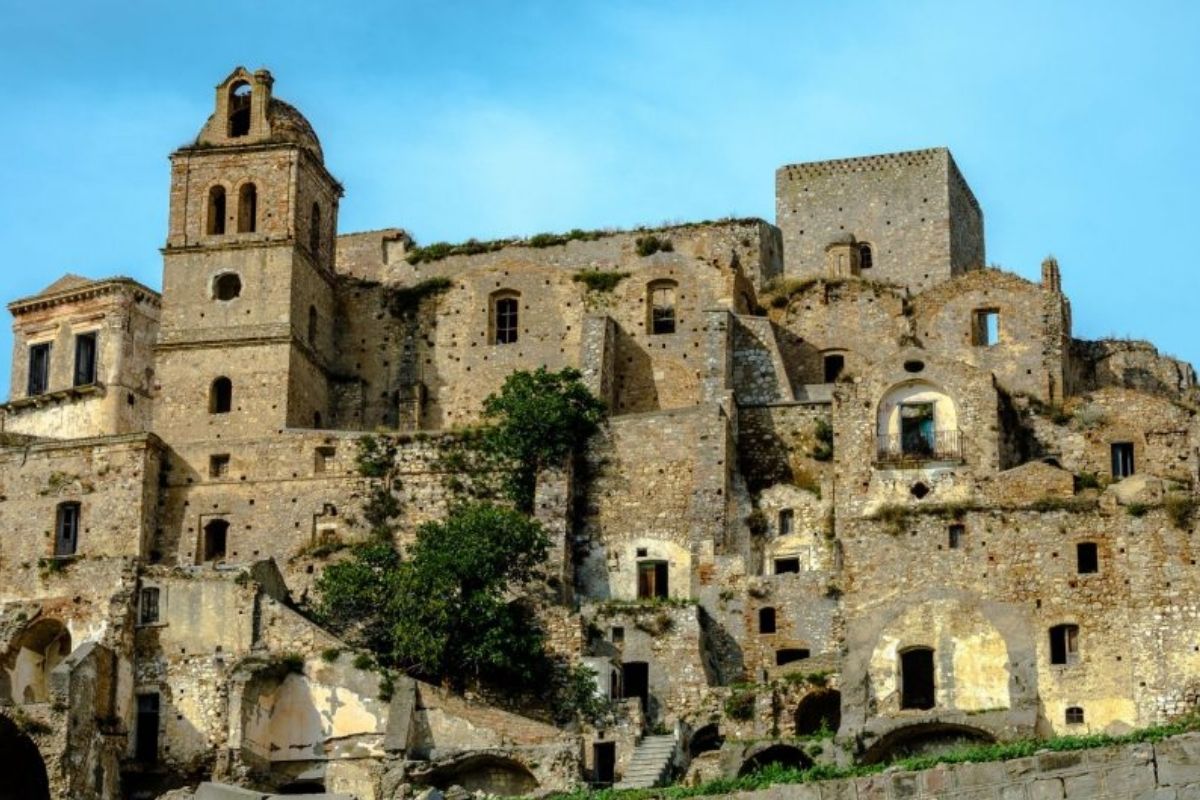
As Atlas Obscura has reported, the silhouette of the town is so iconic that it’s been used for major film sets, but visitors described their reality as anything but glamorous. You don’t just roam these streets. It’s a hard-hat zone. The buildings are fragile, so guided tours are required. The limestone is crumbling. It’s a skeleton of a city, beautiful but strictly off-limits for anyone hoping for a “casual stroll.”
Also Read – What to Do in Bologna, Italy
The Slow Collapse of Civita di Bagnoregio
Then there is Civita di Bagnoregio, sometimes referred to as “The Dying City“. It perches on a plateau of volcanic tufa that’s crumbling away at several centimeters a year. The village is accessible to the world only by a sliver of a footbridge.
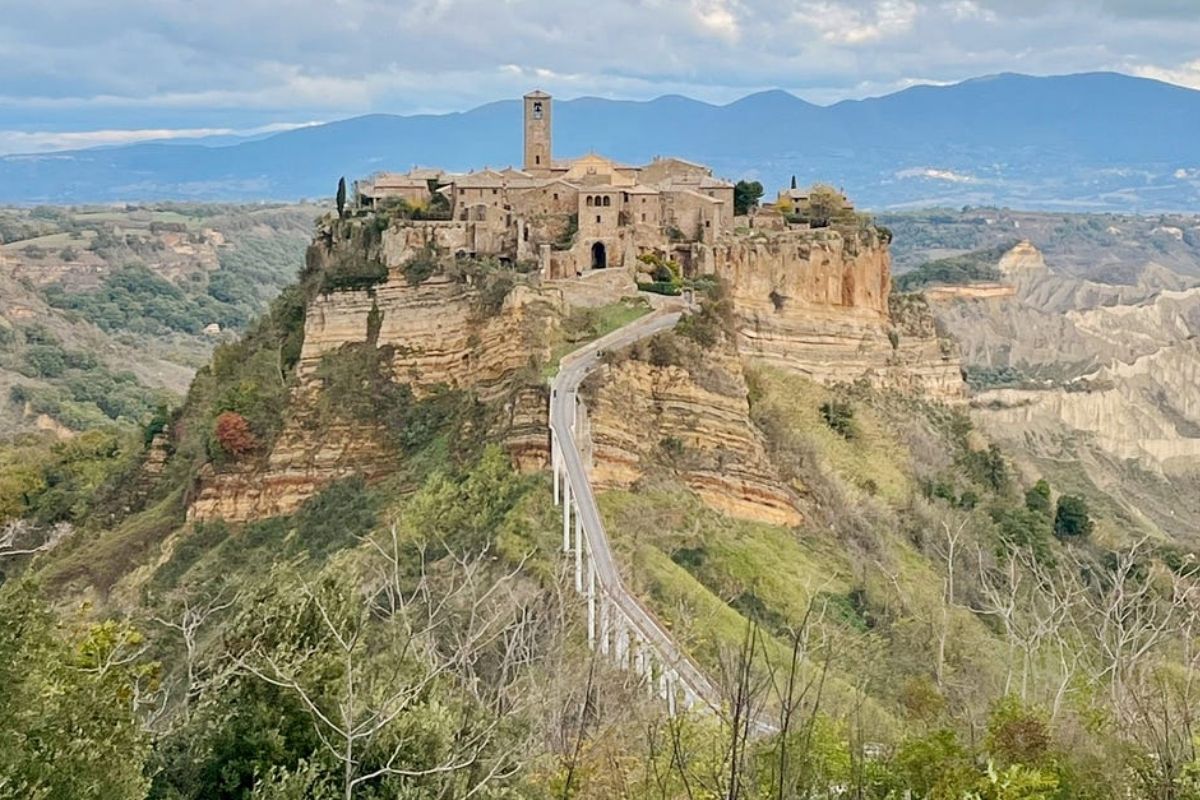
It’s a stark contrast in 2026. There are ancient stone archways and flower-filled balconies sitting right next to sheer drops where a house used to be. Though a handful of residents remain, the town operates more as a living artifact. The entry fee paid by thousands of daily tourists is the only thing funding the massive steel rods being driven into the mountain to keep the whole place from sliding into the valley. It’s a literal race between history and geology.
The Hand of Stone: Pentedattilo
Located deep in Calabria, Pentedattilo is built into a crag resembling five giant fingers reaching for the sky. After an earthquake in 1783, it was left to its fate, though the last dwellers took another two centuries before abandoning it.
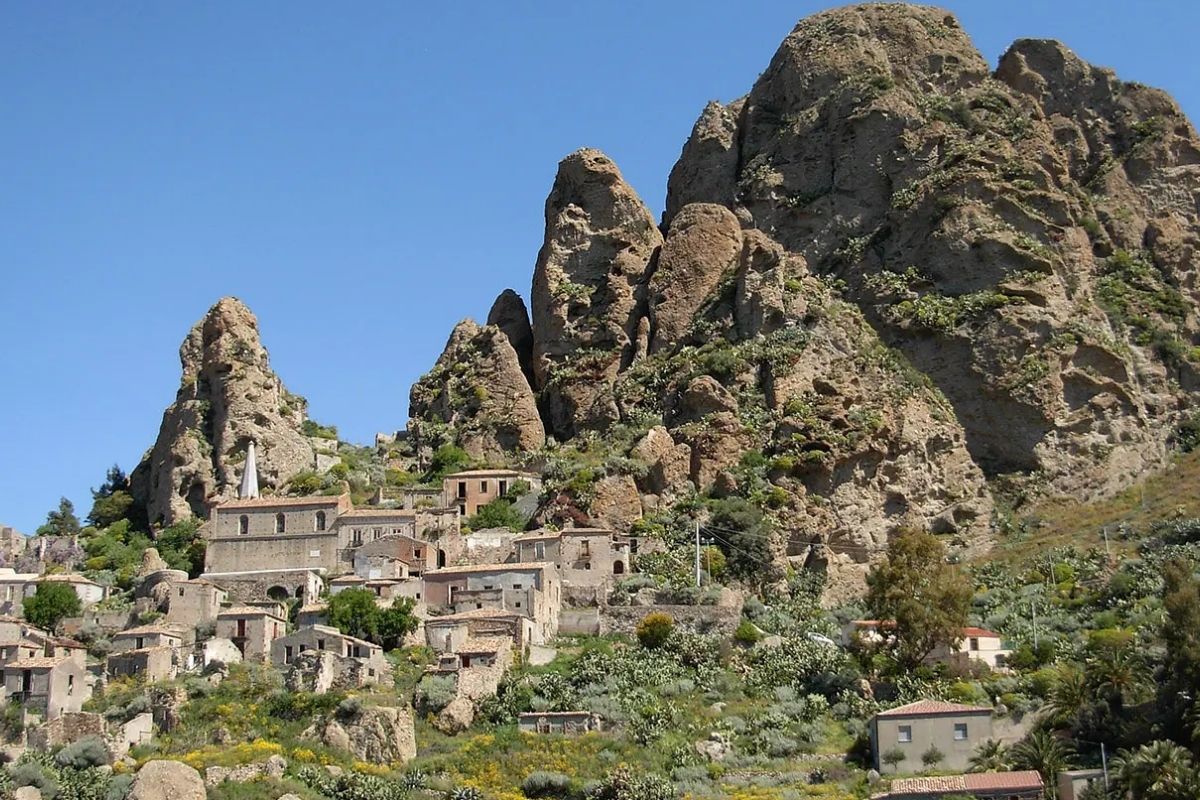
The village has a darker reputation. Local lore still murmurs of a 17th-century massacre by the Alberti family. The silence here in 2026 is oppressive. There’s a tiny group of artisans trying to keep the lights on, but for the most part, it’s just the wind whistling through the “Hand of Stone.” According to Italy Travel & Life, it’s one of the few places where the “ghost town” label feels 100% earned.
The 2026 Investment Reality Check
The idea of buying a home for the price of a coffee is no longer just a headline. It’s a legitimate, albeit complicated, government strategy. As of early 2026, the €1 House Scheme is still running in towns like Sambuca and Mussomeli.
| Program Type | Location Focus | Current 2026 Status |
| €1 House Scheme | Sicily & Calabria | Active in 50+ towns; requires €20k-€50k renovation commitment. |
| Residency Grants | Radicondoli (Tuscany) | Offering up to €20,000 for buyers and 50% rent coverage. |
| Digital Nomad Hubs | Santa Fiora & Rieti | Providing high-speed fiber and rent subsidies for remote workers. |
Radicondoli is the standout this year. Instead of just selling ruins, they are paying people to move in. They realize a town with buildings but no businesses is just a mausoleum. They want people who will actually open shops and pay taxes.
Also Read – What to See in Venice Italy
The Modern Pompeii: Poggioreale
Not all abandoned places are old. Sicily’s Poggioreale was a flourishing town until an earthquake razed the area in 1968. The town remained exactly as it had been, with dilapidated schools, shop signs from the 1960s, and rusted-out cars. Italynotes describes it as the most charming town.
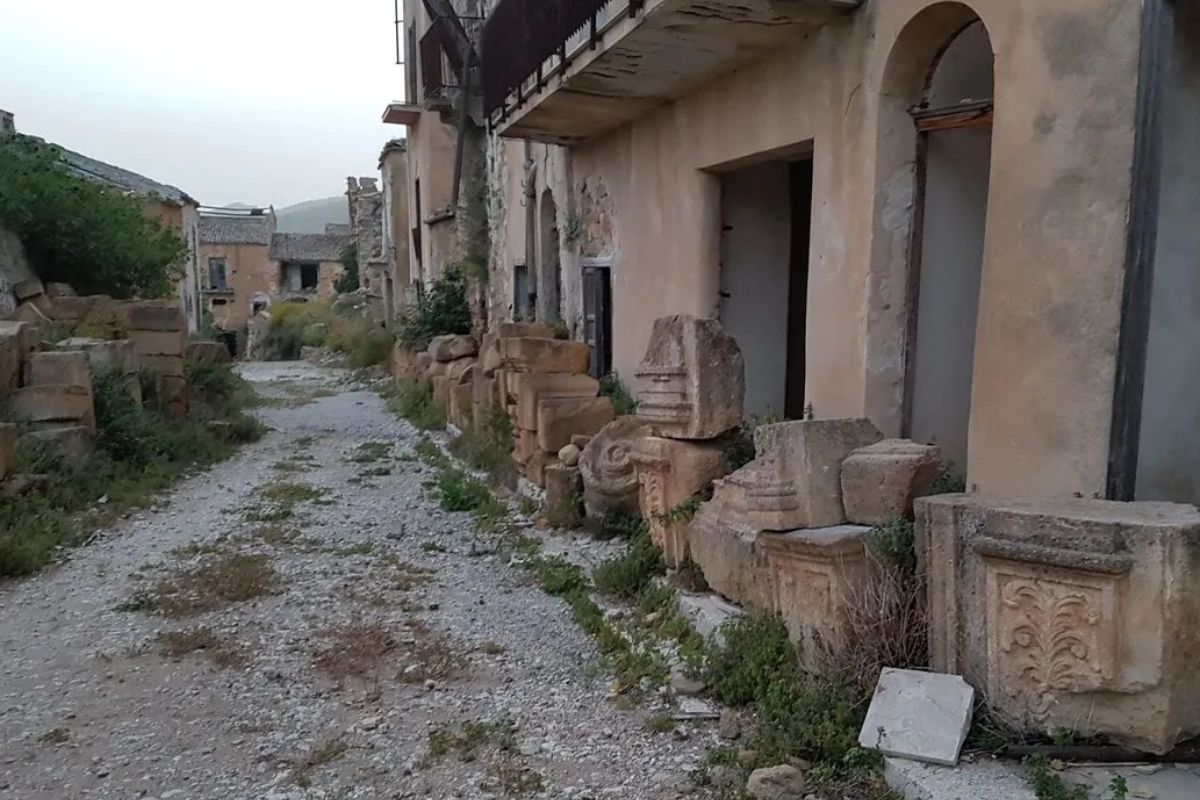
Walking here in 2026 is extremely unsettling because it’s familiar. It’s not a medieval ruin; it’s an impression of one that was still around just a few decades ago. It has not yet been polished to tourist shine. It’s just rotting. It proves that it doesn’t take centuries for a place to be forgotten—just one bad night and a government decision to build “New Poggioreale” a few miles away.
Rogue Revival: Bussana Vecchia
The most interesting story is Bussana Vecchia in Liguria. An 1887 earthquake destroyed it. For decades, it stood as a ghost town until international artists moved in the 1960s and did so without permission. They repaired the roofs and put in their own plumbing, and they ignored the eviction orders.
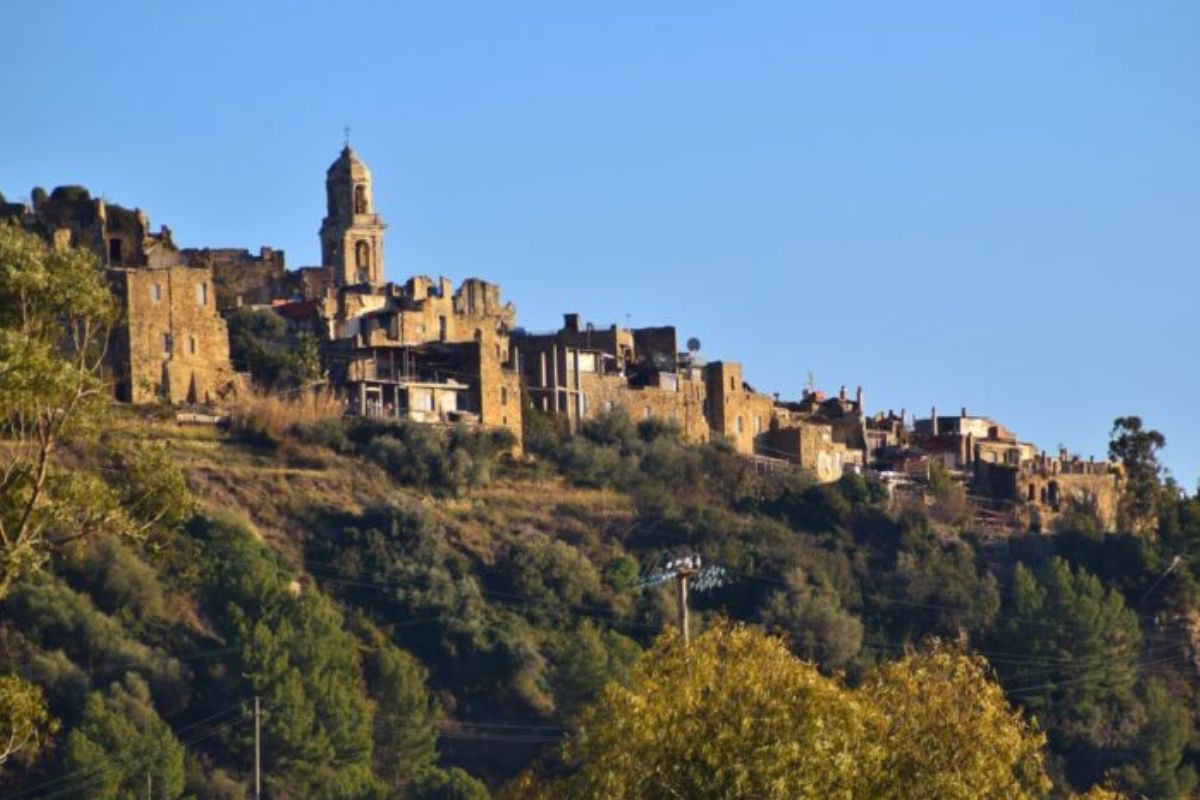
By April 2026, it had evolved into a vibrant though “unofficial” cultural center. It operates outside many standard municipal rules. It’s full of galleries and cafes built into the rubble. It’s a “living” ghost town where the ruins have a pulse. It’s messy, and the legal status is always shaky, but it works.
New Developments: Celleno and Roghudi
Celleno (Viterbo) is currently making news with its “Ghost Egg Hunt” this Easter Monday. It’s a clever move by Mayor Luca Beraldo to use the “ghost village” brand to draw in families and fund the Orsini Castle’s restoration.
Then there’s Roghudi in Calabria. This site is for the hardcore explorers. Abandoned in the 70s due to floods, it sits on a narrow ridge and is still full of personal belongings—clothes in closets and plates on tables. In 2026, it remains one of the most hauntingly intact sites in Italy.
Why It Matters Now
The obsession with these empty spaces says a lot about the world in 2026. Everything is digital, fast, and temporary. A stone house that’s been there since the Renaissance is grounded.
As reported in a recent study on “root tourism,” thousands of people are traveling back to these crumbling villages to find the specific houses their ancestors left a century ago. There’s a deep need to touch something that lasts, even if that something is a pile of rocks in a town with no grocery store.
Also Read – Is Italy Becoming The Luxury Travel Capital Of 2026
FAQ
Is the internet actually good in these remote Italy Villages?
In “Smart Villages” like Santa Fiora, yes. Italy’s “Project Bianca” has pushed high-speed fiber into the mountains to lure remote workers. In a true ghost town like Roghudi? Forget it. You’ll be lucky to get a signal at all.
Can anyone buy a €1 house Today?
Yes, but you need a “surety bond” of about €5,000 and a legal promise to renovate within three years. It’s not a weekend DIY project. It’s a full-scale construction job that has to follow strict historical codes.
Are these villages safe?
Mostly, but stay on the paths. In places like Craco, the ground is unstable. Many of these buildings are literally held up by gravity and old mortar. If a sign says “Pericolo,” it means it.
Are the locals welcoming?
In towns like Sambuca that are being repopulated, the locals are thrilled to see life returning. Just don’t expect everyone to speak English. You’ll need to learn Italian, or at least how to gesture effectively.
The Bottom Line
Italy’s forgotten villages aren’t going anywhere. Some will be gone, some saved by artists, and some purchased by people who just want to disappear. It’s a strange limbo between what the country was and what it’s trying to be.
The question isn’t whether these places are salvageable — it’s whether they deserve to be. The most beautiful thing about a ghost town is silence. But hey, if the din of 2026 grows too loud, there are always the hills. All you need is a hard hat and some patience. Want to swap the city for a stone house in a valley that hasn’t changed much since the 1400s? It’s a tempting thought until the first time the plumbing fails.
Sources and References
- Idealista (March 2026): Trentino offers €100,000 grants to revitalise abandoned villages: everything you need to know (2026 update).
- Atlas Obscura: Detailed Guide to 13 Italian Ghost Towns (Craco focus).
- Civita di Bagnoregio Official: Ticket information and Structural Management Plan.
- True Italian Experience (April 2026): Easter Monday in Celleno: the “Ghost Egg Hunt” in the historic village.
- Calabria Straordinaria (Official Tourism): Roghudi Vecchio: ghost town on the slopes of Aspromonte.
- VisaHQ News (April 2026): Italy’s New Digital Nomad Visa Becomes a Strategic Tool to Revive Rural Communities.