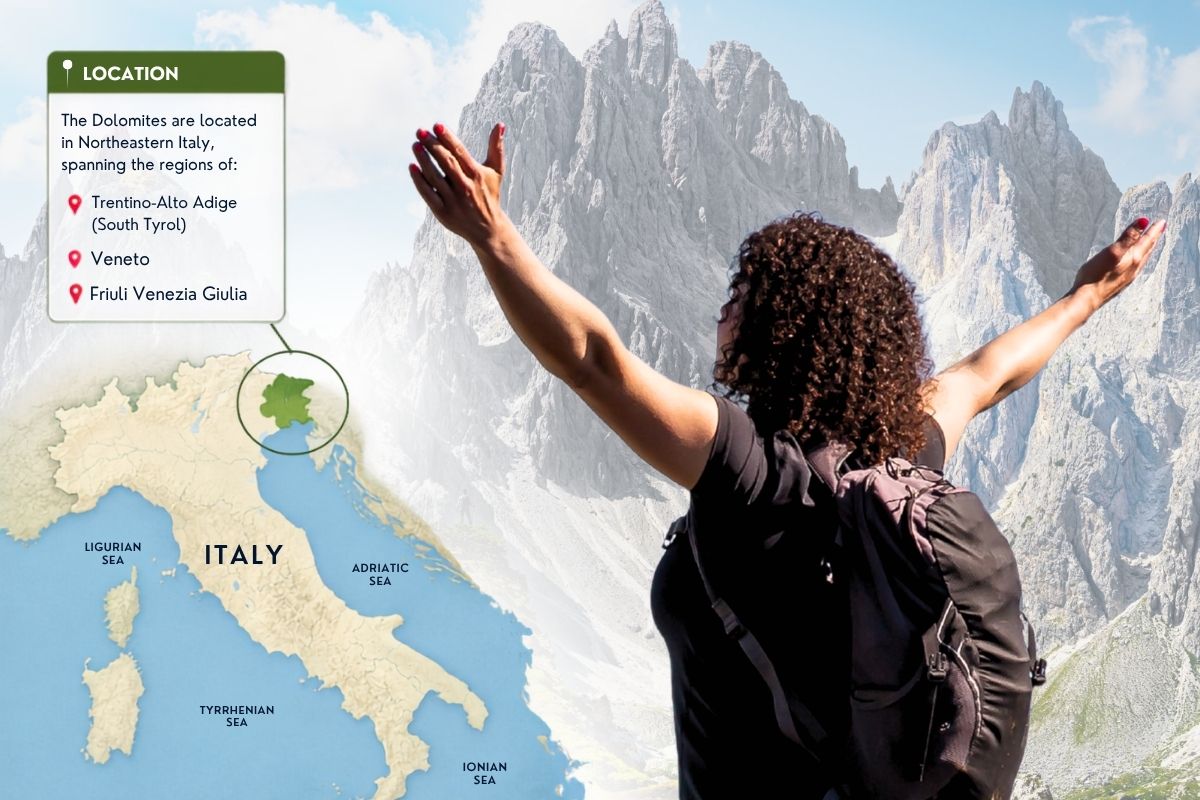
Ask ten people where the Dolomites actually are, and you’ll get ten different vague gestures toward “the Alps somewhere.” So here’s the real answer: they sit in the far northeast corner of Italy, right up against the Austrian border. Three regions share them – Veneto claims the largest chunk, Trentino-Alto Adige comes next (itself split into Trentino and South Tyrol), and Friuli-Venezia Giulia gets the smallest, quietest slice of the range. If you’re staring at a Dolomites Italy map right now trying to make sense of it, that confusion is normal. This is not a range with clean edges. It’s closer to a jigsaw puzzle that five different Italian provinces argue over.
The Provinces Nobody Mentions First
Everyone talks about the regions, but provinces are where the real geography lives. Belluno, sitting in Veneto, owns nearly half the range on its own, something like 46 per cent. Bolzano takes about a quarter. Trento, Pordenone, and Udine split what’s left.
That matters more than it sounds like it should, because provinces decide things like road signage, local dialect, even what’s on the dinner menu. Cross from Belluno into Bolzano and the signs instantly switch to a strict bilingual format in both Italian and German – and if you venture deep into the central valleys, you’ll even see a third language called Ladin. It happens fast, and it catches first-time visitors off guard every single time.
The whole range runs about 250 kilometres end to end and 100 kilometres across. That’s not small. Google Maps will lie to you about how quickly you can get from one side to the other, because mountain roads don’t work like highways.
Also Read – Mediterranean Sea, Sicily, Italy is Beyond the Postcard Views
Cortina, South Tyrol, and the Quiet Corner Nobody Talks About
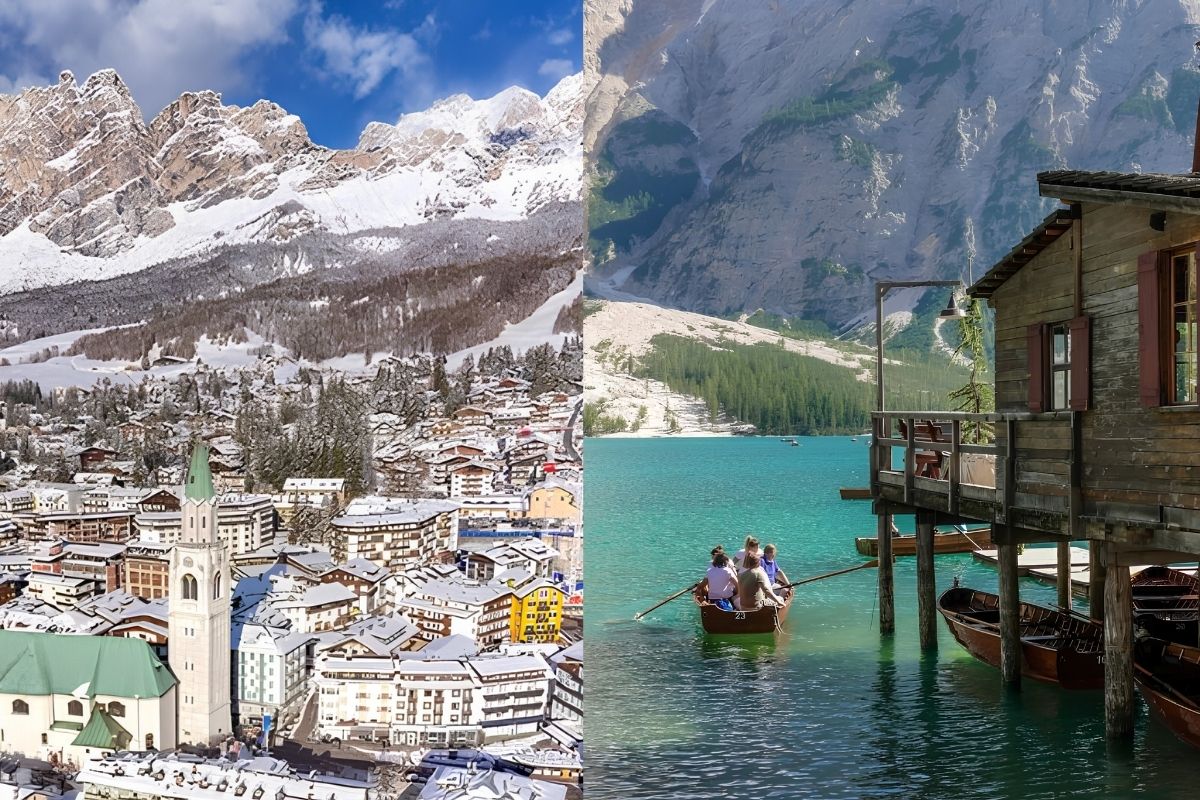
Veneto’s got Cortina d’Ampezzo, basically Italian mountain glamour in town form. It shared hosting duties for the 2026 Winter Olympics alongside Milan, which says plenty about its status. Odds are decent that postcard shot of the Dolomites you’ve seen somewhere came from right around here.
Cross into South Tyrol and everything changes. German gets spoken as much as Italian, sometimes Ladin too – an old language that quietly survived in these valleys long after everywhere else moved on. Bolzano runs things as the provincial capital, and it’s got this permanent identity crisis, Austrian or Italian, never quite settling, which is honestly the best thing about it. Val Gardena and Alta Badia sit nearby, two valleys that pull huge crowds every season and anchor the whole area.
Then there’s Friuli-Venezia Giulia, which barely gets mentioned in travel guides. It holds the Friulian Dolomites, a smaller and rougher edge of the range. Fewer crowds, fewer amenities, and honestly, that’s the appeal for people tired of fighting for parking at Tre Cime.
What Actually Draws the Line
Rivers do the real boundary work here, not politics.
| Boundary | Direction | What It Marks |
| Adige Valley | West | Where the main range starts |
| Piave Valley | East | The major divide before the wilder Friulian peaks |
| Puster Valley (Val Pusteria) | North | The line toward Austria |
| Sugana Valley (Valsugana) | South | Where the mountains drop toward flatter land |
There’s also an old habit of carving the whole range into Western and Eastern Dolomites, with the line running through Val Badia, over the Campolongo Pass, and down into the Cordevole Valley. Useful if you’re trying to work out which side suits you – the Western half leans heavily German (South Tyrol), while the Eastern half stays traditionally Italian (Veneto).
Also Read – Why Italy’s Forgotten Villages
Why This Geography Actually Ruins Trip Plans?
Most Dolomites Italy travel guides skip this part entirely. Here’s the part nobody warns you about. Venice sits about 160 kilometres from the range and is the closest airport with real international traffic. Innsbruck, just over the Austrian border, works too. Verona and Treviso have smaller regional options if the timing lines up.
But distance on a map means nothing once you’re actually driving. A stretch that looks like forty minutes on paper can eat up an hour and a half in reality, because the roads climb, twist back on themselves, and stop dead at passes where you’ll want to pull over anyway just to stare at what’s in front of you. Anyone who plans a Dolomites trip like it’s flat countryside ends up frustrated by day two.
The Peaks Worth Knowing Before You Go
Marmolada beats everything else for height, 3,343 metres, sitting right on the line between Trentino and Veneto. Locals call it the Queen of the Dolomites, and the first time you see it, that name stops sounding like marketing. Tre Cime di Lavaredo you’ve almost certainly seen before, even without knowing the name – three sharp rock towers near the South Tyrol border that show up on every other postcard and somehow still don’t disappoint in person.
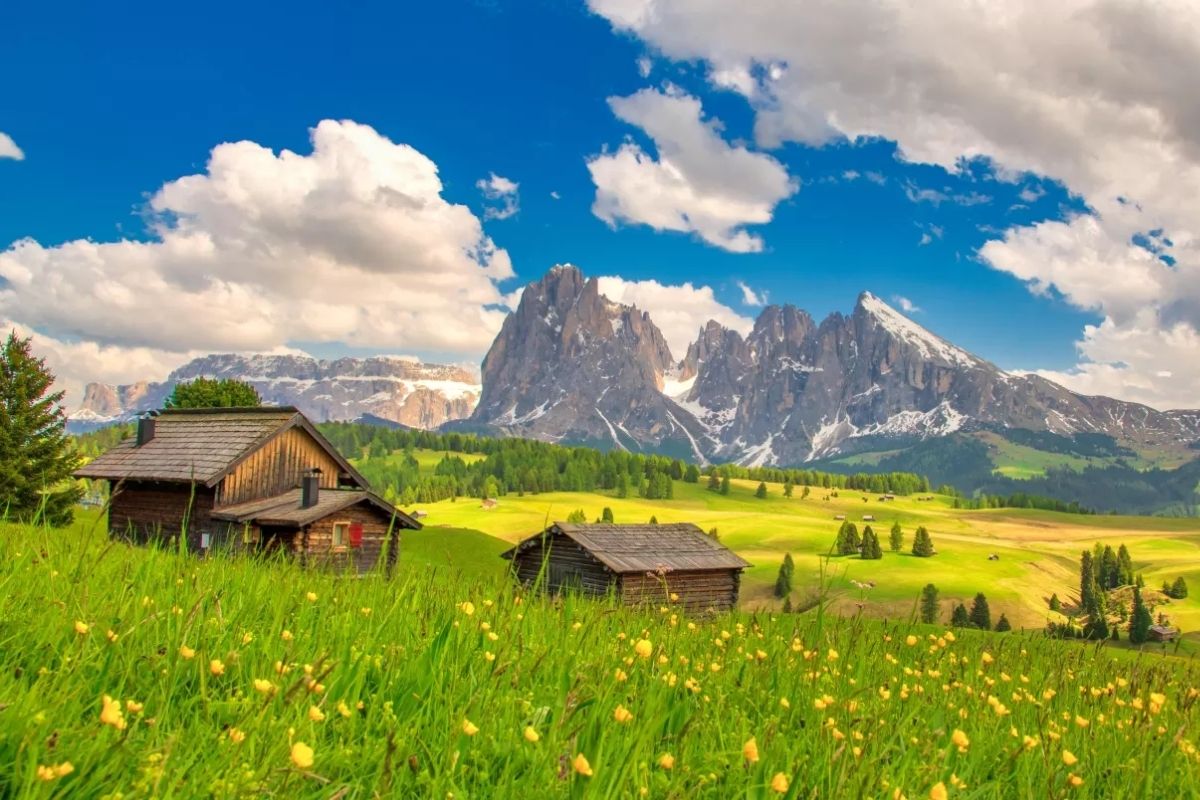
Sassolungo looms over Val Gardena looking like it wandered in from a fantasy film set. Civetta pulls in the serious climbers, mostly because of a northwest face that’s turned into something like a rite of passage in Italian mountaineering.
Also Read – Italy’s Biggest Cultural Events
Why the Rock Turns Pink at Sunset?
This bit still catches people off guard the first time they see it. The pale rock that gives the range both its name and its look was first properly studied back in the late 1700s by a French geologist, Déodat Gratet de Dolomieu. Then dusk hits, and something odd happens – the peaks slide from white to pink to violet, almost like they’re lit from inside. Locals just call it enrosadira. Science puts it down to calcium and magnesium in the rock reacting to low-angle light, but standing there watching it happen, the explanation kind of stops mattering.
FAQs
Where are the Dolomites located in Italy?
Northeastern Italy, spread across three regions – Veneto, Trentino-Alto Adige, and Friuli-Venezia Giulia – right up against the Austrian border.
What’s the closest major city to the Dolomites?
Venice, about 160km out, has the best flight connections if you’re coming from abroad. Bolzano and Belluno sit right at the mountain edges themselves, so they’re your practical bases once you’re closer in.
Are the Dolomites part of the Alps?
Yes – specifically the Southern Limestone Alps, which is its own distinct subgroup within the larger Alpine system.
How many provinces cover the Dolomites?
Five: Belluno, Bolzano, Trento, Udine, and Pordenone.
What’s the highest peak in the Dolomites?
Marmolada, 3,343 metres, sitting right on the border between Trentino and Veneto.
Do the Dolomites touch Austria?
The famous peaks you see in every travel guide are entirely on Italian soil. That said, geologically there’s a smaller offshoot – the Lienz Dolomites – that does cross into Austria’s East Tyrol. That closeness is probably why you’ll notice a strong Austrian influence running through the main Italian range too.
Sources and References
- Dolomites – Wikipedia
- Dolomites | Location, Mountains, Map, and Facts – Britannica
- The Dolomites – UNESCO World Heritage Centre
- Where are the Dolomites – Location in Italy explained
- The Dolomites: The UNESCO Heritage Mountain Group – Italia.it (official Italian tourism board)
- Travelling in the Dolomites – Italia.it