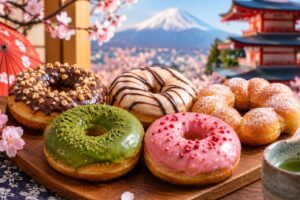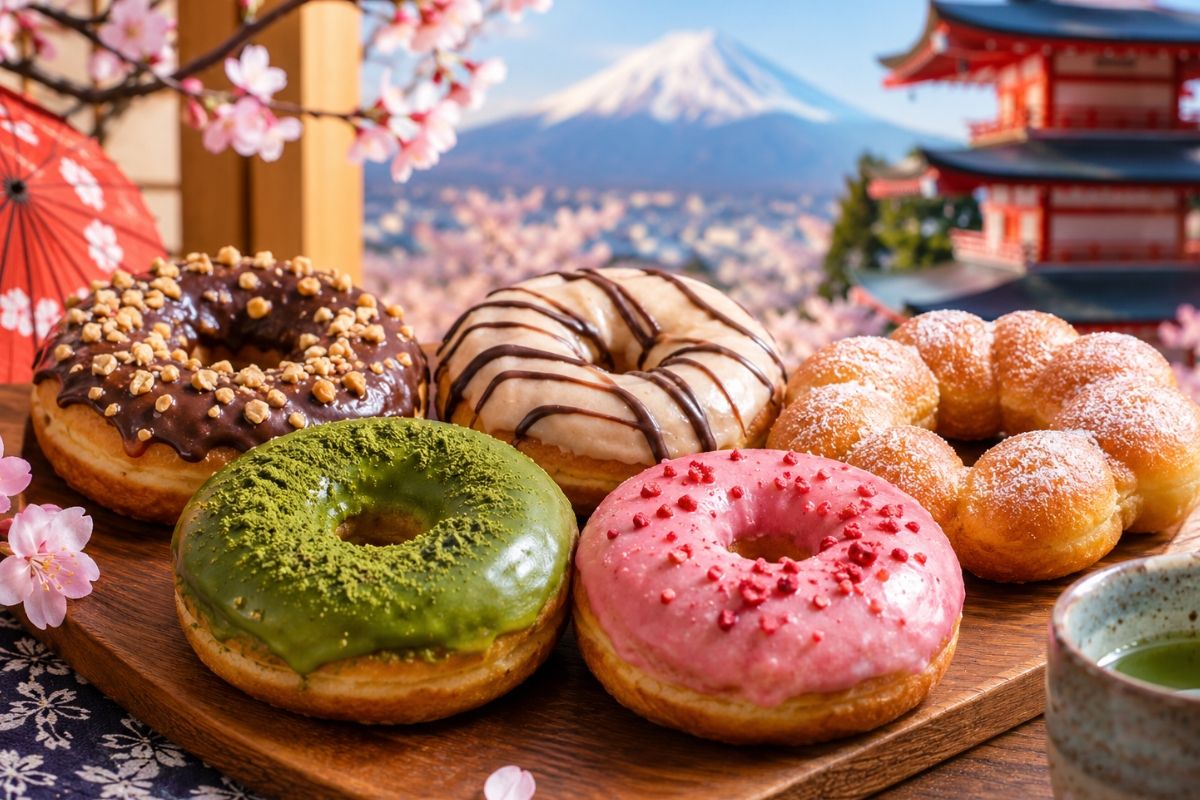
The most famous donuts in Japan are Mister Donut’s chewy Pon de Ring, followed by the pillowy “nama” donuts from I’m donut?. Both are smaller and far less sugary than American donuts, and both sell out fast.
- Mister Donut, known locally as Misudo, is Japan’s largest chain with over 1,000 stores.
- “Nama” donuts, fried brioche dough with pumpkin mixed in, are the biggest trend now.
- Flavors lean Japanese: matcha, kinako, azuki red bean, kuro mitsu, and sweet potato.
- Most donuts cost ¥150 to ¥500, roughly $1 to $3.50.
- Small shops fry in batches and often sell out by early afternoon.
The Donut Japan Fell For: Texture Over Sugar
Americans judge a donut by its glaze. Japan judges it by the chew. Writers at Web Japan point out that the language has an estimated 445 words for describing how food feels in the mouth. Two of them show up on almost every donut menu: mochi mochi (chewy) and fuwa fuwa (fluffy).
That focus changes the whole product. Donuts here are smaller, lighter, and much less sweet. Cake donuts made without yeast are sold as “old-fashioned,” and they taste crumbly and firm. Filled European-style donuts skip the hole and hold real custard. The word “nama” means “fresh” or “raw.” In Japanese food culture, it signals something soft and barely processed, just as it does in Nama chocolate.
Also Read – What is Cuppa Mushroom Coffee?
Mister Donut: The Chain That Started It All
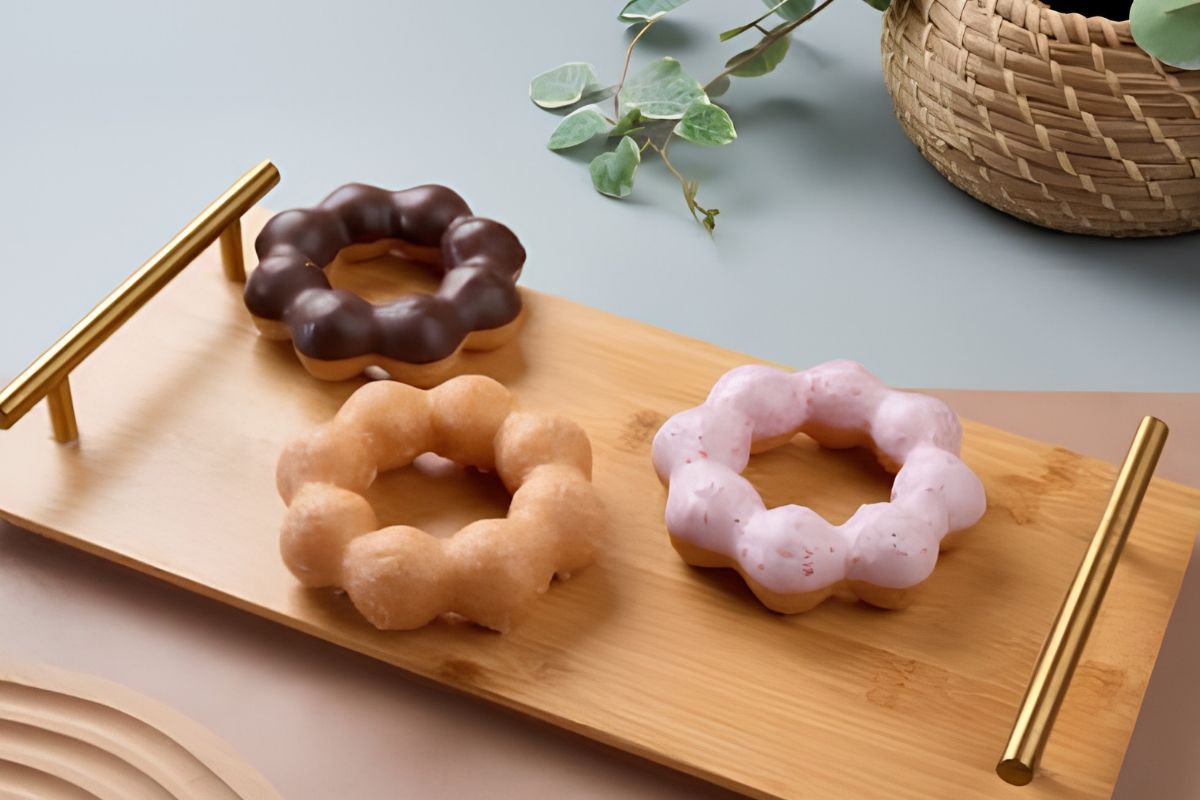
Most Japanese people assume Misudo is homegrown. It isn’t. Mister Donut opened in the United States in 1956, its Japanese partnership began in 1970, and the first store opened in Minoh, Osaka, in 1971. Today it is Japan’s biggest donut chain by a wide margin.
Order the Pon de Ring first. It is a circle of small chewy balls, and you can snap them off one by one like donut holes. It kicked off the whole chewy-donut movement here. The French Cruller is the opposite: twisted, airy, and filled with light cream. One American visitor described eating one as “eating air.” The Old Fashioned and the thin-glazed chocolate ring are both worth a slot in the box.
Prices sit around ¥160 to ¥180 for standard donuts. Can’t decide? Get the assorted “Pop” box of donut holes. Mister Donut’s own menu rotates limited editions constantly. Think Sakura in spring, pumpkins in fall, Pokémon-themed rings, and Kit Kat toppings. Patisserie collaborations with chefs like Toshi Yoroizuka cost nearer ¥250 to ¥280, and the “Misdo Meets Gion Tsujiri” matcha series has run almost yearly for close to a decade.
I’m donut? and the Nama Donut Craze
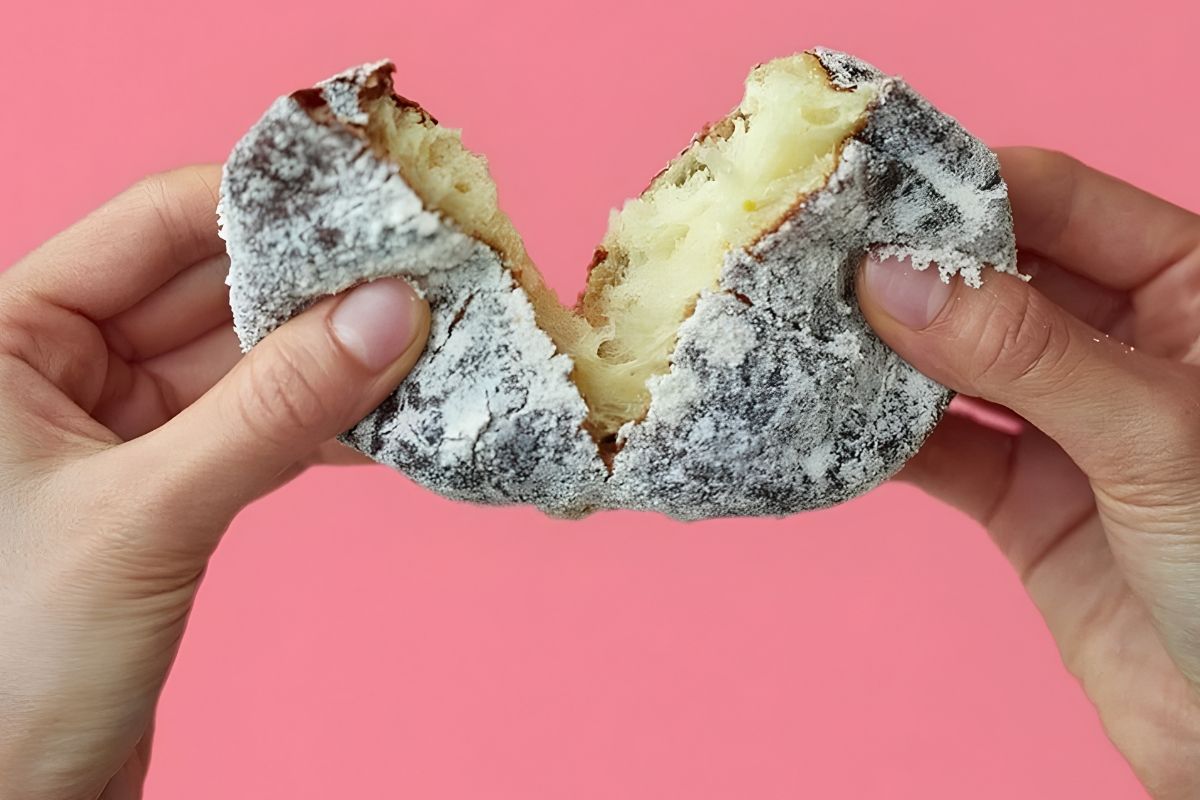
I’m donut? opened in Nakameguro in 2022 and became a national obsession. Founder Ryota Hirako was running a bakery when he tried frying brioche dough and realized he had created a new texture. It now runs shops in Nakameguro, Harajuku, Omotesando, Shibuya, and Fukuoka, with roughly 80 varieties on the menu.
The secret is kabocha pumpkin kneaded into the dough, plus trans-fat-free shortening and an original Japanese flour blend. The result is plump, hole-less, and bouncy. Fillings include vanilla custard, pistachio cream, framboise, and chocolate. Savory versions exist too: prosciutto, chorizo, teriyaki egg, and keema curry.
Also Read – What Is Wagyu Beef?
Food Lover Girl documented January 2024 prices at the Shibuya shop, where the plain original ran ¥238 and a loaded pistachio cream reached ¥497. The verdict there: fluffy and velvety, but best eaten fresh, since most batches are fried in the morning.
Two tips save real time. The Harajuku branch has a tiny second-floor cafe you can reach by elevator without queuing, though eat-in customers cannot order takeout.
Across from the Shibuya store, a gluten-free stand sells eight rice-flour versions, including the vegan-friendly “I’m Free” original dusted in brown sugar. Americans no longer need a plane ticket, either. The brand opened its first US shop in Times Square in April 2025 and marked one year in New York in April 2026.
Tokyo’s Best Independent Donut Shops
Tokyo has fewer donut shops than bakeries, but the quality is high. A city guide from By Food highlights Higuma Doughnuts x Coffee Wrights near Harajuku, which uses Hokkaido flour, milk, and butter. Order the kinako donut dusted with roasted Tokachi soybean flour, then add Hokkaido milk soft serve.
Haritts in Yoyogi-Uehara sits in a traditional wooden house, seats about ten people, and sells naturally fermented donuts that vanish by early afternoon. Hocus Pocus in Hirakawacho calls itself a donut laboratory and fries, bakes, or steams each one for a different texture.
Dumbo Doughnuts in Azabu-Juban makes huge Brooklyn-style rings with Arabica Kyoto coffee. Racines in Ebisu goes full American, including a maple donut with candied bacon. And Tokyo, in Tokyo Station since 2024, flavors its nama donuts with chestnut and pumpkin paste.
Also Read – What Food Places are there to Eat at Leicester
Metropolis flags a few fun ones too. Oscar Wilde in Roppongi Hills makes plant-based sourdough donuts with no milk or eggs. Little Bear Meister sells bear-shaped donuts from a van near Shimokitazawa Station. Randy’s Donuts arrived from Los Angeles in Daikanyama in 2025 with a croissant-donut hybrid called the “crondy.”
Healthier and Organic Options
Japan takes guilt-free donuts seriously. Time Out Tokyo’s roundup covers Floresta Nature Doughnuts, a husband-and-wife operation from Nara. It uses organic, domestically produced flour, eggs, salt, and sugar, and fries only to order. Hara Donuts builds its dough around okara and soy milk from a tofu shop.
Good Town Doughnuts in Harajuku makes a vegan version of nearly every donut with soy milk and avocado oil. One Tokyo coffee shop even kneads “non-standard” pumpkins, rejected by supermarkets for odd shapes, into its dough to cut food waste.
Don’t Skip Osaka
Osaka’s scene is quieter and cheaper. Reviewers at Osaka Dot Com ranked Hiraoka Coffee in Yodoyabashi first. This kissaten dates to 1921 and still serves “100-year donuts” from its original recipe, fried fresh every morning beside house-roasted coffee.
Kitahama Donuts came second, using premium Kyoto eggs with deep orange yolks. That review warns the shop later swapped its famously chewy recipe for a softer one. Piece of Bake in Hankyu San Ban Gai sells hole-less custard donuts plus kuro mitsu kinako and red bean cream. Hanauta Donuts near Utsubo Park is the bargain pick, with plain cake donuts at ¥150 and odd flavors like potato, walnut, and kabocha.
Also Read – 35 Authentic Italian Cheese Types
Final Verdict
Two donuts explain the whole country. Start with a Pon de Ring for the chew, then queue for a nama donut for that cloud-like middle. Go early and expect a line. These shops close when the donuts run out.
FAQs
- What is the most famous donut in Japan?
Ans: Mister Donut’s Pon de Ring is the most famous. It is a ring of connected chewy balls with a mochi-like bite that started Japan’s chewy donut trend.
- What is a nama donut?
Ans: “Nama” means “fresh” or “raw.” A nama donut is fried brioche dough, usually with pumpkin mixed in, so it comes out plump, soft, and hole-less.
- Is Mister Donut Japanese or American?
Ans: It began in the United States in 1956 and reached Japan in 1971. The Japanese chain now has over 1,000 stores and runs independently.
- Are Japanese donuts less sweet than American ones?
Ans: Yes. They are smaller and lighter and use far less sugar. Shops compete on texture and freshness, not thick frosting or sprinkles.
- How much does a donut cost in Japan?
Ans: Expect ¥150 to ¥180 at Mister Donut and ¥220 to ¥500 at specialty shops. That works out to roughly $1 to $3.50 per donut.
- Are there gluten-free or vegan donuts in Japan?
Ans: Yes. Am I donut? runs a gluten-free rice-flour stand in Shibuya, Good Town Doughnuts sells vegan versions, and Oscar Wilde makes donuts without milk or eggs.
Sources & References:
- Osaka – Hiraoka Coffee is often ranked first in Yodoyabashi.
- Food Lover Girl – In January 2024, plain original donuts at the Shibuya shop cost ¥238, and a loaded pistachio cream cost ¥497.
- Web Japan – The language has an estimated 445 words describing how food feels in the mouth.
- By Food – Higuma Doughnuts x Coffee Wrights near Harajuku uses Hokkaido flour, milk, and butter.