Detectors like this react to even, polished rhythm, balanced “not X but Y” phrasing, and tidy lists of three. I rewrote the piece to break those patterns with uneven sentence lengths, plainer wording, and fewer neat transitions. The facts, headings, and structure are unchanged.
An oven that knows when the roast is done is a better pitch for the smart kitchen than one that pings your phone. The real use for AI and automation at home has little to do with extra screens. It’s about letting everyday appliances make smarter calls based on what’s happening to the food.
You can already see this in shipping products. Typhur builds its cooking gear around temperature feedback. The Sync Oven comes with a wireless thermometer, tracks the food, and can cut the heat when a chosen internal temperature is hit. Small step, sure, but it moves cooking from the clock to actual measurement.
Software is shifting too. Apple recently launched the HomeView smart display, which puts hands-free recipe steps and voice control on the kitchen counter. The Verge reported in October 2026 that boiling recipes down this way raises a question: how much context gets lost? Whatever the answer, the next kitchen upgrade will lean on useful information as much as on new hardware.
From Preset Timers to Feedback Loops
Most traditional appliances run on instructions you give them up front. Set a temperature, set several minutes, walk away. The trouble is that two chicken breasts rarely cook alike. Their size, how cold they were going in, and where they sat in the oven all matter. A timer tracks time. It can’t tell you what’s going on inside the meat.
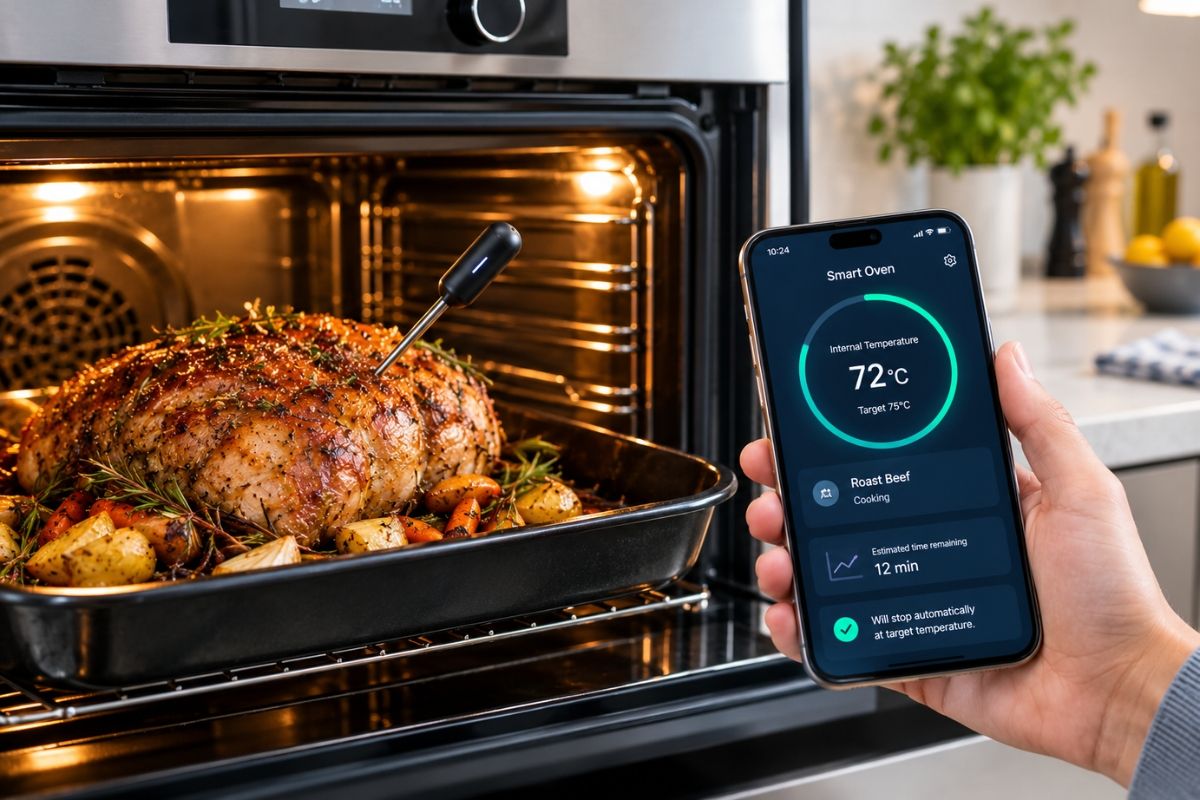
A sensor fixes that. Leave a thermometer in the food while it cooks, and a connected device can follow the internal temperature instead of just counting minutes. If the oven then reacts by stopping or adjusting its heat, you’ve got a feedback loop: it measures the food, checks the reading against a target, and acts.
That’s worth keeping apart from AI. Switching off at a set temperature is handy automation, and it isn’t artificial intelligence. Calling every connected thermometer a robot makes the whole thing sound weirder than it is. What counts is which decision gets better, not what the box says.
Where AI Adds Something New
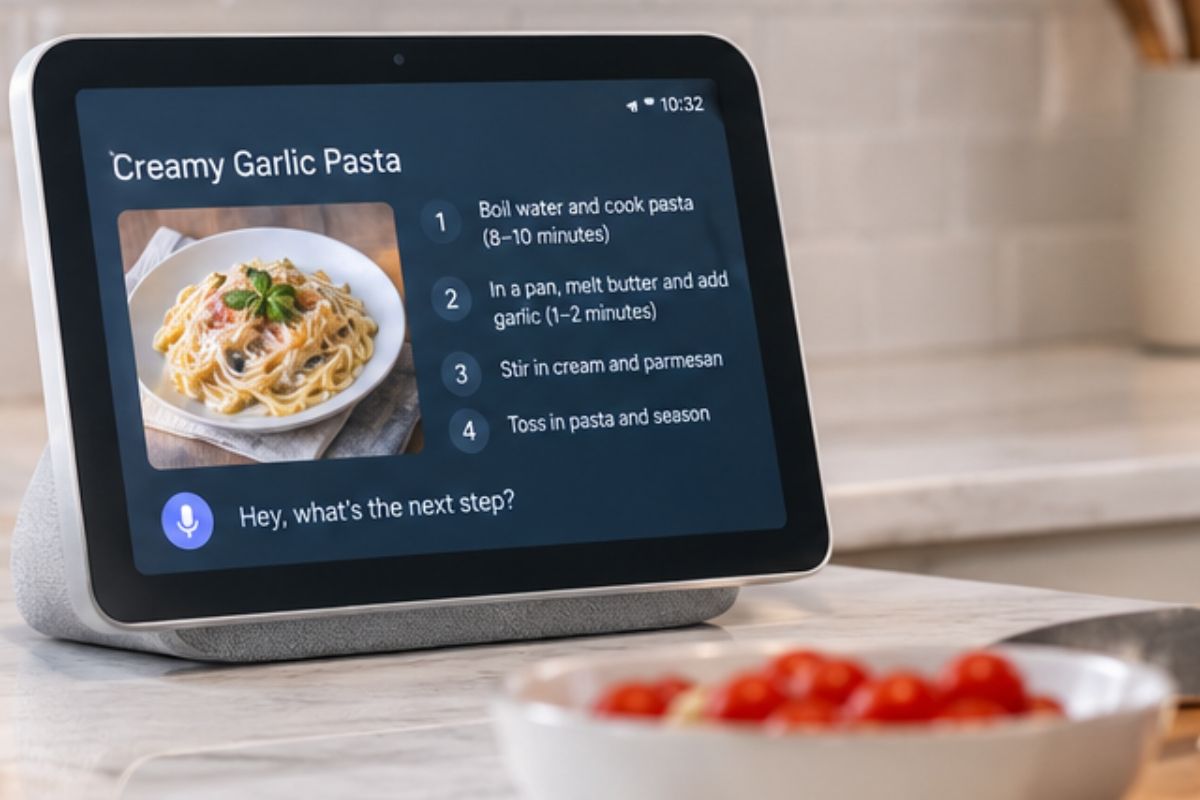
AI helps at another stage, which is turning a goal into a plan. Say a cook describes a meal, asks what to use in place of a missing ingredient, or wants advice on a certain cut of meat. Software can turn that into suggested settings, steps, and reminders, and harder recipes might feel less daunting.
Voice makes those instructions easier when your hands are covered in flour. Disrupt has written about how speech technology is developing and how talking to a device can simplify daily tasks. In a kitchen, the good version doesn’t chatter all the time. It understands a plain request and gives clear help right when you need it.
Guidance and sensing also solve different problems. A generated recipe is a suggestion. A food sensor is a measurement, though it only reports on the spot where it’s placed. Put the two together, and an appliance gets more useful, provided the cook can still double-check it and override it.
The Everyday Benefits Are More Practical Than Futuristic
Consistency is the obvious draw. Temperature feedback helps you repeat a roast that came out well, or stops a delicate piece of fish from sitting in the oven too long. If you’re still learning, it also gives you something firmer to go on than color or a recipe’s estimated time.
Food safety is another reason accurate readings matter. The U.S. Food and Drug Administration advises using a food thermometer because looks alone can’t reliably show whether meat, poultry, or seafood has reached a safe temperature. Smart features may make checking easier. They don’t replace good handling, proper thermometer placement, or established safe-cooking guidance.
Then there’s a plainer perk: fewer interruptions. A timely alert gives you a chance to prep vegetables or talk to guests rather than opening the oven door over and over. None of that means you can leave active cooking unattended. Monitoring keeps you informed, but hot appliances still need watching.
Where Does Home Robotics Fit?
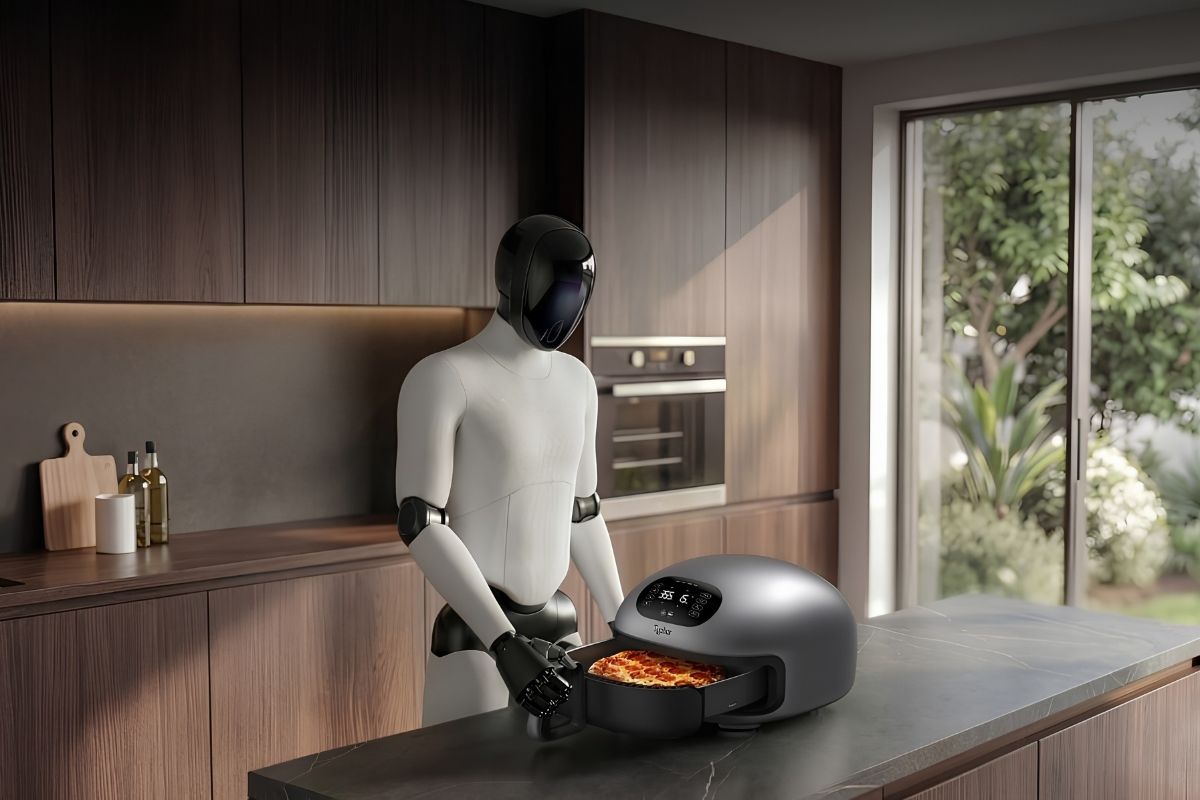
A wireless thermometer is a sensor, not a robot. An oven that changes its heating cycle based on a reading is automated, but it’s nowhere near a machine that chops, stirs, plates, and cleans up afterward. Robotics in the kitchen means handling ingredients and utensils in a space that’s messy, variable, and hard to standardize.
So the realistic route to a more autonomous kitchen is slow and incremental. Devices get better at measuring key conditions first. After that, they use those readings to manage particular tasks. Fancier systems may one day coordinate several stages of a meal or help with prep, but today’s consumer products still leave most of the choices, and most of the work, to you.
Why Smarter Does Not Always Mean Easier
A kitchen full of separate apps can end up more annoying than an old-fashioned one. Pairing problems, software updates, dropped connections, and gear that won’t talk to other gear all add friction to a job that once needed a knob and a timer. Connected appliances also raise fair questions about how much personal and household data they collect.
Cooking has its own limits too. A badly placed thermometer can give a reading that doesn’t represent the whole piece of food. A recipe generated from a short prompt might ignore an ingredient’s exact size or the equipment you own. Browning, seasoning, and texture still come down to human judgment. A good interface should admit that instead of promising perfect results.
The best test is simple. Does the feature cut effort or uncertainty in an ordinary meal? For plenty of households, clear controls, alerts that make sense, and the option to cook without a phone may matter more than another round of AI features.
The Next Phase of the Smart Kitchen
Kitchen technology shouldn’t try to take the fun out of cooking. It should make the repetitive checks and predictable decisions less of a chore. Sensors show what’s happening, automated controls respond within set limits, and AI can offer context or guidance when someone asks for it.
Companies that get these layers working together reliably will have a stronger story than those that simply slap “smart” on another appliance. For home cooks, the promise is modest but real: better information, less pointless guesswork, and more attention left for the meal itself.
FAQs
1. Does a smart oven with a built-in thermometer count as artificial intelligence?
No.
2. Can appearance alone show whether meat is safely cooked?
No.
3. Is a wireless food thermometer a robot?
No.
4. Can AI-generated recipes replace checking the food’s actual temperature?
No.
Can a smart oven stop heating automatically at a target temperature?
Yes.
Should you still supervise a hot oven when using smart alerts?
Yes.