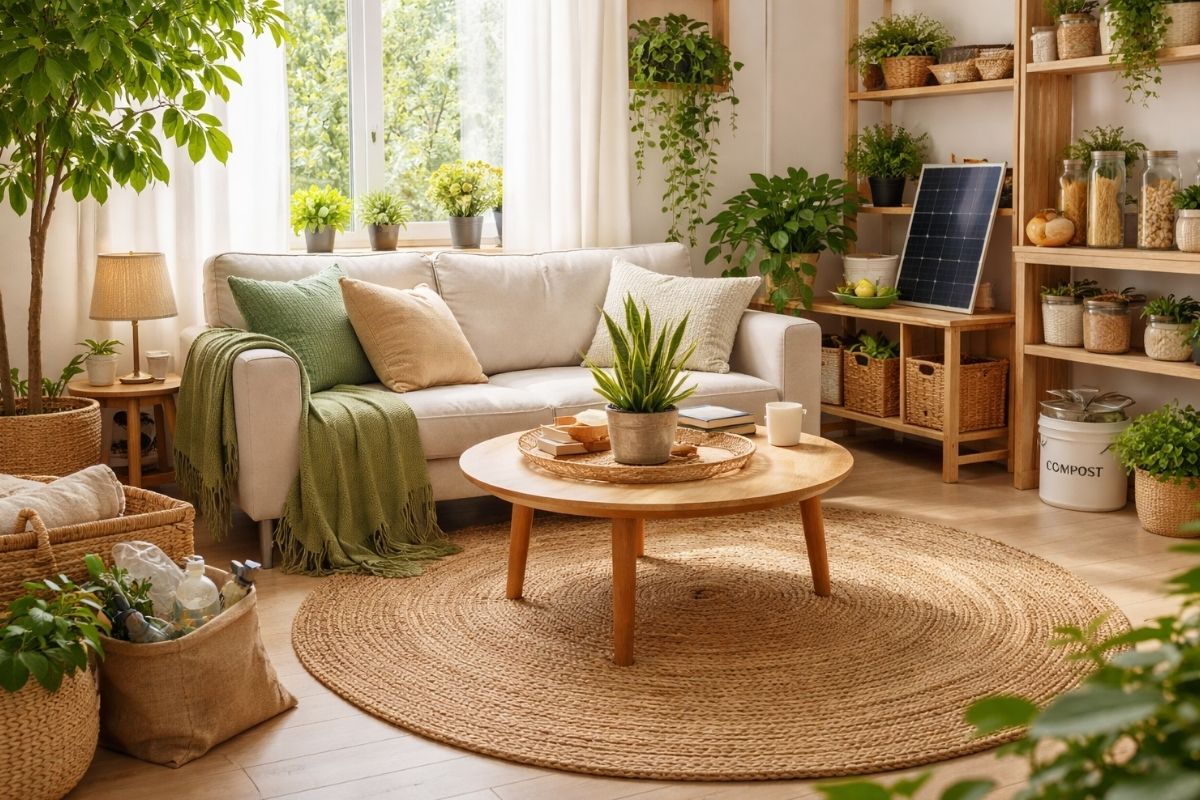
I used to think that building an eco-friendly home required a massive bank account and a high-tech engineering degree. Honestly, the marketing makes it seem that way. They want you to buy $40,000 solar arrays and smart windows that cost more than a used car. But after a decade of trying to shrink my own footprint while living on a pretty tight budget, I’ve realized most of that is just noise. Real sustainability isn’t about what you can buy. It’s about how you live and what you stop wasting.
A couple of years ago, I spent an entire weekend chasing drafts around my drafty old house with just a stick of incense. Whenever the smoke flickered, I would find a hole where money and heat was literally escaping. That $5 tube of caulk did more for my energy bill than any “smart” gadget ever did. So it was that as we reached the middle of 2026, the trend finally caught up to this reality. They are opting out of big, ostentatious renovations and embracing “Micro-Sustainability”. It is about the small, nitty-gritty victories. And honestly? It’s about time.
Stop the Bleeding: The “Fabric-First” Secret
Before you even think about fancy tech, you’ve got to fix the shell of your house. We call this the “fabric-first” approach. If your home has air gaps, a high-efficiency heater is simply working in overdrive to heat the neighborhood.
This doesn’t require a professional thermal camera. Just wait for a windy day, take a candle, and walk around your window frames. If the flame is flickering, you’re burning money.
Weatherstripping is cheap. Like, “less than a lunch out” cheap. I’ve seen homeowners cut their heating loss by roughly 20% just by sealing the gaps under their doors with DIY “draft dodgers”—those long fabric tubes filled with rice or dried beans. It’s old-school, sure.
But it works. Another free hack? Use your curtains like a pro. In summer, keep those light-colored drapes closed in the day to reflect the sun’s heat back outside. In winter, open curtains to let in the sun during the day, then close heavy drapes at night to keep warmth inside. It costs literally nothing and has a huge impact on your comfort level.
Also Read – VIP Client List of Giorgio Armani
The Myth of the “Green” Price Tag
I have talked to many people who feel guilty for not being able to afford a Tesla or a full roof of solar panels. Look, don’t sweat it. According to recent data from EcoWatch, some of the most effective upgrades are the ones you barely notice.
Converting to LEDs is the low-hanging fruit.” They use roughly 90 percent less energy than the old bulbs we grew up with. And if you haven’t swapped them all already, you’re practically burning money every time you flick a switch.
Then there’s the “phantom load.” My coffee maker and toaster used to sit there all day, glowing with tiny LED lights, sipping power for no reason. I started using a simple power strip to kill the power to the whole kitchen counter with one click when I leave for work. It seems tiny, but those phantom loads can account for about 10% of a typical energy bill. When you add it up over a year, that’s a nice dinner or a few tanks of gas back in your pocket.
Living by the Sun (Even Without Panels)

One of the coolest things happening in 2026 is “load shifting.” Because of how utility companies are changing their rates, electricity is often cheaper and greener when the sun is hitting the grid hard. You don’t need your own panels to take advantage of this.
I started setting my dishwasher and laundry to run at noon instead of 8 PM. By aligning my heaviest chores with peak solar hours on the local grid, I’m using the cleanest energy available. It’s a habit shift, not a financial one.
The Kitchen Revolution: Rags, Vinegar, and Scraps
We generate an obscene amount of trash. I would tear through a roll of paper towels every three days. Then I realized I was spending money to buy trash. I collected a pile of old, soft t-shirts that were headed for the bin, cut them into squares, and stored them in a basket on the counter. Now I use cloth rags for everything. They go in the washer, and I haven’t bought paper towels for two years. That’s forking over $250 a year less right there.
And how about cleaning supplies? The grocery store aisle “green” is a scam. Most of those bottles are 90% water and 10% fragrance. I store a gallon of white vinegar and a giant sack of baking soda under my sink.
Combine vinegar with water and a splash of lemon, and you’ve got yourself a glass and counter cleaner that works. It smells like salad for 10 minutes, and then it doesn’t smell like anything. Toxins are zero, plastic waste is zero, and the cost runs in pennies.
Also Read – 8 Secret Italian Towns You Need to See in 2026
Water: Stop Flushing Cash Down the Drain
Water rates aren’t getting any lower. A low-flow showerhead is probably the best $20 you’ll ever spend on an eco-friendly home. You can reduce your water usage by 40% without it feeling like you’re being rained on by a leaky faucet.
I’ve also picked up what I call the “greywater trick.” While I’m waiting for the shower to get hot, I catch that clean, cold water in a bucket. Or when I’m rinsing veggies for dinner, I do it over a bowl. That water goes straight into my houseplants. They love it, and I’m not paying to treat and pump “new” water just to keep my ferns alive. It’s about seeing the value in what we usually just let disappear down the drain.
Why “New” is Often the Enemy of “Green”
The most sustainable commodity in existence is the one that already exists. “Fast decor” is just as destructive as fast fashion. If you are in the market for a new coffee table, do not buy a lame one made of particle board and plastic veneer that will fall apart in three years. Try a local thrift store or check out a “Buy Nothing” group on social media.

Last summer, I came across a solid oak table that was in awful shape: scratched, stained, the works. Twenty minutes’ worth of sanding and a $15 tin of low-VOC (volatile organic compound) stain made it look better than anything I could have picked up at a big-box store. Upcycling isn’t a pastime for Pinterest; it’s a means of keeping high-quality materials out of the landfill. And your home actually has some personality instead of resembling a showroom.
Also Read – What to Do in Bologna Italy
The Low-Cost “Green” Cheat Sheet (2026 Estimates)
I’ve crunched the numbers based on my own utility bills and current 2026 market trends. Here’s how the “Quiet Strategy” for your home actually pays off.
| Project | Upfront Cost | Yearly Savings (Est.) | Impact Level |
| DIY Air Sealing (Caulk/Draft Dodgers) | $10 – $30 | $150 – $300 | High (Stops the “leaks”) |
| LED Bulb Swap (Whole House) | $40 – $60 | $225 | Medium (Set it and forget it) |
| Low-Flow Showerheads | $20 | $100+ (Water & Heat) | Medium (Saves water + energy) |
| Power Strip “Kill Switch” | $15 | $50 – $80 | Low (Kills “Phantom” loads) |
| The “Rags over Paper” Switch | $0 (Upcycled) | $200 – $300 | High (Zero-waste win) |
A Quick Note on 2026 Incentives
Before you spend a dime, check the latest updates on the 2026 Federal Green Home Tax Credits. Many states have just rolled out new “point-of-sale” rebates for things like heat pump water heaters and induction stoves. This means the “upfront cost” in the table above could be even lower if you decide to go for bigger appliances later this year.
Common Questions About Budget Green Living
Does it really matter if I don’t have solar panels?
Absolutely. Efficiency is actually more important than generation. A tight, well-insulated home that uses very little energy is much greener than a leaky home covered in solar panels. Focus on the “needing less” part first.
Are “natural” products always better?
Not necessarily. “Natural” is a marketing term, not a legal one. Seek out third-party certifications like Energy Star or FSC-certified wood. If a label calls something “eco-safe” but doesn’t clarify exactly what makes it so, be skeptical.
What’s the one thing I should do today?
Check your water heater. Most of them are factory-set to 140°F (60°C). Lowering it to 120 degrees F (49 degrees C) provides plenty of heat for showers and washing dishes, and it avoids “standby” heat loss. It takes two minutes and saves you money immediately.
The Big Picture: It’s a Journey, Not a Project
The wildest part about all this is how much better my life feels now. My house is quieter because it’s sealed up well. It’s less messy because I’m not bringing in jugs of plastic chemicals once a week. And it’s definitely better for my bank account.
We think of being “eco-friendly” as some sort of sacrifice that we are going without to save the earth. But honestly? It feels like I am taking charge. I’m not a victim of escalating utility bills or “planned obsolescence”. I’m living in a space that I’ve created to be efficient and healthy.
So, don’t wait until you can afford to pay the $10,000 for that upgrade. Grab a candle, find your drafts and go from there. The planet doesn’t need a handful of people doing “zero waste” perfectly; it needs millions of us doing it imperfectly, one rag and one LED bulb at a time. This is your home and your budget. Why not make them both work a little harder for you?
Sources & References
- Practical Home Upgrades: For a deep dive into the science behind sealing air leaks and cost-effective energy shifts, check out EcoWatch’s 2026 Guide to Sustainable Home Improvements.
- Daily Habit Shifts: To find a list of easy-to-implement resolutions for reducing waste in a modern household, visit The Better India’s Easy Sustainability Resolutions.
- Energy Efficiency Data: The Department of Energy provides the benchmarks for LED savings and thermal loss prevention at Energy.gov – Lighting Choices.
- Green Cleaning Science: For the chemical breakdown of why vinegar and baking soda work as effective disinfectants, refer to the Environmental Working Group’s Guide to Healthy Cleaning.
- Sustainable Sourcing Trends: Read about the move toward hyper-local furniture and upcycling in the 2026 market report by Good Energy – Sustainable Home Trends.