The first time I truly understood how much people care about blood pressure wasn’t in a lab or a lecture. It was in a crowded pharmacy line, the kind that smells vaguely of hand sanitiser and seasonal cough medicine. The man in front of me was closely examining the reverse side of a box of garlic supplements, as if his life relied on it. He looked up at the pharmacist and asked, quietly, almost embarrassed, “Does this actually work… or is it just a gimmick?”
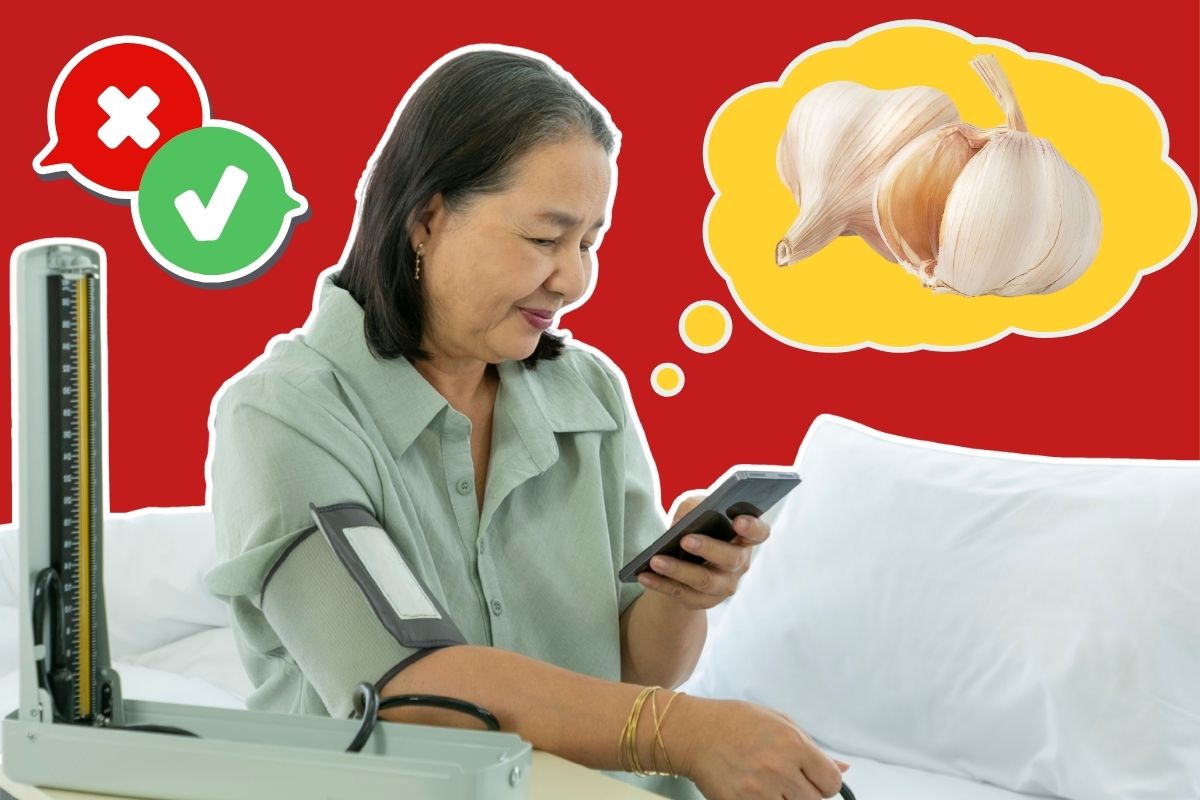
That question comes up a lot, especially in the UK, where blood pressure checks are almost a cultural ritual once you hit a certain age. Someone’s always got a cuff at home, and someone’s always been told to “keep an eye on it.” And when the numbers creep up, people go hunting for something they can do today. They don’t wait for six months to take action. Today.
Garlic ends up in the middle of that hunt because it feels familiar. It’s not exotic. It’s in the fridge, in the curry or in the roast. And it’s been talked about as “good for the heart” for ages.
So, is garlic good for BP? Yes, it can help a bit, especially for people who already have high blood pressure. But it’s not a magic lever you pull, and suddenly your readings behave. The effect is usually modest; it takes time, and it depends on the form and dose. The useful part is knowing what garlic can realistically do and what it can’t. That’s where most people get tripped up.
How Garlic Helps Blood Vessels Relax
When people talk about garlic and blood pressure, they’re usually talking about its sulphur compounds. One that gets mentioned a lot is allicin. Here’s the thing, though: allicin isn’t sitting there in a whole clove waiting politely. It forms when garlic is chopped or crushed, because that action brings different compounds together.
Why does that matter for BP? Because several lines of research suggest garlic’s active compounds can help blood vessels relax, which makes it easier for blood to flow. Some mechanistic research points to pathways involving nitric oxide and hydrogen sulphide signalling, both linked with blood vessel function.
A review in Nutrients discussed these vasodilation pathways in the context of garlic’s compounds.
Now, that doesn’t mean chewing a clove guarantees anything. It just means there’s a plausible biological reason garlic might nudge blood pressure down in some people.
Also Read – Why Gen Z Feels More Stressed Than Ever
Understanding the Limits of Garlic for BP
If you want the most honest summary, it’s this: garlic supplements tend to show clearer blood pressure effects than “normal cooking garlic”, because studies often use standardised doses.
A 2025 meta-analysis in Frontiers in Nutrition that focused on longer-term garlic interventions found a statistically significant reduction in systolic and diastolic blood pressure overall, but the average drop wasn’t massive. It also flagged that benefits may be more noticeable in certain groups and that side effects like stomach upset matter in real life.
And that’s the key point. Garlic isn’t a replacement for medication, but it may be a helpful extra for some people, alongside the boring basics like less salt, decent sleep, and taking prescribed meds properly.
The British Heart Foundation takes a careful stance too. Their “Ask The Expert” piece notes that there’s some research showing reductions in blood pressure, but it’s largely based on garlic extracts or powders, not a clove or two in dinner.
So, if someone asks me, “Is garlic good for BP?” We’ll say: it can be, especially as a support act. Just don’t cast it as the lead singer.
Fresh vs. Aged: Why Clinical Research Favours Aged Garlic Extract
People often assume fresh is always best. With garlic, it’s a bit more complicated.
Aged garlic extract is a specific supplement form that’s been studied quite a lot for cardiovascular markers, including blood pressure. One reason it comes up in research is that it’s more standardised, so trials can actually compare like with like.
A 2024 systematic review and meta-analysis looking at aged garlic extract reported significant decreases in systolic and diastolic blood pressure in hypertensive patients, particularly at higher daily doses in the studies they included.
That doesn’t mean everyone should run out and buy it. It means if you’re trying to judge evidence, the strongest evidence is usually around specific extracts and doses, not “garlic in general” as a vague idea.
And yes, if you’re cooking with fresh garlic, the way you prep it may matter. Chopping or crushing and letting it sit briefly before heating is often suggested to allow those compounds to form. That’s a food prep tip, not a medical treatment plan.
Also Read – 5 Clear Signs Your Gut Health Is Improving
Garlic As A Salt Cutter
Here’s where garlic shines.
Most people don’t have “too little garlic” as their main issue. They have too much salt and too many ultra-processed meals and not enough predictable routines. Garlic can contribute to the solution, as it enhances the flavour of food without requiring salt.
If you’ve ever attempted to cut back on salt, you know the world can feel bleak in that first week. Food tastes flat. You start eyeing the salt shaker like it’s a friend who moved away. Garlic, herbs, lemon, chilli, and black pepper help you get through that patch.
And lowering salt intake is one of the most evidence-backed dietary changes for blood pressure. Garlic doesn’t have to directly lower BP to be useful. It can help you stick to the stuff that does.
So, even if supplements aren’t your thing, using garlic more often in everyday cooking can still be a smart move for BP, because it supports a lower salt pattern.
How Long Does It Take To Make Any Difference?
This is where people get impatient. Totally understandable.
Most trials that show blood pressure changes don’t run for five days. They tend to run for weeks. It’s common to see study durations in the range of two to three months when researchers look for measurable shifts. The 2025 long-term meta-analysis we mentioned earlier is a good reminder that “longer term” is where garlic interventions are usually assessed.
So if you begin eating garlic today and measure your BP tomorrow morning, hoping for a magic effect, odds are you’ll be disappointed. Blood pressure reacts to sleep, stress, alcohol, pain, caffeine, and even whether you sprinted up the stairs. One good reading doesn’t prove garlic worked, and one bad one doesn’t prove it didn’t.
Honestly, the best way to go is boring but solid: measure accurately, at the same time every day after sitting quietly for a bit, and watch the trend, not the mood swings.
Interactions And Risks
Garlic is food. But concentrated garlic supplements act more like herbal products with veritable effects, and that brings about real interactions.
Garlic has a moderate blood-thinning effect. That’s a very important thing if you are on anticoagulants like warfarin or if you’re taking other medications that affect the risk of bleeding.
The NHS warns that herbal remedies and supplements aren’t tested the same way as medicines, and there isn’t enough information to say they’re all safe with warfarin. Simply put: first, consult with your clinician.
There is also medical literature on garlic and its impact on anticoagulation control and platelet aggregation, which is why clinicians tend to be careful with high-dose supplements near surgery or when someone is taking blood thinners.
Side effects are another real-world issue. Some people get reflux, nausea, or just that lingering garlic burp situation that can haunt you through an entire work meeting. Not deadly, but not pleasant either.
And if you’re pregnant, have a bleeding disorder, or are scheduled for surgery, it’s worth raising garlic supplements specifically, because clinicians often ask about “supplements” in general, and people forget garlic counts.
Also Read – Italian Cures Making a Massive Comeback
Should You Try It?
If blood pressure is already high and you want a sensible, low-drama add-on, garlic might be worth considering. Especially if it helps you cook more at home and lean less on salty convenience food.
But a few guardrails make this safer and more realistic:
- If you’re on blood thinners, don’t self-prescribe garlic supplements. Speak to your GP or pharmacist first.
- If you’re on BP medication, don’t stop it because garlic feels “natural”. Garlic isn’t a substitute for prescribed treatment, and the BHF is clear that the evidence people cite often involves extracts at standardised doses.
- If you do try a supplement, give it time and track your readings properly. And stop if it makes you feel rough.
And if all you want is to get more garlic into your food, brilliant. Chop it, let it sit a few minutes, and toss it into sauces, soups, and roasted veggies. Make it easy. Make it tasty. Consistency beats heroics.
Because the true victory isn’t just discovering one perfect ingredient. It’s establishing a pattern in which your blood pressure is not affected by stress, salt and late nights.
So, circling back to the big question: Is garlic good for BP? For many people, the answer is yes, to a certain extent. For some people, it’s not worth the hassle for a few, risky without medical advice. The trick is being honest about which camp you’re in.
Now, be honest with yourself. Do you want a real helper, or do you hope garlic will suffice so you don’t have to change anything?
Scientific Sources & Clinical Studies
- Frontiers in Nutrition (2025): Meta-analysis on the safety and efficacy of long-term garlic consumption as an adjunctive treatment for hypertension. (Confirmed statistically significant BP reduction in 10+ long-term trials).
- MDPI Nutrients (2024): Garlic and Hypertension: Efficacy, Mechanism of Action, and Clinical Implications. (Comprehensive review of vasodilation, nitric oxide, and ACE-inhibiting pathways).
- PubMed / Prostaglandins & Other Lipid Mediators (2024): Effects of Aged Garlic Extract on blood pressure in hypertensive patients: A systematic review. (Specific data on 1200mg+ daily doses of AGE).
- PMC (National Institutes of Health): Effect of Garlic on Blood Pressure: A Meta-Analysis. (Found average systolic reductions of ~4.4 mmHg in hypertensive groups).
- British Heart Foundation (BHF): High blood pressure – causes, symptoms, and lifestyle tips. (General guidance on salt reduction and heart-healthy dietary changes).
- NHS Medicines Advice: Taking Warfarin with herbal remedies and supplements. (Official warning on supplement-drug interactions).
- Dorset County Hospital (NHS): Diet and Blood Pressure Management. (Recommends fresh garlic as a salt alternative).
This article was last updated on January 19, 2026. All clinical data regarding garlic and hypertension has been cross-referenced with the 2024–2025 Meta-Analysis updates from Frontiers in Nutrition and MDPI.