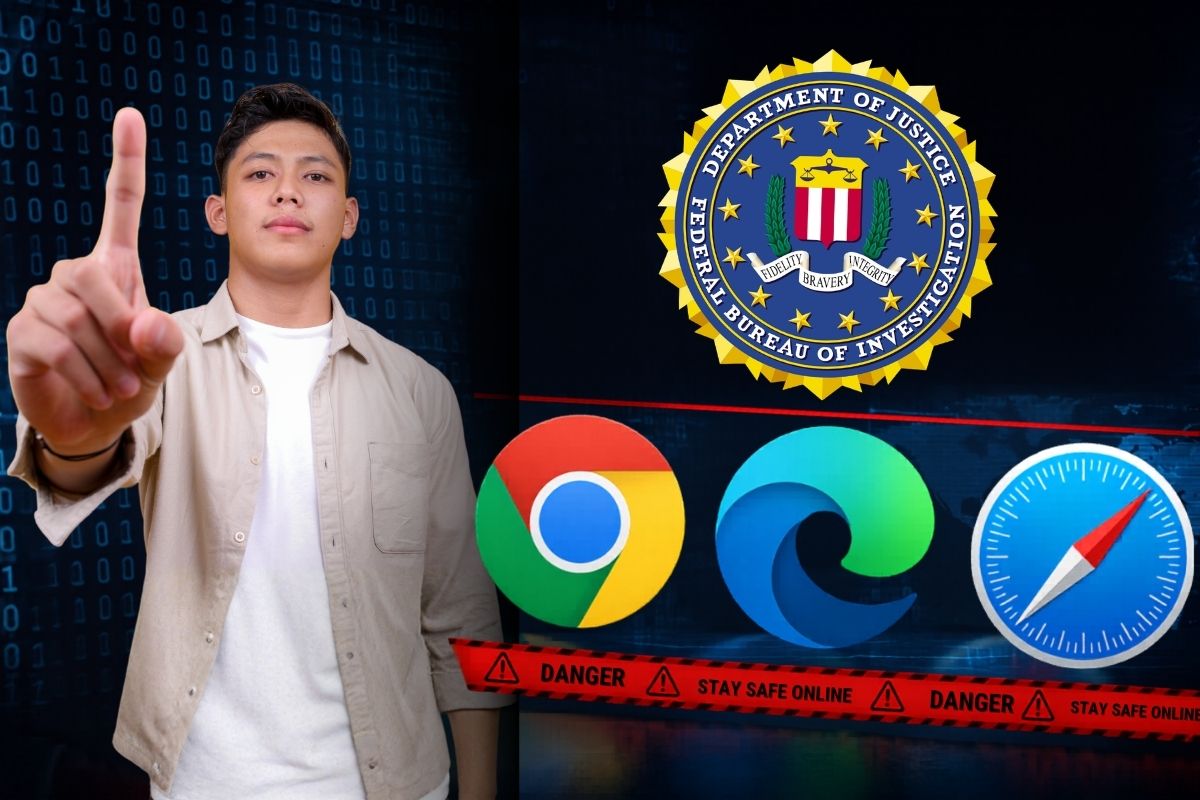
To convert a PDF into a Word file or an MP4 into an MP3 or compress a large-sized doc, most of us open Chrome, Safari, or Edge, search for a free tool, click one of the first results, and get on with our day.
The FBI says that a simple habit could land you in serious trouble.
A growing number of fake file-conversion websites are being used to spread malware, steal passwords, and, in some cases, hand cybercriminals access to sensitive personal information. And here’s the uncomfortable part: many of these sites don’t look shady at all.
They look exactly like the kind of websites you’ve probably used before.
Key Points
- The FBI has issued a warning to users about fake online file converters.
- Some websites have malware that helps scammers to steal data.
- Cybercriminals often disguise these websites as legit.
- Google has flagged several domains.
- Experts recommend using only trusted software.
That “Quick File Conversion” Could Come With a Hidden Surprise
Let’s be honest. Nobody gets excited about converting files.
It’s one of those boring little internet chores. Suppose you have to convert a PDF into a DOC file. You will search for a free tool, upload the file, download the result, and move forward.
If you think that is all that happens on these websites, then you’re wrong.
The FBI says criminals are using fake converter websites as bait. Some sites perform the conversion exactly as promised. But while you’re busy downloading the file, malicious software may breach your device.
The FBI Denver Field Office was very clear when they described the threat:
“The FBI Denver Field Office is warning that agents are increasingly seeing a scam involving free online document converter tools, and we want to encourage victims to report instances of this scam. In this scenario, criminals use free online document converter tools to load malware onto victims’ computers, leading to incidents such as ransomware.”
That’s a pretty steep price to pay for converting a PDF.
Also Read – California Governor Race is a Nail-Biter As Count Drags On
Why So Many People Are Falling for It
Now, you might be wondering, why do people fall into this trap, even when they know about it?
The reason is that these websites look normal.
Some have professional designs. Some show up in search results right next to legitimate services. Others use web addresses that are almost identical to trusted sites, changing just a single letter or swapping one domain ending for another.
As highlighted by Forbes, scammers are even taking advantage of paid search placements. In simple words, there are very high chances that websites on the first SERP may not be safe to use.
The Websites Raising Red Flags
The FBI didn’t release an official blacklist, but researchers tracking the campaign have identified several domains linked to suspicious activity. Among them are:
- Imageconvertors[.]com (phishing)
- convertitoremp3[.]it (Riskware)
- convertisseurs-pdf[.]com (Riskware)
- convertscloud[.]com (Phishing)
- convertix-api[.]xyz (Trojan)
- convertallfiles[.]com (Adware)
- freejpgtopdfconverter[.]com (Riskware)
- primeconvertapp[.]com (Riskware)
- 9convert[.]com (Riskware)
- Convertpro[.]org (Riskware)
Hindustan Times reported on the list after examples were shared by threat hunters and cybersecurity researchers investigating the scam.
Also Read – How to Set Up Google Alerts
The Really Sneaky Part? The File May Actually Work
This is where things get clever.
Many people assume a scam website will immediately look broken or suspicious. Not always.
Some of these converter sites deliver exactly what you asked for. Your PDF gets converted. Your MP3 downloads. Everything seems fine.
Days later, though, you could be dealing with stolen login details, strange activity on your accounts, or malware quietly running in the background.
Security expert Fred Chagnon says users can’t always trust the files they get back. A converted PDF can contain hidden code. Word and Excel files may hide malicious macros that activate when opened.
So yes, the conversion works. That’s what makes the scam convincing.
The Bigger Cybersecurity Problem Nobody Talks About
Fake converter websites are only one piece of a much larger puzzle.
Researchers at Cofense found that document-themed phishing attacks made up 8.8% of all credential-phishing campaigns during 2024. Cybercriminals have figured out that people trust document-sharing tools, which is why attackers increasingly hide behind names users recognize.
Platforms like Adobe, Canva, Dropbox, Google Docs, SharePoint, DocuSign, and Zoho are now regularly used as part of phishing campaigns.
When a familiar logo appears in your inbox, your guard naturally drops. Scammers know that.
And they take advantage of it.
Also Read – If Kim Jong Un Enters the Iran–Israel War, What Could Happen Next?
What the FBI Wants Users to Do
The agency’s advice isn’t complicated. Slow down. That’s it.
The FBI says people should think carefully before uploading files, clicking links, or downloading documents from unfamiliar websites.
“The best way to thwart these fraudsters is to educate people so they don’t fall victim to these fraudsters in the first place. Every day, we are working to hold these scammers accountable and provide victims with the resources they need.”
The bureau also recommends keeping antivirus software updated, scanning downloaded files, contacting financial institutions if fraud is suspected, and changing passwords from a trusted device if an account may have been compromised.
Meanwhile, separate reporting from NDTV pointed to a broader rise in scam websites targeting internet users, while Meristation noted that many of these operations are designed to steal passwords, financial data, and digital wallet information.
The bottom line? If a random website you’ve never heard of is offering a free file conversion tool, don’t assume it’s harmless just because it looks polished.
Sometimes the most dangerous websites are the ones that seem perfectly normal.
Sources and References:
- Forbes – Scammers are making use of paid search placements.
- Hindustan Times – The list of websites that are being used for scams.
- NDTV – There has been a huge rise in the number of scam websites in the last few months.
- Meristation – Hackers steal passwords, financial data, and digital wallet information.