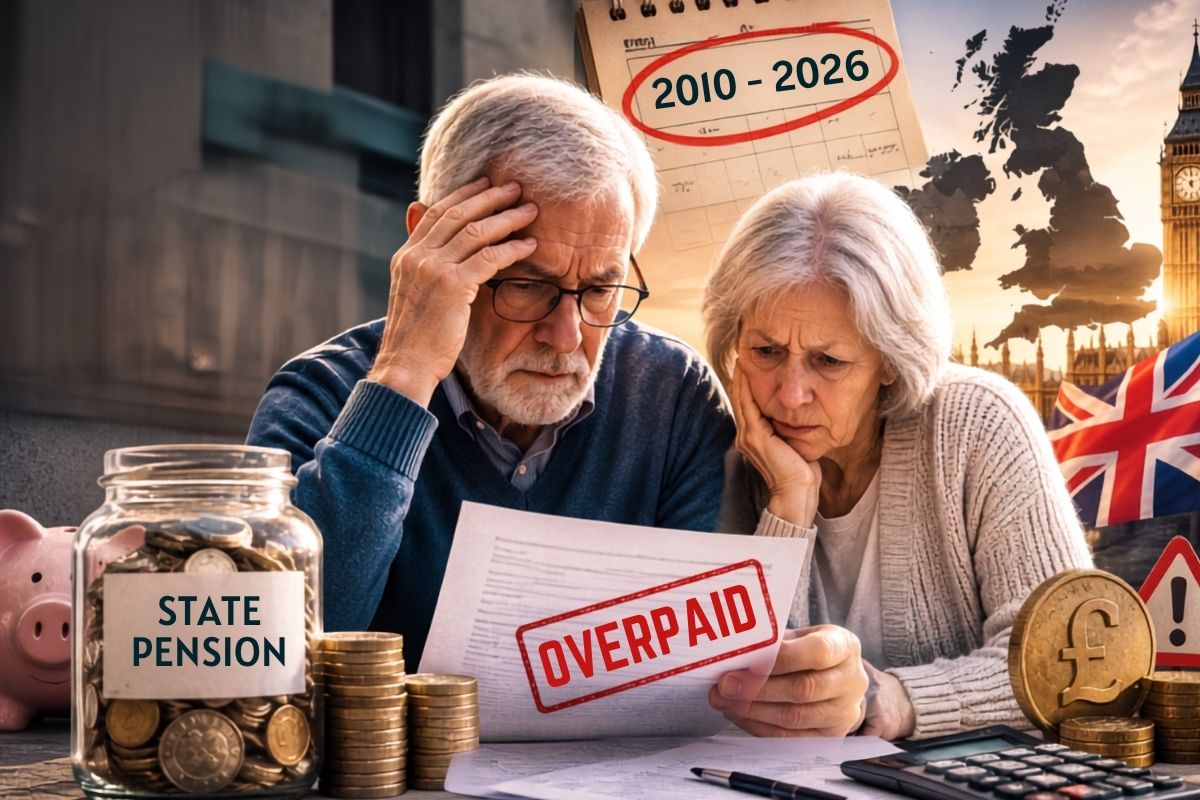
HMRC, the tax authority of the UK, has confirmed an extensive computer error that started in 2010 and made many state pensioners pay extra income tax. The problem is a result of the fact that the tax authority has not been able to correctly assess the yearly increases of the state pension that are linked to the price level.
This issue has raised a lot of alarms throughout the country since the affected older people have to live on very tight and fixed incomes, when each penny is important. Even though HMRC has apologized for the issue, campaign groups urge prompt action to compensate the extra tax paid by pensioners.
- The UK tax office admitted overtaxing millions of state pensioners since 2010.
- Computers failed to properly process annual inflation-linked pension increases for sixteen years.
- Over three million UK retirees were overcharged in the recent tax year alone.
- The £12,570 tax-free personal allowance freeze leaves pensioners with zero breathing room.
- HMRC’s chief executive apologized and promised to fix the calculation system quickly.
What Exactly Went Wrong?

Every single year, the UK state pension goes up a little bit. This yearly increase is highly important because it helps older individuals keep up with the rising cost of everyday items like food and energy bills. This process is known as an inflation-linked rise or part of the “triple lock” system.
However, there is a catch to how the money is handled. The state pension is paid out “gross.” This means when the government transfers the money into a pensioner’s bank account, they do not take any tax out of it beforehand. Instead, the tax office has to look at a person’s total income later to see if they owe anything.
In the United Kingdom, everyone has what is called a “personal allowance.” This is a set amount of money you can earn each year completely tax-free. Currently, that tax-free limit is frozen at £12,570. If an older person’s total income, including their state pension and any private workplace pensions, goes over £12,570, they must pay income tax on the extra money.
The big blunder happened because HMRC’s computer system had a major flaw following a system change made in 2010. Whenever the state pension rose each April, the computer system failed to process the math properly. It incorrectly calculated the tax codes by using 52 weeks of the new, higher rate instead of accounting for the partial crossover week from the previous lower rate. This made it look like retirees had a much higher taxable income than they actually did, resulting in automatic overcharging that went unnoticed for 16 years.
Also Read – Elijah Hoard is Missing After Failing to Board Flight
5 Key Points to Know About the Tax Error
1. The Glitch Has Been Running for 16 Years
The system flaw originally began all the way back in the 2010-11 tax year after a major technology change at HMRC. Because the glitch went entirely unnoticed by senior management for over a decade, it quietly warped the tax profiles of older citizens year after year.
2. Over 3 Million Retirees Affected Last Year Alone
In the 2024-25 tax year alone, the error caused roughly 1.4 million pensioners using the Pay As You Earn (PAYE) system to lose extra cash from their incomes automatically. On top of that, up to 1.7 million individuals filing through self-assessment and simple assessment letters were also pulled into the calculation mistake.
3. State Pension “Crossover Weeks” Caused the Error
The math broke down because the state pension is paid out gross. Whenever the pension rate went up in April, HMRC’s computers calculated tax codes using 52 weeks of the new, higher rate instead of accurately handling the partial crossover week from the older, lower rate.
4. Frozen Tax Limits Are Making the Burden Worse
This error has triggered widespread concern because the UK’s personal allowance is currently frozen at £12,570. Because the full new state pension has risen to £241.30 a week (around £12,548 a year), pensioners are left with almost zero “breathing room” before tiny private pensions or savings accounts spark large, unexpected tax bills.
5. An Official Apology and Promises of Action
John-Paul Marks, the chief executive of HMRC, has formally apologized to MPs and the public, stating that any shortfall heavily impacts households living on fixed incomes. While individual losses average out to a few pounds per year, tax experts note the collective glitch has unfairly topped up government funds by millions of pounds. HMRC is working “at pace” to fix the issue, but campaigners warn that affected individuals will need clear guidance to ensure they receive refunds.
Also Read – FBI Warns Chrome, Edge, Safari Users to Avoid These Sites
Year-by-Year Rise: How the Numbers Grew
Official data provided by HMRC reveals how the problem has steadily worsened over recent financial years. The numbers highlight three distinct groups of pensioners impacted by the computing glitch:
| Tax Year | PAYE Retirees Affected | Self-Assessment Cases | Simple Assessment Cases |
| 2021–22 | 720,000 | 784,000 | 167,000 |
| 2022–23 | 762,000 | 806,000 | 235,000 |
| 2023–24 | 1,167,000 | 887,000 | 554,000 |
| 2024–25 | 1,409,000 | 955,000 | 757,000 |
Note: As of 2026, HMRC has not released official figures for the 2025–26 tax year. The latest confirmed data covers 2024–25, when approximately 3.1 million pensioners across PAYE, Self Assessment, and Simple Assessment were potentially affected by the tax calculation error.
The True Scale of the Scandal
The scale of this tax mistake is massive, stretching over more than a decade. Millions of older people living across England, Scotland, Wales, and Northern Ireland have been hit by the error.
Reports indicate that up to 8.7 million pensioners may have been impacted by the glitch over the years, allowing the taxman to net tens of millions of pounds in error. Even though senior tax officials were alerted to the problem years ago, the public was left in the dark.
While individual overpayments might average around £1.76 per person each year, the cumulative sum over 16 years represents millions of pounds drained out of the pockets of retirees. Campaigners warn that many older people find the UK tax rules confusing and likely have no idea they are being overcharged.
Also Read – California Governor Race is a Nail-Biter As Count Drags On
How to Check if You’re Affected
- Check your State Pension records.
- Review your HMRC tax calculation.
- Compare your pension income with your tax records.
- Contact HMRC if you think you paid too much tax.
Why This is Happening Now
This massive computer error comes at a time when older citizens are already facing heavy tax pressure. Because the government has frozen the personal allowance at £12,570 while pension payments continue to rise, more retirees are being dragged into the tax net than ever before.
At present, the total state pension has climbed to £241.30 per week. This works out at an annual sum of £12,548 and is only just under the £12,570 allowance that one can have without being taxed. As there is such a small amount left, any additional income, be it savings interest or even a small work pension scheme, will immediately attract taxation. The computer error has made a difficult situation even more difficult for millions of families.
The HMRC has confirmed that they are working “at pace” to implement the solution. But they are under increasing political pressure to quickly draw up the entire history of the problem, locate those affected, and give them immediate compensation.
FAQs
1. How do I know if I paid too much tax on my pension?
HMRC is currently checking its records to find everyone who was affected. If you overpaid, the tax office will usually send you an official tax calculation letter (called a P800) or a Simple Assessment letter in the post detailing the mistake and how much you are owed.
2. Do I need to hire a lawyer to get my money back?
No, you do not need to pay for a lawyer or a tax agent. HMRC has promised to fix the issue itself. If they find that you overpaid, they will automatically calculate your refund and send it to you. Be very careful of scam phone calls or text messages claiming they can get your refund faster if you pay them a fee.
3. What is the Personal Allowance limit right now?
The personal allowance limit in the UK is currently £12,570. This means you do not pay any income tax on the first £12,570 you make in a year. You only pay tax on the money you earn above this specific amount.
4. Why doesn’t the government just take tax out of the state pension directly?
The UK government pays the state pension in full without taking tax out because it keeps the system simpler for millions of retirees who do not earn enough total money to owe any tax at all. It is only when you combine the state pension with other private incomes that tax needs to be collected.
5. Will HMRC pay me interest on the money they took by mistake?
When HMRC sends out official tax refunds for previous years, they often include a small amount of extra money called “repayment interest.” This is added to make up for the time the government held onto your cash.
Sources & References
The Telegraph – HMRC warning as 1.4m state pensioners hit with extra tax charges for 16 years
Express – HMRC warning as 1.4m state pensioners hit with extra tax charges for 16 years