Quick Answer: Washington, D.C., is the capital city of the United States of America. Congress created it as a federal district in 1790, and the government moved in by 1800. It is near the Potomac River, boxed in by Maryland on three sides with Virginia on the far bank.
- Washington, D.C. has served as the nation’s capital since 1800.
- “Washington” is to honor George Washington. “D.C.” stands for District of Columbia.
- President Washington signed the Residence Act on July 16, 1790.
- Maryland and Virginia donated the land; Virginia grabbed its share back in 1846.
- 689,545 residents, 68.34 square miles, and zero voting members of Congress.
One City, Two Names
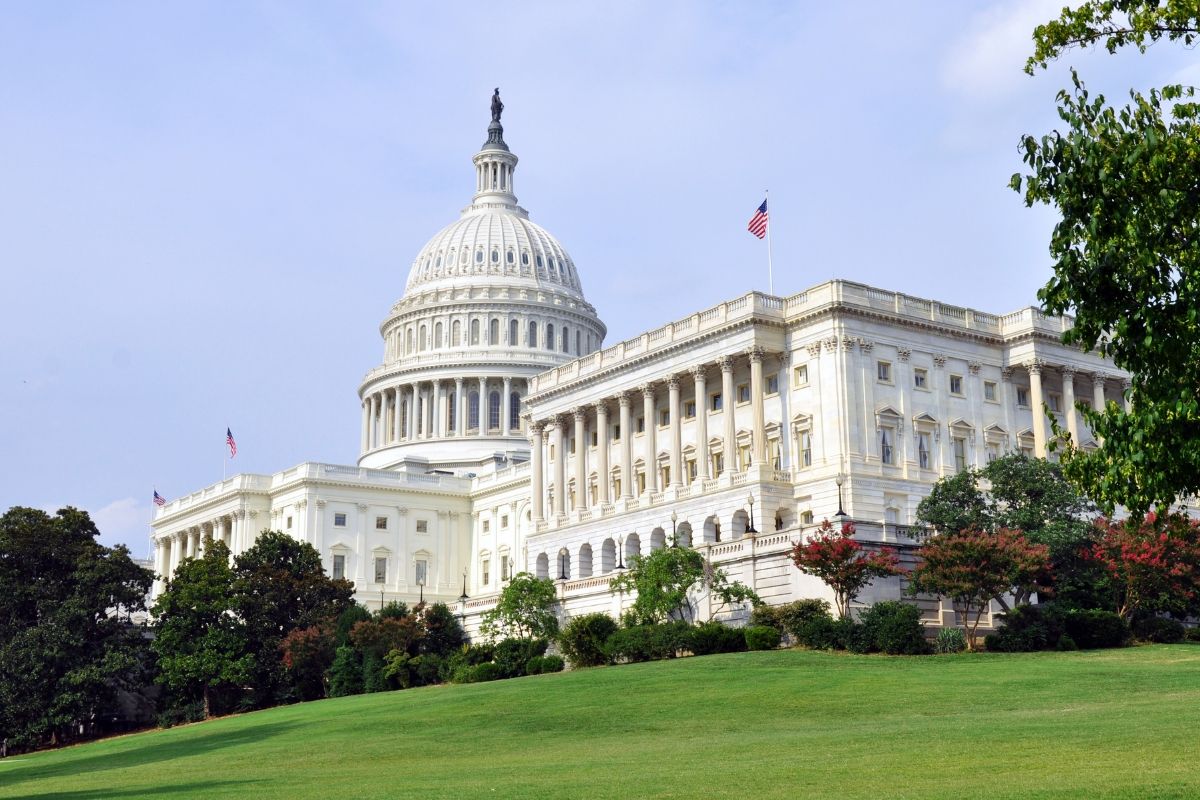
“Washington” is the easy half. “Columbia” is an old poetic name for America, drawn from Christopher Columbus, used like Brits say Britannia. Hotel Washington’s history notes point to Columbia University and the Columbia River as surviving examples.
The “D.C.” tag also keeps the capital separate from Washington state, which joined the Union in 1889. Locals shorten it to “the District” anyway.
Also Read – When Was Italy Established As A Country
Why the Capital Belongs to No State
Blame a bunch of furious, unpaid soldiers. In June 1783, in Philadelphia, around 400 Continental troops plant themselves at today’s Independence Hall, block the doors, and demand their back pay. Alexander Hamilton talked them into standing down. Congress asks Pennsylvania for militia; Pennsylvania says no thanks. Lawmakers bolt the town the same day.
The National Constitution Center recounts, “A national government can’t borrow someone else’s muscle.” Madison argued it in Federalist No. 43. Article I, Section 8 locked it in. Congress gets a district “not exceeding ten miles square,” all to itself.
The 1790 Deal That Picked the Potomac
The location was pure horse trading. Hamilton wanted the feds to eat the states’ war debts. According to Washington, Jefferson and Madison wanted the capital down south. The deal was struck, and the Residence Act was the paperwork.
Congress passed it on July 9, 1790. Washington signed a week later, then scouted the exact spot himself where the Potomac meets the Anacostia. Maryland and Virginia chipped in a diamond of land, ten miles a side, 100 square miles. Two working ports already sat inside: Georgetown from 1751, Alexandria from 1749.
Philadelphia? Not thrilled. It got ten years as temporary capital, lobbied shamelessly, and even waved a mansion at President Washington. Yellow fever swept through in 1793 and killed the pitch. Congress shut the doors May 15, 1800, and Philly’s title expired June 11, 1800.
Which Cities Served as Capital Before Washington?
Nine. Early Congress kept the schedule of a broke touring band, and History.com’s list of forgotten early capitals names every stop: Philadelphia, Baltimore, Lancaster, York, Princeton, Annapolis, Trenton, and New York City.
Lancaster’s reign lasted one day in 1777. York was more important when the Articles of Confederation were approved there. Annapolis watched the Treaty of Paris ratified on January 14, 1784. New York wore the crown first under the Constitution; Washington took his oath at Federal Hall on April 30, 1789.
Also Read – The Fascinating History of Who is on the 20 Dollar Bill
L’Enfant’s Blueprint and the Low Skyline
President Washington hands the gig to French-born engineer Pierre Charles L’Enfant, who draws a capital from nothing: fat diagonal avenues over a tight grid, the Capitol parked dead center. Surveyor Andrew Ellicott and astronomer Benjamin Banneker walked the borders and set boundary stones; plenty still stand.
That Capitol chops the place into four quadrants—Northwest, Northeast, Southeast, and Southwest. Hunt for J, X, Y, or Z Street. There aren’t any.
Skyline looks squashed, right? Britannica blames the Height of Buildings Act of 1910, which set a maximum height of 130 feet for commercial streets and 90 feet for residential areas. Hence, the 555-foot Washington Monument is still the tallest structure in town.
War, Emancipation, and a Smaller District
On August 24, 1814, the British troops walked in and torched the Capitol, the White House, and the Library of Congress. Jefferson refilled those shelves by selling Congress his books for $23,950 in 1815.
Then it shrank. In 1846 Congress handed Virginia back every acre it donated, Alexandria included, leaving only Maryland’s slice. On April 16, 1862, Lincoln signed the Compensated Emancipation Act, freeing roughly 3,100 enslaved people here, nine months before the Emancipation Proclamation. The city still celebrates Emancipation Day in honor of it.
Washington, D.C. Today, by the Numbers
689,545 people in the 2020 census, 693,645 by the 2025 estimate. Weekdays, commuters shove the headcount past a million. Metro area: about 6.3 million, the seventh largest in the country. Wikipedia’s profile clocks the highest natural ground at 409 feet in Fort Reno Park.
Uncle Sam signs most paychecks: 168,000-plus federal jobs there in 2025, better than one in five. Add 177 foreign embassies, the World Bank, the IMF, and the Organization of American States. It has 683 parks across roughly 20% of the land, and the Trust for Public Land crowned D.C. number one for parks among big U.S. cities in 2023.
Visiting? Washington.org, the official tourism site, pushes the classics: the National Mall, the Smithsonian museums (free, all of them), plus the Lincoln, Jefferson and Vietnam Veterans memorials.
Taxed Federally, Still Without a Vote
Residents pay every federal tax you do, then get one non-voting delegate in the House and no senators. In fiscal 2012, D.C. residents and businesses handed over $20.7 billion in federal taxes, out-paying 19 states.
Small wins exist. The 23rd Amendment delivered three electoral votes in 1961. A 1973 law brought home rule, and Walter Washington became the first elected mayor in 1975. Congress can still overturn local laws whenever it likes.
In 2016, 85% of voters said, “Make us a state”. The House passed an admission bill in April 2021, and the Senate let it rot. The proposed name: Washington, Douglass Commonwealth. Until then, the license plates do the shouting: “End Taxation Without Representation.”
Also Read – Large Statues in the World That Leave Travelers Speechless
FAQs
- What is the capital city of the United States of America?
Ans: Washington, D.C. It’s been the capital since 1800, and it’s a federal district, not a state.
- What does D.C. stand for?
Ans: District of Columbia. “Columbia” was an early nickname for America, borrowed from Christopher Columbus, and the letters keep it separate from Washington state.
- Which city was the first capital of the United States?
Ans: New York City, 1789 to 1790, under the new Constitution. Philadelphia had it from 1790 to 1800.
- What was the capital of the Confederate States of America?
Ans: Montgomery, Alabama, was the first capital in 1861. It shifted to Richmond, Virginia, which kept it until the city fell in 1865.
- Where is Washington, D.C. located?
Ans: North bank of the Potomac River, roughly 38.9072° N, 77.0369° W. Maryland wraps three sides; Virginia sits southwest.
- Why is Washington, D.C., not a state?
Ans: The founders wanted a capital no state could push around. Congress has the final word, and statehood needs an act of Congress.
Sources & References:
- Wikipedia – The highest natural ground at 409 feet is in Fort Reno Park.
- Britannica – The Height of Buildings Act of 1910, which set a maximum height of 130 feet for commercial streets and 90 feet for residential areas.
- Washington – Jefferson and Madison wanted the capital down south.
- Hotel Washington – Columbia University and the Columbia River are surviving examples of the name with Columbia.