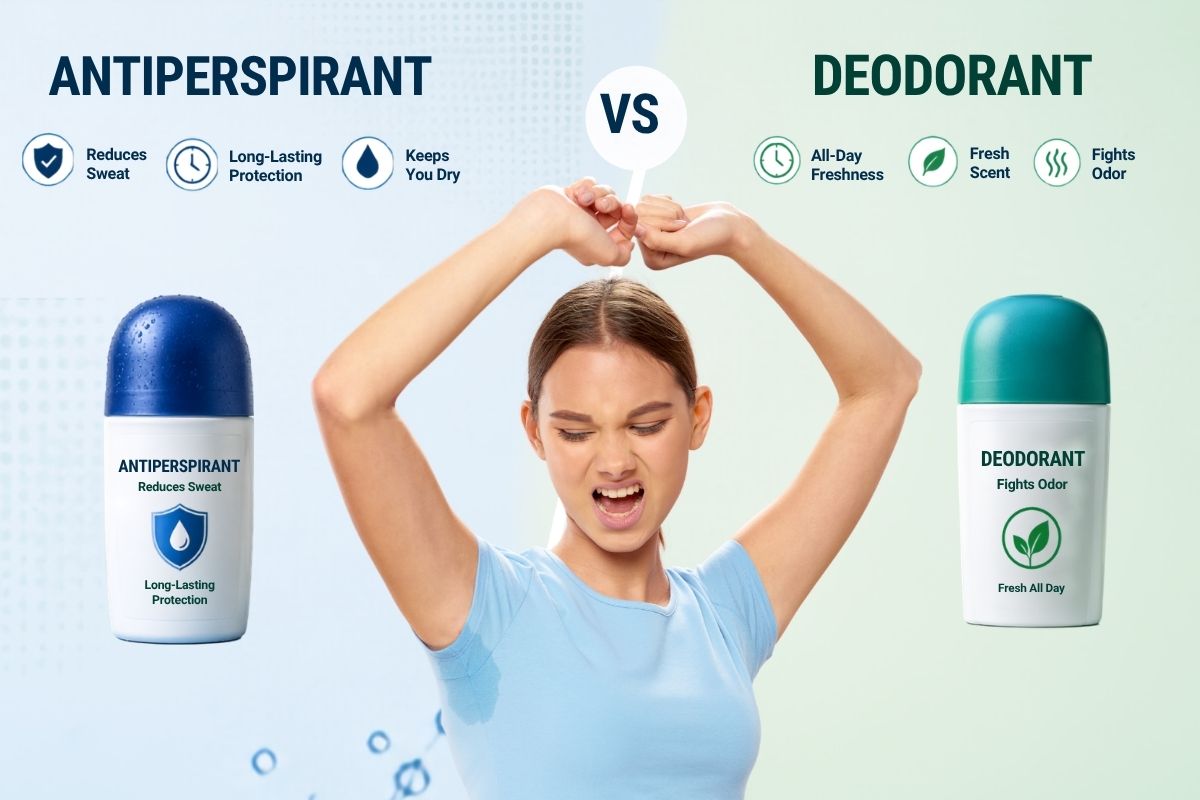
Quick Answer: One stops the sweat. The other just deals with the pong. Antiperspirants block your pores so less sweat gets out. Deodorants don’t touch your sweat. They go after the smell instead. Two different jobs, one little stick in your cabinet.
So why does everyone mix them up? They sit on the same shelf and go under the same armpit. But the antiperspirant vs. deodorant question has a proper answer and once you know it, you’ll stop grabbing the wrong one.
- Antiperspirants cut sweat. Deodorants only cover the smell.
- Your sweat barely smells. If it does, bacteria are the reason.
- Antiperspirants use aluminum salts to plug sweat pores.
- Deodorants make your skin acidic so bacteria can’t settle in.
- The FDA calls antiperspirants drugs and deodorants cosmetics.
- No strong study links antiperspirants to breast cancer.
What is a Deodorant?
Deodorant first. Its whole job is sorting out armpit smell and that’s about it. It won’t stop you sweating one bit.
Your sweat isn’t actually the smelly bit. Nivea points out that fresh sweat is basically odorless. The stink turns up later, once bacteria on your skin multiply and break that sweat down into acids. That’s your body odor, right there.
So deodorant plays it clever. It nudges your skin to be a little bit acidic, which bacteria can’t stand. Fewer happy bacteria, less smell. Most deodorants chuck in some perfume, alcohol, or essential oils too to mask anything that passes through.
What is an Antiperspirant?
Antiperspirant takes a different road. Rather than chasing the smell, it goes straight for the wet.
It’s loaded with aluminum compounds. Roll it on and the aluminum dissolves into the moisture on your skin, then gets pulled into your sweat glands. Once it’s in there, sweat struggles to get out. Drier pits and because bacteria then have less to feed on, you smell better too.
It doesn’t last forever, mind. After a while the moisture inside and outside the glands balances out, sweat returns, and you’re due a top-up. It’s not armpits-only either, use it anywhere you get sweaty. And if the shop-bought stuff can’t keep up, Healthline notes there are prescription-strength antiperspirants for exactly that.
Also Read – Vitamin D3 K2 Benefits
The Science Behind the Sweat
The process is called the “gel plug”. A systematic review in the International Journal of Cosmetic Science lays it out. The aluminum salts react with proteins in your sweat and form a soft, water-resistant plug right at the top of the sweat duct. That plug corks the flow.
None of this is new. Aluminum chloride was first used as an antiperspirant back in 1916. The snag was that it stung the skin and ruined clothes, so aluminum chlorohydrate started being used in the 1940s, with salicylic acid to calm things down. Oddly, the main ingredients haven’t really changed in over 50 years.
Eccrine glands are scattered all over your body and help cool you down. Apocrine glands sit in your armpits, groin, and around the nipples, and their fluid is high in protein, which bacteria love. That’s why your underarms kick off far more than, say, your elbows.
A Few Odd Facts Worth Knowing
Around 2–3% of people have hyperhidrosis, sweat way more than they need to, and often need a medicated antiperspirant just to cope.
A gene called ABCC11 means plenty of people of East Asian descent produce hardly any body odor at all. And that musty “older” smell? A compound called 2-nonenal appears once you’re past 40.
Also Read – How to Do a Squat the Right Way Without Hurting Your Knees
Antiperspirant vs Deodorant: The Key Differences
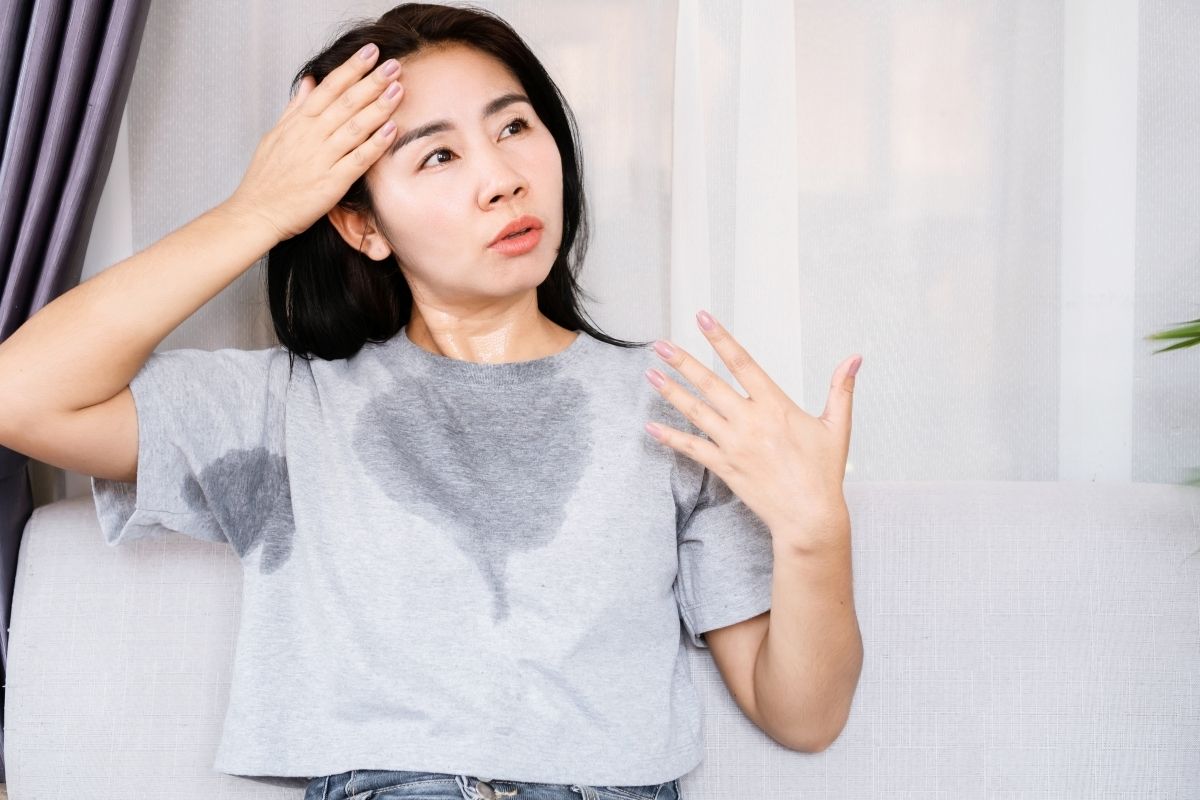
| Feature | Antiperspirant | Deodorant |
| Reduces sweat | Yes | No |
| Reduces body odor | Yes | Yes |
| Contains aluminum | Yes | No |
| Keeps you dry | Yes | No |
| FDA status | Drug | Cosmetic |
| Main action | Plugs sweat pores | Acidifies skin |
| Typical wear time | 6–8 hours+ | Around 24 hours |
Which One Is Better?
Honestly? Neither. It just comes down to you.
The Cleveland Clinic, through dermatology specialist Lauren Zamborsky, makes it clear: it’s a personal call. Some folks barely sweat and get by fine on deodorant. Others want to stay bone-dry all day.
Go for deodorant if smell’s your only worry and you’re not a heavy sweater—light days, gentle activity. Reach for antiperspirant if you sweat buckets or want dryness and odor control in one.
Sure sells stronger formulas built for workouts and long days, some claiming up to 72 hours of protection. Loads of products now bundle both actives together, so you get the whole lot.
Tip: Put antiperspirant on at night. Zamborsky says sweat drops while you sleep, so it settles in properly and holds for six to eight hours before you wash it off. Then swipe on deodorant in the morning for a fresh finish.
If white marks on black tops or yellow stains on white shirts drive you round the bend, hunt out a color-protecting formula. Made for exactly that.
Also Read – Is Garlic Good For BP?
Best Choice Based on Your Lifestyle
| If you… | Choose |
|---|---|
| Sweat heavily | Antiperspirant |
| Have sensitive skin | Deodorant |
| Go to the gym daily | Antiperspirant |
| Want only fragrance | Deodorant |
| Work outdoors | Antiperspirant |
| Have dry underarms | Deodorant |
Are They Safe?
Mostly, yeah. Both are fine for everyday use.
The big scare is that old antiperspirant-and-breast-cancer rumor. The thing is, the evidence doesn’t stack up. The American Cancer Society says there’s no strong link, and cancerous breast tissue holds no more aluminum than healthy tissue.
A 2002 study of over 1,600 women found no jump in breast cancer among users. Barely any aluminum gets absorbed anyway, roughly 0.0012%.
The real, day-to-day risk is far smaller: skin irritation. Perfumes and dyes can bring on a rash, especially if you slap it on straight after shaving. Easy fix — clean, dry skin only, and read the label if yours is sensitive.
FAQs
What’s the real difference between antiperspirant and deodorant?
Ans: Antiperspirant blocks your pores with aluminum salts to stop sweat. Deodorant leaves the sweat alone and just fights the smell by making your skin acidic.
Does deodorant stop sweat?
Ans: Nope, not at all. It only tackles odor. You’ll still sweat and feel a bit damp, but you shouldn’t smell.
Why do my armpits smell even after a wash?
Ans: Because sweat itself barely smells. It’s bacteria breaking it down into acids that cause the pong, and warm, damp pits are their favorite spot.
Is the aluminum in antiperspirant dangerous?
Ans: No solid proof it is. Only a tiny amount gets absorbed, and research hasn’t tied it to breast cancer or anything serious.
When’s the best time to put antiperspirant on?
Ans: At night, oddly enough. You sweat less asleep, so it plugs your pores properly and protects you all next day.
Can I use both together?
Ans: Definitely. Plenty of products already combine the two, or you can layer them. Antiperspirant for dryness, deodorant for scent.
Also Read – 5 Clear Signs Your Gut Health Is Improving
Sources & References:
- Cleveland Clinic – The choice of antiperspirant and deodorant is personal.
- Nivea – Fresh sweat is basically odorless.
- Healthline – There are prescription-strength antiperspirants if normal ones do not work.
- Sure – They sell strong formulas built for workouts and long days, some claiming up to 72 hours of protection.