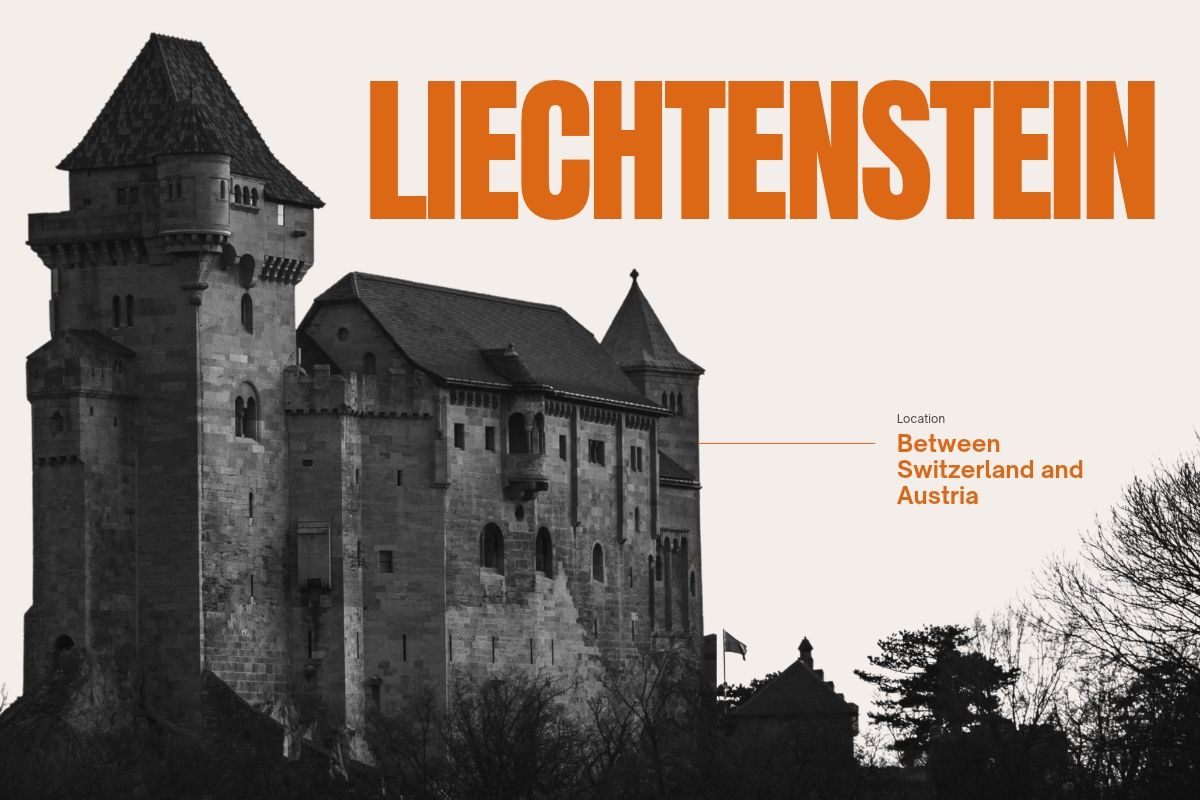
Quick Answer: Liechtenstein is a very small country in the Alps with no coastline. It lies between Switzerland and Austria. Mountains, castles, banking, and a high standard of living are what it’s best known for. Only a handful of countries are smaller. Vaduz is the capital; people speak German, and they pay in Swiss francs.
- Location: Central Europe, between Switzerland and Austria.
- Capital: Vaduz.
- Official Language: German.
- Currency: Swiss franc (CHF).
- Population: Around 41,228 permanent residents at the end of 2025.
- Government: Constitutional hereditary monarchy with an elected parliament.
- Area: Around 160 square kilometres.
- Famous For: Alpine mountains, financial services, castles, museums and outdoor tourism.
Introduction
Liechtenstein doesn’t take up much room on the map, but it comes up in conversation more often than you’d guess. Its full name is the Principality of Liechtenstein. Mountain scenery, a steady political scene, plenty of money, and a princely family that still has a real role are the things people tend to mention first.
It sits between Switzerland and Austria. Old traditions are still alive there, though the economy is thoroughly modern. The country has no sea access and only about 160 square kilometres of land. That hasn’t stopped it from becoming an important place for finance and industry.
If you’re into European geography, business, history or travel, it’s worth knowing a bit about. A country can be tiny and still matter.
Where Is Liechtenstein Located?
Liechtenstein is in Central Europe, up in the Alps. Switzerland is next door to the west and south, and Austria to the east and north. Much of the western border runs along the Rhine.
One thing stands out about its position: it’s doubly landlocked. No coast of its own, and none of its neighbours has one either.
At around 160 square kilometres, it’s the fourth-smallest country in Europe and the sixth smallest in the world.
You’ll find:
- The Rhine Valley and the flat land around it.
- Alpine mountains and green valleys.
- Wooded hills and old villages.
- Farmland and open countryside.
People who enjoy nature and the mountains tend to like this variety.
What Is the Capital of Liechtenstein?
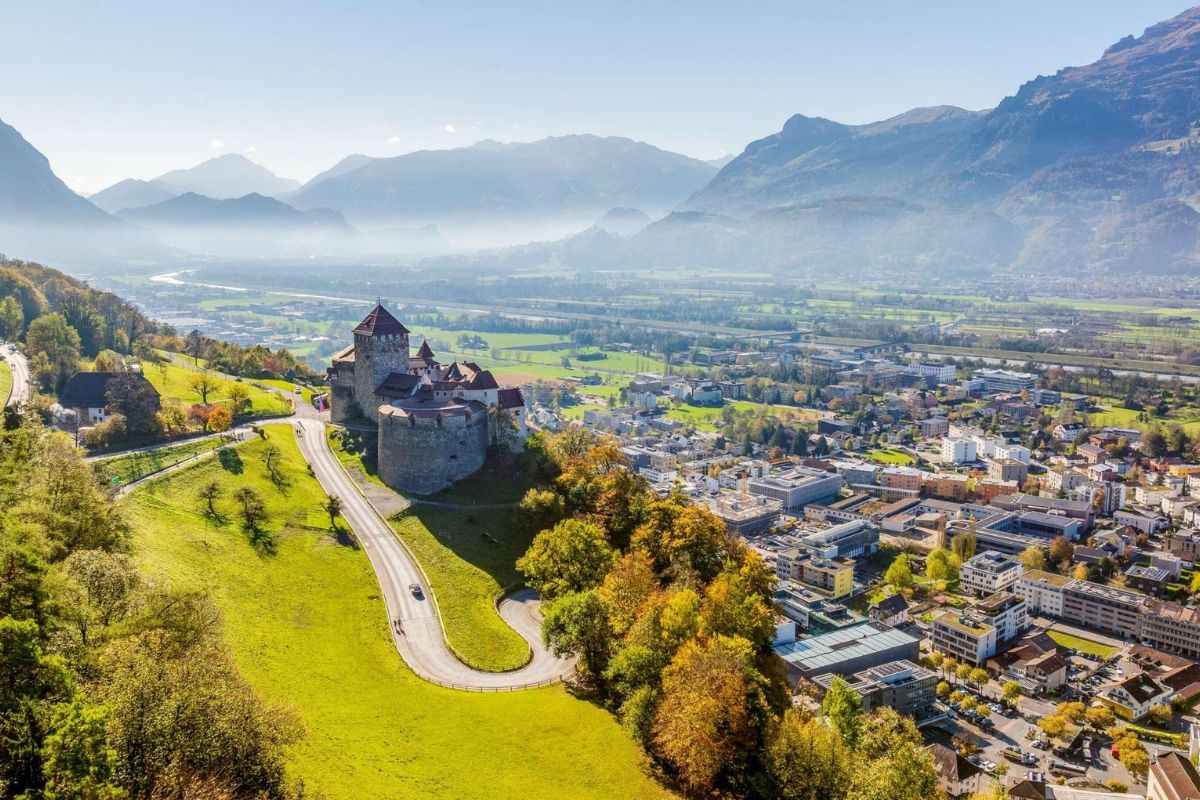
The capital is Vaduz, and the government is based there. Compared with other European capitals, it’s pretty small, yet much of the country’s political, cultural and economic activity centres on it.
Vaduz Castle is the landmark you’ll see in most photos. It stands on a hillside over the town and is the home of the princely family. It’s also one of the most photographed places in the country.
Some other places in Vaduz:
- Liechtenstein National Museum: Covers the country’s history, traditions, and cultural heritage.
- Kunstmuseum Liechtenstein: Shows modern and contemporary art.
- Government District: Home to the main government institutions.
- City Centre: Shops, restaurants, public spaces and cultural sights.
If you’re visiting, it makes sense to begin here.
History and Royal Heritage of Liechtenstein
The region’s past goes back many centuries. Part of it was once the Roman province of Raetia, and the Franks later held sway there.
Today’s principality began when the Princely House of Liechtenstein bought land. The Lordship of Schellenberg came in 1699, and the County of Vaduz in 1712.
In 1719, Emperor Charles VI joined the two territories and created the Principality of Liechtenstein, within the Holy Roman Empire.
Sovereignty arrived in 1806. After that, the country slowly built its own political identity, with the monarchy still central to how Liechtensteiners see themselves.
The country is now a constitutional hereditary monarchy, run on democratic and parliamentary lines. Constitutional responsibilities are shared between the Prince and the elected Parliament.
Economy: Why Is Liechtenstein So Wealthy?
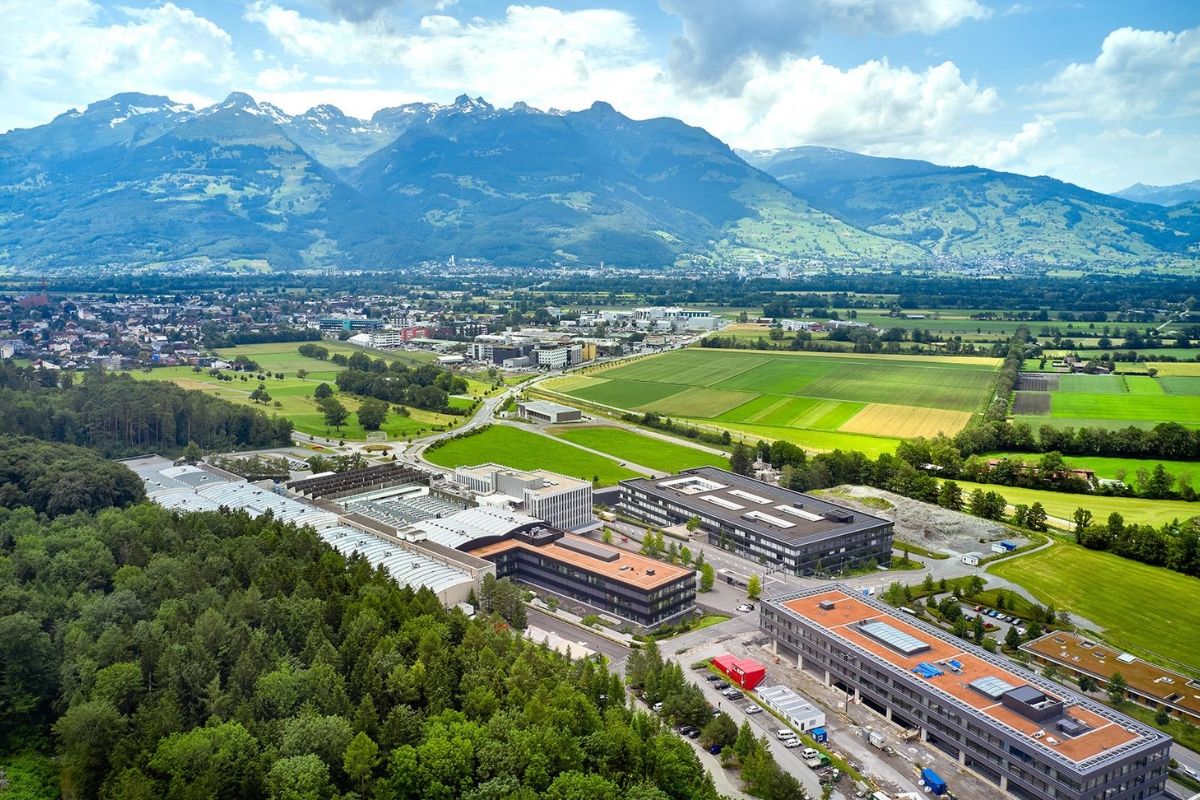
Incomes in Liechtenstein are high, and the economy is doing well. It’s a small country with few natural resources, so that’s a bit surprising, but it has managed to build a fairly varied economy.
The main sectors are:
Financial Services: Banking, asset management, insurance, and similar services do a lot to shape how the country is seen abroad.
Manufacturing: Industry is strong here. Specialised machinery, precision instruments, dental technology and advanced manufacturing stand out.
International Business: Companies that operate across borders are drawn by the business-friendly rules and by access to European markets.
Tourism: Not the biggest earner, though visitors do help hotels and other services.
The Swiss franc is the official currency, and the economy is closely tied to Switzerland’s. Liechtenstein also belongs to the European Economic Area (EEA) and the European Free Trade Association (EFTA), which gives it access to European markets.
Language, Culture and Lifestyle
German is the official language. At home and among friends, though, many people speak an Alemannic dialect. You can usually get by in English in business and tourist settings.
Its culture reflects the Alpine surroundings and a long history of contact with Switzerland, Austria and Germany.
Traditional celebrations, music, regional food and community festivals are still part of everyday life. Art, architecture and protecting local heritage matter to people there as well.
A few things worth noting:
- National Day: Takes place on 15 August, with public festivities and traditional events.
- Traditional Cuisine: Includes Käsknöpfle, a pasta-style dish served with melted cheese and onions.
- Art and Museums: The country supports several museums, galleries, and cultural institutions.
- Outdoor Lifestyle: Hiking, cycling, skiing and other mountain activities are popular.
Traditional customs sit comfortably next to modern life, and that blend gives Liechtenstein its own identity.
Best Places to Visit in Liechtenstein
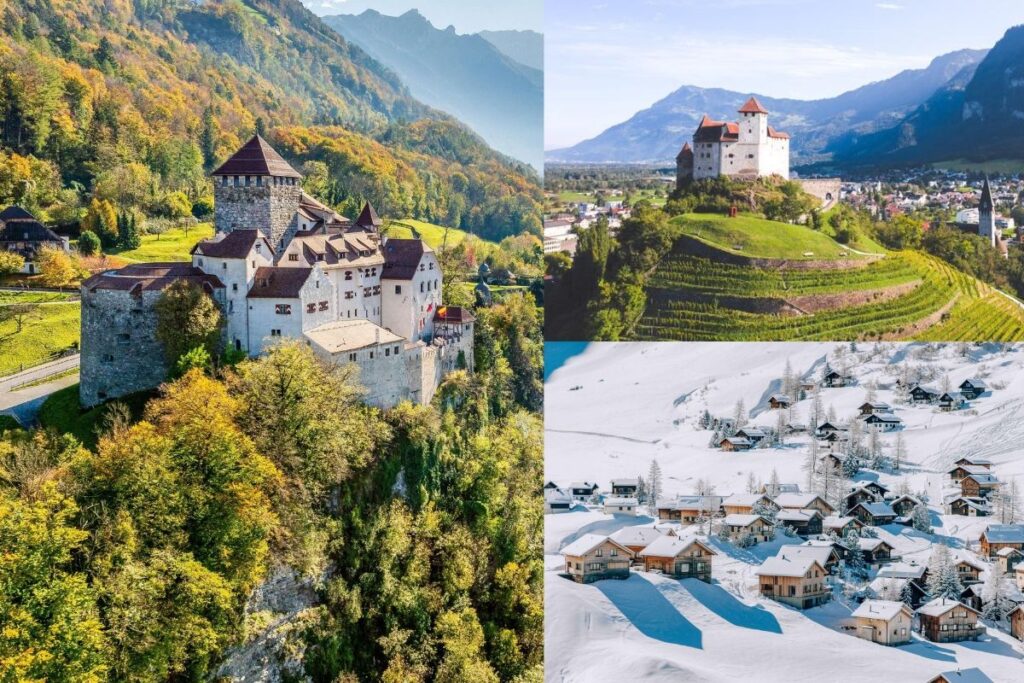
The country is small, but visitors who like history, architecture, or the outdoors will find enough to fill a trip.
Vaduz Castle: One of the most recognisable sights in the country. It looks down over the capital and gives wide views of the Rhine Valley. The princely family lives inside, so visitors can’t normally go in, but the area around the castle is popular for sightseeing.
Gutenberg Castle: Stands on a hill in Balzers with lovely views of the landscape. It’s a good example of the country’s medieval heritage.
Malbun: A mountain resort that’s particularly popular with families and outdoor enthusiasts. What you can do there depends on the season: skiing, snowboarding, or hiking, plus the mountain views.
Liechtenstein National Museum: In Vaduz. It introduces the country’s history, natural environment, and cultural development.
Liechtenstein Trail: A route of roughly 75 kilometres connecting all 11 municipalities. You can walk the entire thing or just do shorter stretches.
The official tourism information highlights the large hiking network, the cultural attractions and the year-round outdoor activities.
Population and Standard of Living
By European standards, the population is small. Official statistics show 41,228 permanent residents as of 31 December 2025.
The country still has well-developed public infrastructure, stable institutions, and a high standard of living.
The job market is a bit unusual, too. There are more jobs than residents, so many employees commute in each day from Switzerland and Austria.
Several factors add to the quality of life:
- A stable political and economic environment.
- Good transport and public infrastructure.
- Access to healthcare and education.
- A strong employment market.
- Alpine recreation close by.
With its prosperity and small communities, Liechtenstein is an interesting example of a successful European microstate.
Interesting Facts About Liechtenstein
Here are some lesser-known facts:
- It’s one of only two doubly landlocked countries in the world.
- It has just 11 municipalities.
- Its currency is the Swiss franc, not the euro.
- It joined the United Nations in 1990.
- It has no airport of its own.
- Its national holiday is on 15 August.
- It’s one of the smallest sovereign countries in the world.
- A 75-kilometre hiking trail links all of its municipalities.
So a small footprint, yes, but a very distinct identity.
Conclusion
Liechtenstein may be a tiny country between Switzerland and Austria, but there’s a lot more to it. A royal history, a thriving economy, Alpine scenery and its own cultural traditions all help make it a real part of the European landscape.
In one trip, you might visit Vaduz Castle, walk the historic streets of Balzers and spend a day skiing in Malbun. A strong industrial base, financial services and a high standard of living help explain how it has secured such a firm position internationally.
For anyone researching European countries, planning an Alpine holiday or just curious about smaller sovereign nations, Liechtenstein is well worth discovering.
Frequently Asked Questions (FAQs)
1. Where is Liechtenstein located?
Liechtenstein is in Central Europe, between Switzerland and Austria.
2. What is the capital of Liechtenstein?
Vaduz is the capital.
3. What language is spoken in Liechtenstein?
German is the official language, and an Alemannic dialect is widely spoken too.
4. What currency does Liechtenstein use?
The Swiss franc (CHF).
5. Is Liechtenstein a rich country?
Yes. In terms of GDP per capita, it’s among the wealthiest countries in the world.
6. How many people live in Liechtenstein?
There were 41,228 permanent residents at the end of 2025.
7. Is Liechtenstein part of the European Union?
No. It isn’t an EU member, though it belongs to the European Economic Area and EFTA.
8. What is Liechtenstein famous for?
Alpine scenery, royal heritage, financial services, manufacturing, and historic castles.
Sources and References
1. Official Liechtenstein Tourism – Facts and Figures.
2. Liechtenstein Office of Statistics – Population.
3. Australian Government – Liechtenstein Country Brief.
4. Liechtenstein and Its Economy – Council of Europe.
5. Official Tourism – Reasons to Visit Liechtenstein.
6. Official Tourism – Places of Interest.