Quick Answer: There’s no set list of illnesses that gets you an automatic yes. What medical conditions qualify for ill health retirement depends on one thing: how much your condition stops you from doing your job. It is expected to last at least 12 months, and you’ll need solid medical paperwork to support it.
When your health starts getting in the way of work, money worries usually aren’t far behind.
- It’s about what you can’t do, not the name of your illness.
- The condition has to last, or be expected to last, at least 12 months.
- Physical and mental health problems both count.
- Every program wants medical proof.
- The rules shift by program.
What Ill Health Retirement Really Means
Ill-health retirement is also called medical or disability retirement. It happens when poor health forces you to stop working early and tap into your retirement money.
Unbiased states that it’s retirement brought on by not being able to work because of bad health or a disability. A doctor has to confirm it’s long-term and the real reason you can’t earn a living. The positive part is that there is no age limit, unlike normal retirement, which you pick when you’re ready, usually in your sixties.

Also Read – Is Tonic Water Good for Health?
How Social Security Decides
For most American workers, the main option is Social Security Disability Insurance (SSDI). The Social Security Administration only pays for total disability. No benefits are payable for partial disability or for short-term disability.
Two things have to line up: you’ve worked in jobs covered by Social Security, and you have a condition that fits their strict definition. Usually, that means 40 work credits, 20 of them earned in the last 10 years before your disability begins. The 20/40 Rule applies, but younger workers can qualify with fewer credits. In 2026, each $1,890 you earn gets you one credit, and $7,560 maxes out your four for the year.
They run your case through five questions: Are you working? Is it severe? Is it on their list? Can you do your old job or any other work? To count as disabled, all of these must be true:
- You cannot do work at the substantial gainful activity (SGA) level because of your medical condition
- You cannot do the work you did previously or adjust to other work because of your medical condition
- Your condition has lasted or is expected to last for at least one year (12 consecutive months) or to result in death
In 2026, earning over $1,690 a month ($2,830 if you’re blind) usually counts as SGA and sinks the claim. You’re legally blind if your vision can’t be corrected past 20/200 in your better eye, or your field is 20 degrees or less.
There’s a five-month waiting period, so your first check arrives in the sixth full month, and back pay can reach up to 12 months before you applied. Serious cases sometimes get fast-tracked through compassionate allowances—ALS, acute leukemia, and pancreatic cancer. At full retirement age, disability benefits roll into retirement benefits at the same amount.
Conditions That May Qualify
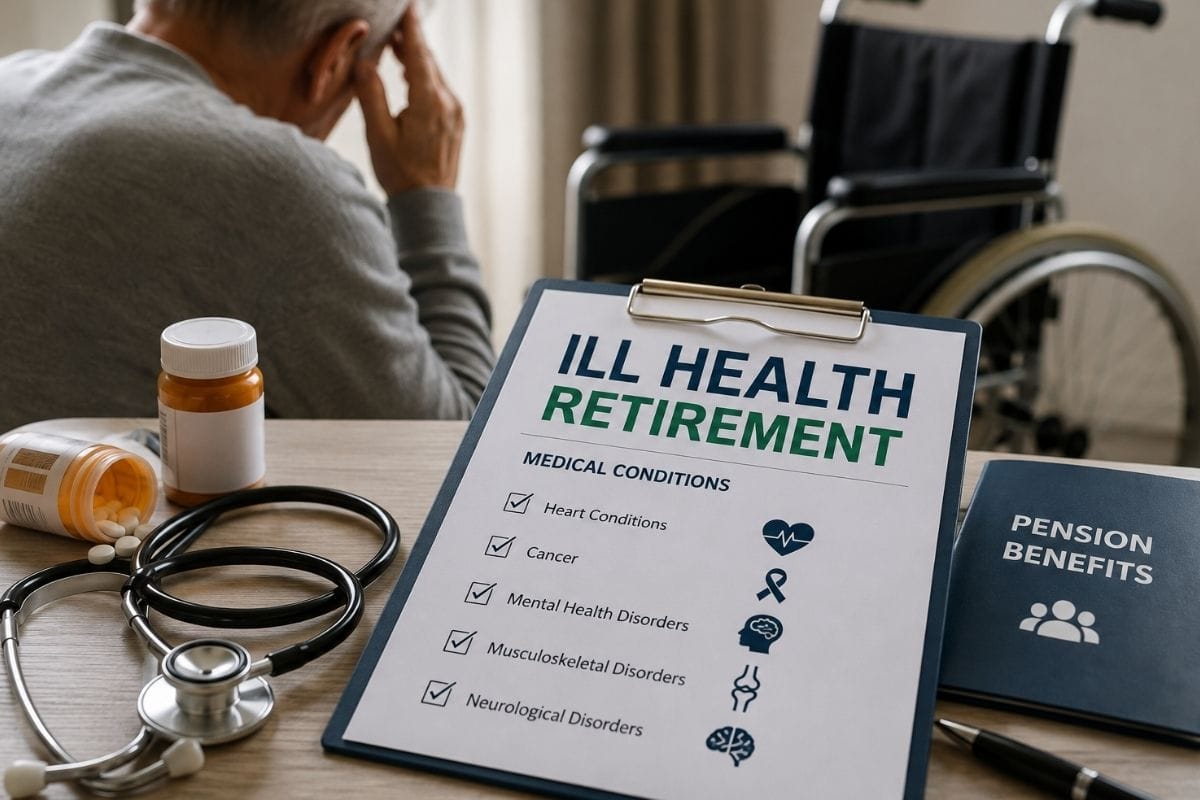
There’s no official list of qualifying diagnoses. WAEPA makes the point that it’s all about how a condition hits your ability to work, not the label on it. The common ones fall into these buckets:
| Condition Group | Common Examples |
| Musculoskeletal | Chronic back pain, joint disorders |
| Heart and lung | Problems that limit stamina or activity |
| Neurological | Multiple sclerosis, severe migraines |
| Autoimmune or chronic | Illnesses that cause fatigue, pain, or limits |
| Endocrine or metabolic | Issues that affect energy or thinking |
| Mental health | Depression, anxiety, PTSD, cognitive impairment |
| Cancer | The illness and treatment-related effects |
| Multiple conditions | Combined problems that wreck steady performance |
Also Read – Antiperspirant vs Deodorant
Federal Disability Retirement: FERS vs. CSRS
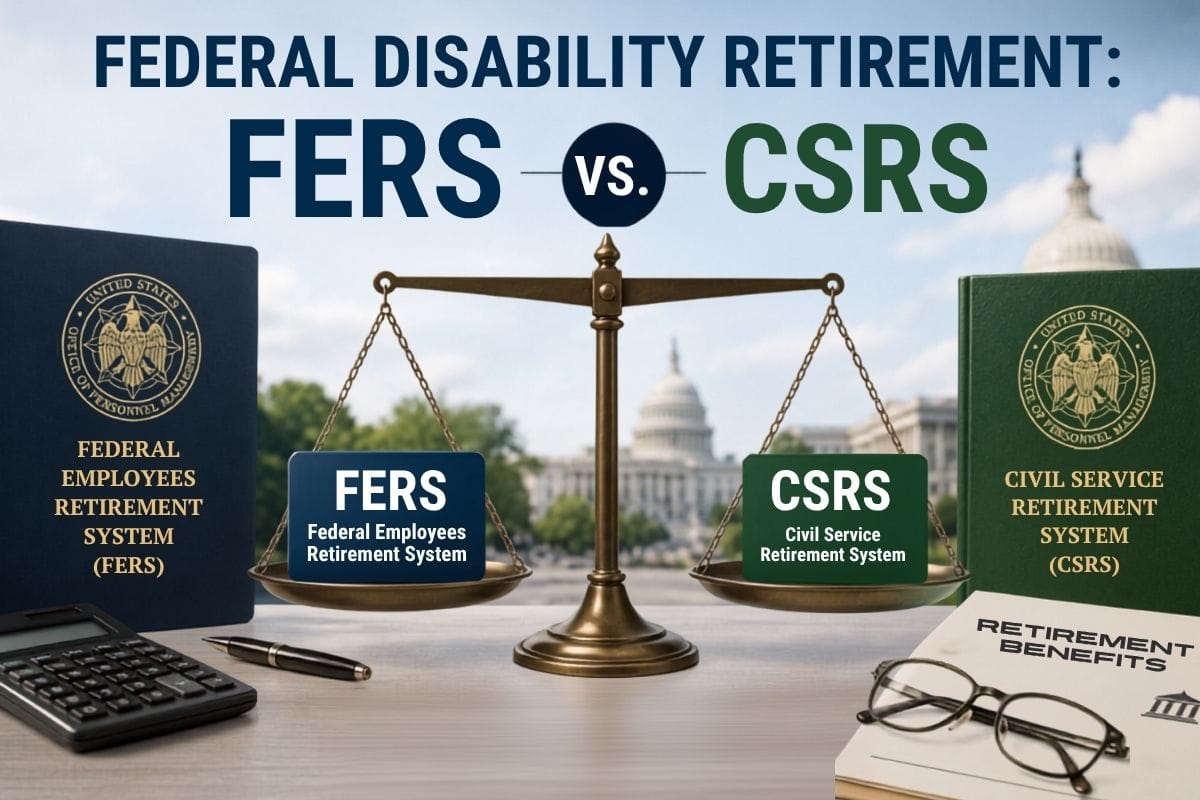
Federal civilian workers get their own path, and the rules split by system. Most people today are on FERS. A few hired before 1984 are still on CSRS.
| Topic | FERS | CSRS |
| Minimum service | At least 18 months | At least 5 years |
| SSDI requirement | Must apply for SSDI | Not required |
| Typical coverage | Most current employees | Long-tenured staff |
Your agency also has to prove it can’t move you into a similar job—same grade, same commuting area—or adjust things so you can stay before retirement goes ahead.
These conditions don’t have to be job-related; pre-existing ones count if they worsen during your service, and postal workers follow the same playbook. One more thing: federal disability retirement looks at your current federal job, while SSDI looks at any job nationwide. That’s why some qualify for one and not the other.
Military Medical Retirement

Medical retirement actually shows up more for military folks than regular citizens. If an injury or condition stops you from doing your military duties, a Physical Evaluation Board (PEB) of active-duty doctors decides whether you’re fit to serve.
To get medically retired, you must be found unfit with a disability rating of at least 30%. Pay is your retired base pay multiplied by a percentage multiplier, capped at 75%. You can also pick up VA disability compensation, VA home loans, pensions, and medical benefits, and they last for life.
Also Read – 5 Clear Signs Your Gut Health Is Improving
Pension Rules and Early Access
Workplace pensions handle poor health in their own way. PensionBee explains that some final salary (defined benefit) plans let you take your pension early for permanent ill health, sometimes with no reduction and a boost if it’s terminal.
With defined contribution plans, ill health can unlock your money at any age, as income or a lump sum. And if your life expectancy is shorter, an impaired life annuity may pay more.
Before you jump, weigh the alternatives — part-time hours, reasonable adjustments your employer must consider, or voluntary redundancy. There’s short-term help too—statutory sick pay, employment and support allowance, and universal credit. And one nice perk: medical retirees skip the usual 10% early-withdrawal tax penalty on 401(k)s and IRAs.
FAQs
- What medical conditions qualify for ill health retirement?
Ans: There’s no fixed list. A condition qualifies if it stops you from doing your job for at least 12 months, backed by medical records.
- Do the conditions have to be job-related?
Ans: Nope. They don’t need to be caused by work. Even pre-existing ones qualify if they get worse and affect your ability to work.
- Can mental health conditions qualify?
Ans: Yes. Depression, anxiety, PTSD, and cognitive issues count when they hurt your job performance and are backed by medical proof.
- How long does my condition have to last?
Ans: It must have lasted, or be expected to last, at least 12 straight months or be expected to result in death.
- Is there an age limit for medical retirement?
Ans: No. Medical retirement has no age limit or age requirement. A doctor just has to confirm you can’t work.
- Can pre-existing conditions qualify?
Ans: Yes. A pre-existing condition can qualify if it worsens during your service and cuts into your ability to do your job.
Sources & References:
- SSA – The Social Security Administration only pays for total disability.
- WAEPA – It’s all about how a condition hits your ability to work, not the label on it.
- Pension Bee – Some final salary (defined benefit) plans let you take your pension early for permanent ill health, sometimes with no reduction and a boost if it’s terminal.
- Unbiased – Ill health retirement is the retirement that comes from being unable to work due to poor health or a disability.