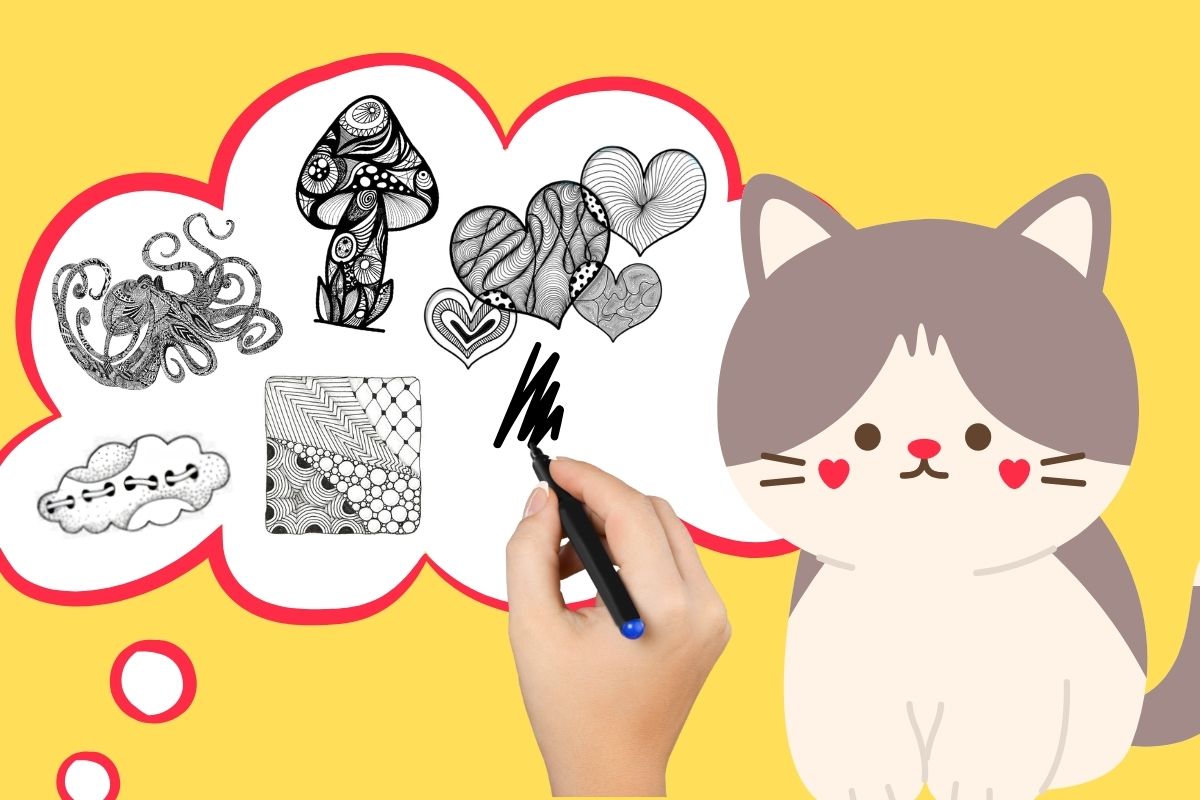
Zentangle patterns are small, repeated pen strokes drawn on a tiny square tile to build a structured, abstract design. Anyone can learn them; no drawing background needed. They’re used for relaxation, focus, and simple creative expression, one deliberate stroke at a time.
- Rick Roberts and Maria Thomas came up with Zentangle back in 2003-2004, mixing calligraphy with meditation almost by accident.
- Every tangle breaks down into five strokes: dots, lines, curves, S-curves, orbs. That’s it, nothing fancier hiding underneath.
- Thousands of patterns exist now, and artists keep dreaming up new ones every single year.
- A few 2025 studies found lower anxiety and sharper focus in people who tangle regularly, though the groups tested were pretty small.
- You don’t need any art background, no pencil sketch first, no “right” way it’s supposed to look.
- Over 80 countries have Certified Zentangle Teachers running actual classes if you want guidance.
What Are Zentangle Patterns?
So what exactly are Zentangle patterns? They’re tangles, small repeated shapes that fill up a section of your paper. No picture in your head first. You just follow the steps, stroke after stroke, and the design builds itself along the way.
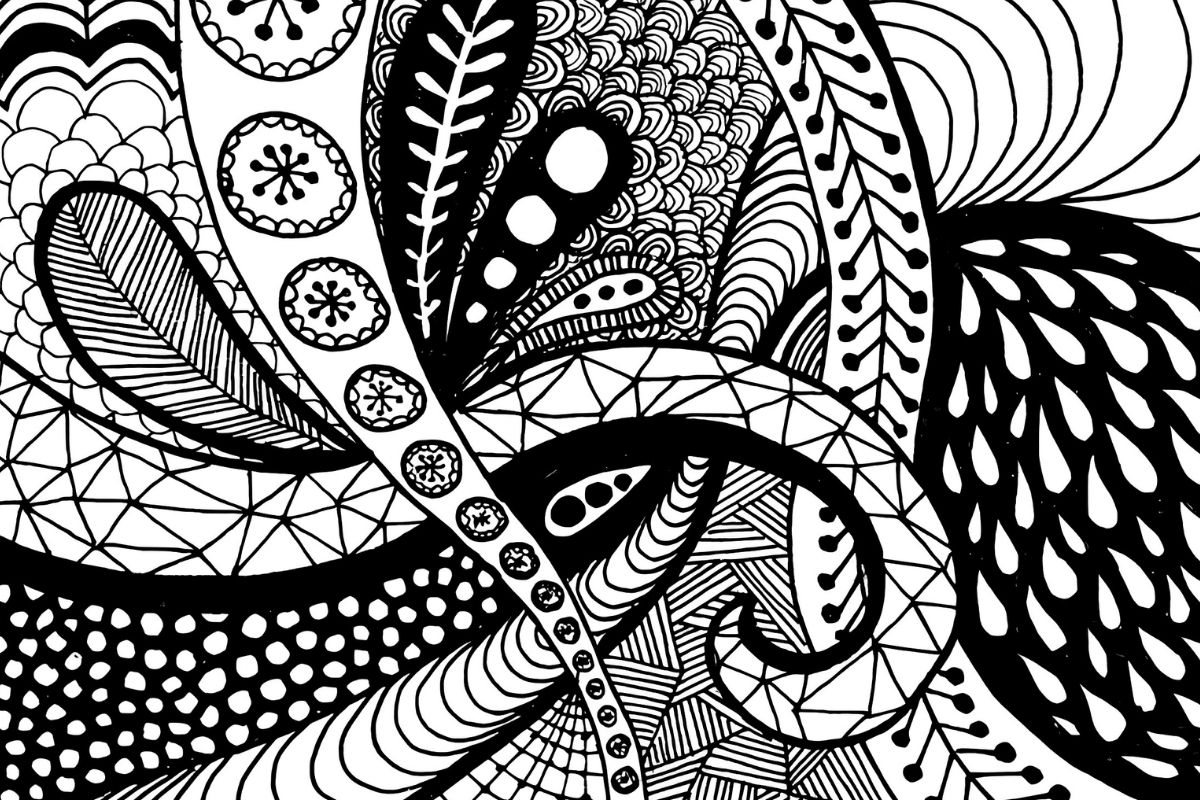
Funny enough, the method started by accident. Rick Roberts interrupted Maria Thomas one afternoon in 2003 while she was decorating a large gilded letter with patterns. She described feeling selfless and timeless in that moment, the kind of flow state artists talk about. That’s the seed the whole method grew out of.
Per Zentangle’s official site, everything comes down to five strokes – dots, lines, curves, S-curves, orbs. They call them Elemental Strokes. Once those five click for you, combining them into new tangles gets almost automatic.
There’s no correct way to lay down a stroke, either. Zentangle art isn’t supposed to represent anything or follow a plan. You just stay present with the stroke you’re drawing right now, not the finished piece.
Also Read – Inter vs Intra – Two Tiny Words That Cause Big Confusion
Why Zentangle Patterns Feel So Calming
This isn’t just something marketing teams made up. There’s actual research behind it now – small studies, but real ones.
A 2025 scoping review looked into this and found people got sharper focus and better emotional well-being while tangling. They reported feeling calmer, less stressed, less anxious, right there in the moment of drawing.
Older folks see the benefit too. One 2025 study in Activities, Adaptation & Aging tested a Zentangle group against a control group and found lower anxiety and higher happiness in the ones who tangled.
Now, let’s be honest about this research, though. The sample sizes are small, and even the people running the 2025 scoping review admit more work needs to happen before anyone can call Zentangle a proven treatment. Think of it as a genuinely relaxing habit that costs almost nothing, not something that replaces actual therapy if you’re dealing with a real diagnosis.
How to Start: Zentangle Patterns for Beginners
You need almost nothing to begin:
- A small square paper tile (traditionally 3.5 inches)
- A fine-tip black pen
- A pencil (for the border only)
- Optional: a graphite pencil or blending tool for shading later
Here’s the basic process:
- Add four small pencil dots near the corners of your tile.
- Connect the dots lightly to form a border.
- Draw a “string,” a light pencil line dividing the tile into a few sections.
- Fill each section with a different tangle, one stroke at a time.
- Add shading if you want extra depth.
- Sign and date your tile.
This is one of the best Zentangle patterns, an easy entry point for anyone who’s never drawn before. You’re not aiming for a finished picture in your head. You just follow the steps.
Also Read – The Fascinating History of Who is on the 20 Dollar Bill
22 Zentangle Patterns to Try First
| Pattern No. | Pattern Name | How to Draw It |
| 1 | Bales | A wavy line straight down the middle, then little curved ribs poking out on both sides. Kind of like a fern leaf. |
| 2 | Printemps | Loose loops spiraling outward, nothing too tight. Toss a few dots or dashes inside each one once you’re done. |
| 3 | Florz | Start with a grid of small squares. Every other square gets a curvy little petal shape inside it. |
| 4 | Paradox | Draw a square, then pack it with parallel diagonal lines. Shift the direction section by section, and you’ll get this weird optical illusion effect. |
| 5 | Hollibaugh | Wavy lines running parallel across your tile. Add dots that trace the same wave, and it starts looking almost musical. |
| 6 | Shattuck | Grid first, then shade half of each square, just the triangle part. Gives it that chunky 3D block look. |
| 7 | Purely Zentangle | Small loops, all connected, all roughly the same size. Simple, but it takes a steady hand to keep them even. |
| 8 | Msst | Little “M” shapes, overlapped and stacked in a row. Comes out looking soft, almost cloud-like once you’ve layered a few rows. |
| 9 | Crescent Moon | Crescents overlapping in a row, then shade the inside curve of each. That shading is what sells the whole thing. |
| 10 | Tipple | A line of dots first. Then connect each one with a short curve, like you’re stringing tiny beads together. |
| 11 | Cadent | Dots arranged in a grid. Connect groups of four with curved lines, and you’ll end up with these soft diamond shapes. |
| 12 | Static | Short straight lines shooting outward from random spots. Looks a bit like static on an old TV, hence the name. |
| 13 | Rain | Vertical lines, different lengths, spaced unevenly on purpose. The messiness is what makes it look like actual rain. |
| 14 | Flux | One wavy line going back and forth across the tile. Fill whatever gaps are left with small dots. |
| 15 | Sand Swirl | Start a spiral right at the center and keep going outward. Keep the lines close; that’s what gives it the sandy texture. |
| 16 | Ing | A row of small connected hooks, one after another. Think of a chain of question marks without the dots. |
| 17 | Nzeppel | Grid of squares, then drop a little circle in each one and shade around it. Simple but it adds real depth. |
| 18 | Verve | One curved line, then short strokes branching off perpendicular to it. Comes out looking feathery. |
| 19 | Huggins | Diagonal lines crossing over each other in a grid. Shade alternating triangles once the grid’s down. |
| 20 | Onamato | A row of small ovals with a line running lengthwise through the center of each. Quick one to fill space with. |
| 21 | Pokeroot | Start with one dot in the middle, then surround it with little teardrop shapes pointing outward. |
| 22 | Keeko | A wavy horizontal line, then scatter small dots evenly above and below it. Easy filler pattern once you get the rhythm. |
Start with just three or four of these on one tile. Filling every section with a different pattern can feel overwhelming for a first attempt.
Zentangle Art Patterns: Common Beginner Mistakes
- Trying to plan the whole design first. The method works best when you commit to one stroke, then the next.
- Erasing pencil guidelines too soon. Keep light pencil lines until you’re confident with the ink.
- Pressing too hard with the pen. A relaxed grip makes cleaner, calmer lines.
- Rushing shading. Shading is optional but adds the most visual depth when done slowly.
- Comparing your tile to others online. The process matters more than matching someone else’s finished piece.
Also Read –
FAQs
What are Zentangle patterns exactly?
They’re small, repeated pen-drawn shapes called tangles, built from five basic strokes, used to fill sections of a small tile to create a structured abstract design.
Are Zentangle patterns hard to learn?
No. They’re small, structured drawings made from basic shapes like dots, lines, and curves, and you don’t need a full picture in mind before starting. Most people pick up the basics in one sitting.
Do I need art skills to start Zentangle patterns for beginners?
No prior art training is required. The method breaks every pattern down into simple, repeatable strokes anyone can draw.
How long does one Zentangle tile take?
Most tiles take 15 to 30 minutes, though there’s no time limit. The focus is on the process, not speed.
Can Zentangle patterns help with anxiety?
Small studies suggest yes, though research is still limited. Recent research links the practice to reduced anxiety and increased happiness in participants. It works well as a calming habit, not a medical treatment.
What’s the difference between Zentangle and regular doodling?
Doodling is usually absent-minded and unfocused, while Zentangle follows specific steps and deliberate strokes to build intricate patterns on purpose.
Sources & References
- Zentangle Official — About the Method
- Zentangle Official — How Did It Start
- Zentangle Official — What Is It
- Hermanto et al., “Zentangle Art to Improving Mental Health: A Scoping Review,” Jurnal Promkes, 2025
- McCord, McKenny & Horstmanshof, “Effects of Zentangle on Older Adults’ Anxiety, Happiness, and Dexterity,” Activities, Adaptation & Aging, 2025
- TheMasterCraft — 17 Zentangle Patterns Guide
- Creative Zenspiration — About Zentangle