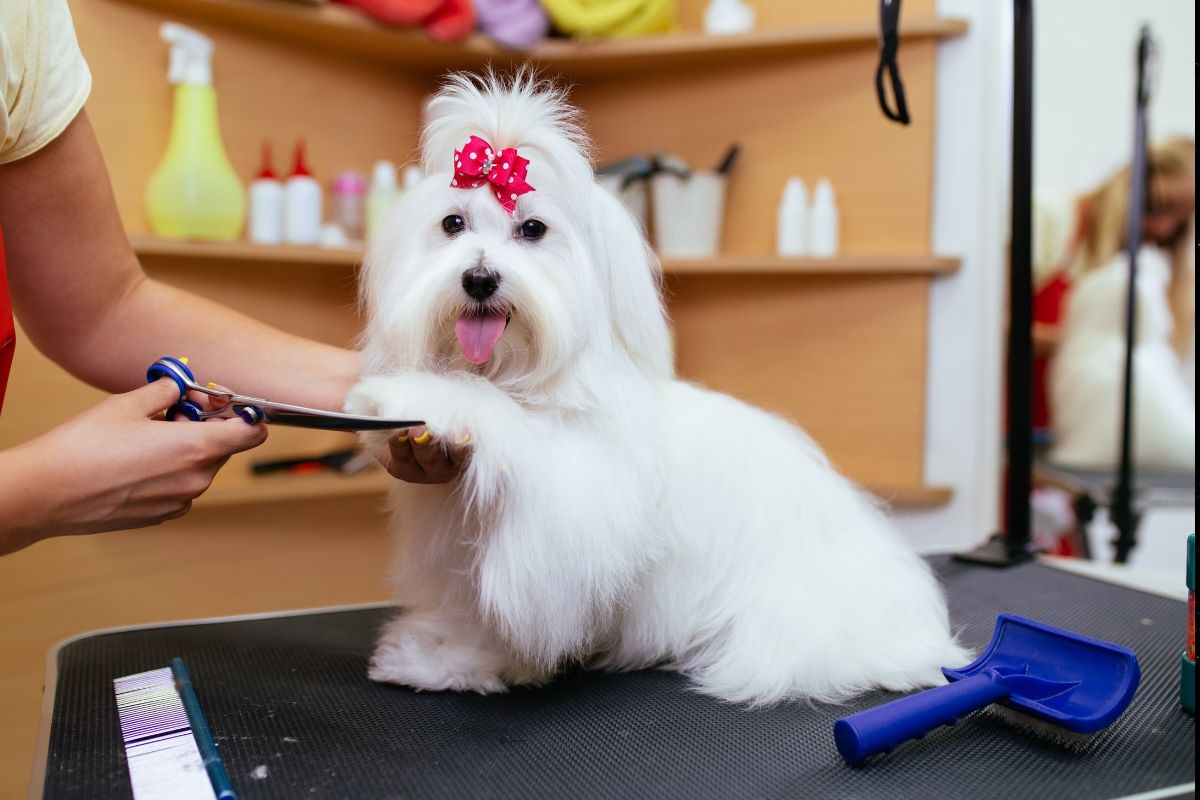
Brush a few times a week. Bathe only when your dog is really filthy. Trim nails every two to four weeks, clean ears weekly, and brush teeth two or three times a week. Run your hands over your dog’s skin and paws, too.
The best dog grooming tips are not about salon haircuts. They are small habits that protect the coat, skin, nails, ears, and mouth. Each session also puts your hands on your dog often enough to catch lumps, ticks, or sore spots early.
- Brush first, bathe second. Wet mats get tight, not loose.
- His coat type runs the schedule, not your mood.
- Use dog-specific shampoo and toothpaste. Human versions can irritate a dog.
- Stop nail trims at the first sign of the quick.
- Stink, redness, or goop means vet, not a second bath.
The Kit (Don’t Overthink It)
Less than the pet store suggests. Dog shampoo, the right brush, a metal comb, clippers, styptic powder (because accidents happen), cotton balls, ear cleaner, dog toothbrush and paste, and blunt round-tip scissors. One box, all of it.
It Starts With Brushing, Not Bathing
Brushing is the most important step. Dead hair out, natural oils spread around, tangles gone before they harden.
Coat type is everything. Slick short coat, your Boxer or Basset Hound type? Once a week: a rubber brush for dead skin and a bristle brush to sweep it off. Dense coat like a retriever? Weekly, too, slicker brush. Yorkie with that curtain of silk? Daily. Curly and double coats mat fastest, so comb down to skin level, not the top.
Go easy, though. The Best Friends Animal Society points out you can give your dog brush burn—actual irritated skin—by leaning in too hard. Spritz a detangler on dry hair and tease the knot apart. Don’t yank.
How Often Should You Bathe a Dog?
The ASPCA puts it at a bath every three months at minimum, or more if he’s outdoors or has skin issues. The Animal Humane Society goes further, every two to four months, and flags what people get wrong: wash your dog too often, and you dry his skin and strip his coat’s oils. If your dog finds every mud puddle within a mile, Zigly’s three-to-four-week pace for high-energy dogs is a better fit.
Brush your dog before he/she gets wet. Non-slip mat, three to four inches of lukewarm water, never cold. Cup or spray hose, off his ears, eyes, and nose. Shampoo head to tail, then rinse, and rinse again. Leftover suds leave a dull film and itch like mad. Towel properly, dryer on low.
Dog shampoo only. Human shampoo isn’t toxic exactly, but the fragrances can trash his skin. Use oatmeal shampoo for dry skin, and choose a tearless formula for puppies. Cotton ball in each ear first, and if soap keeps finding his eyes, ask your vet for a sterile eye lubricant. Puppy turning bath time into WWE? Float a toy in there.
Also Read – Before You Laugh at a Fat Monkey, Here’s What to Know
Nail Trims Without the Drama
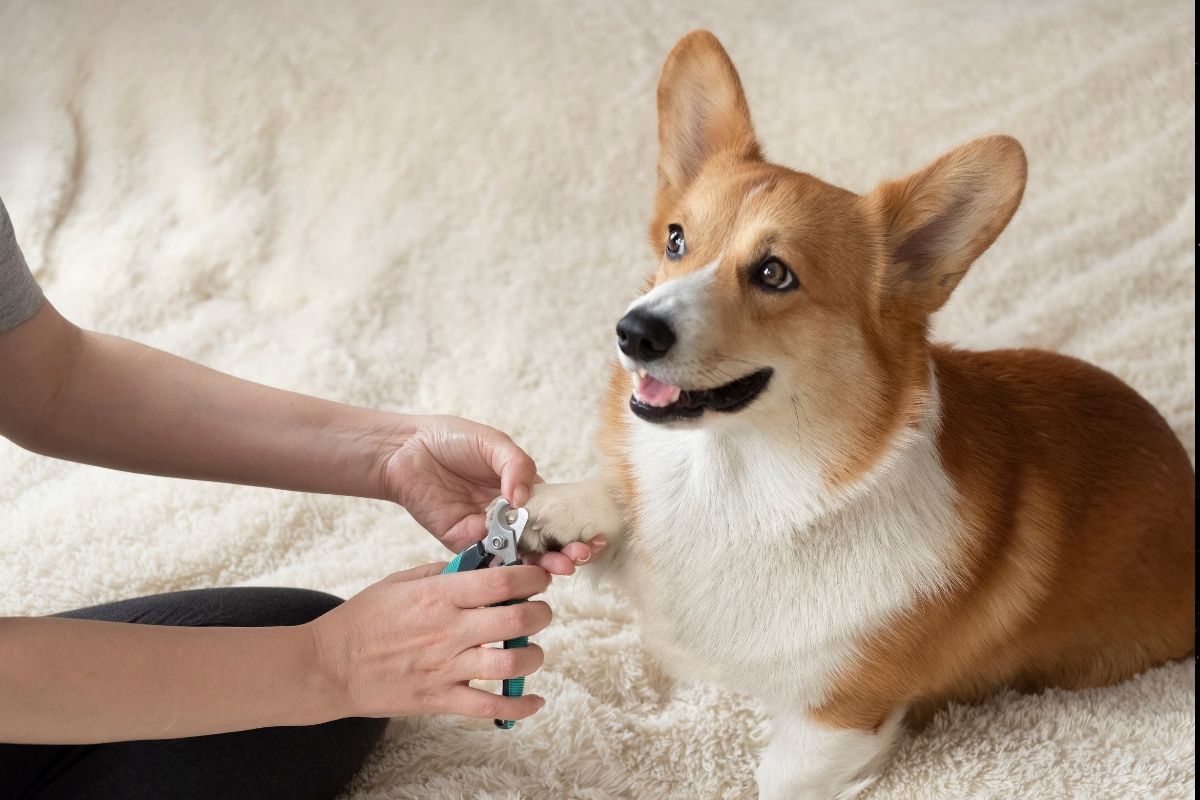
Are the nails touching the floor while he/she stands still? That tap-tap-tap down the hallway? Overdue. Most dogs need this every two to four weeks.
Back paws first, less sensitive. Grip the toe, snip a sliver at a slight angle, then look. Light nails show a pale oval mid-cut. Dark nails, a tiny black dot. Either one, that nail’s done—that’s the quick one, with a blood vessel and nerve inside.
Nick it and your dog’ll shriek as you’ve ended him, then bleed. Stir styptic powder or cornstarch into the tip, and hold for 30 seconds. Dewclaws too—inside the leg, never touch the ground, and they curl into his skin if ignored. Hates it? One nail a day with a treat after. Trembling, drooling, growling? Hand it to a groomer.
Ears, Eyes, and Face Folds
Once a week, look in there. Dampen a cotton ball with dog ear cleaner, then wipe the folds head-outward, lifting muck out rather than smearing it deeper. Nothing goes down the canal. The floppy-eared crowd—Cocker Spaniels, Basset Hounds and Poodles trap moisture, so dry them after swims. Dark wax like coffee grounds? Usually ear mites. Bad smell, swelling, head shaking, wobbly walking? Vet. Today.
Eyes, easy. Wipe outward from the inner corner with damp cotton, never the eyeball. Long-haired dogs get a trim there so hair stops poking them. The wrinkly lads, Pugs, and Shar-Peis need folds wiped and dried properly, because damp skin in a crease is a bacteria resort.
Also Read – Fascinating Things You Never Knew About Chamaeleonidae
The Step Most Owners Skip: Teeth
Loads of dogs have gum disease by age four. Four! Plaque hardens into tartar within days, and then nothing you own shifts it. Vet job.
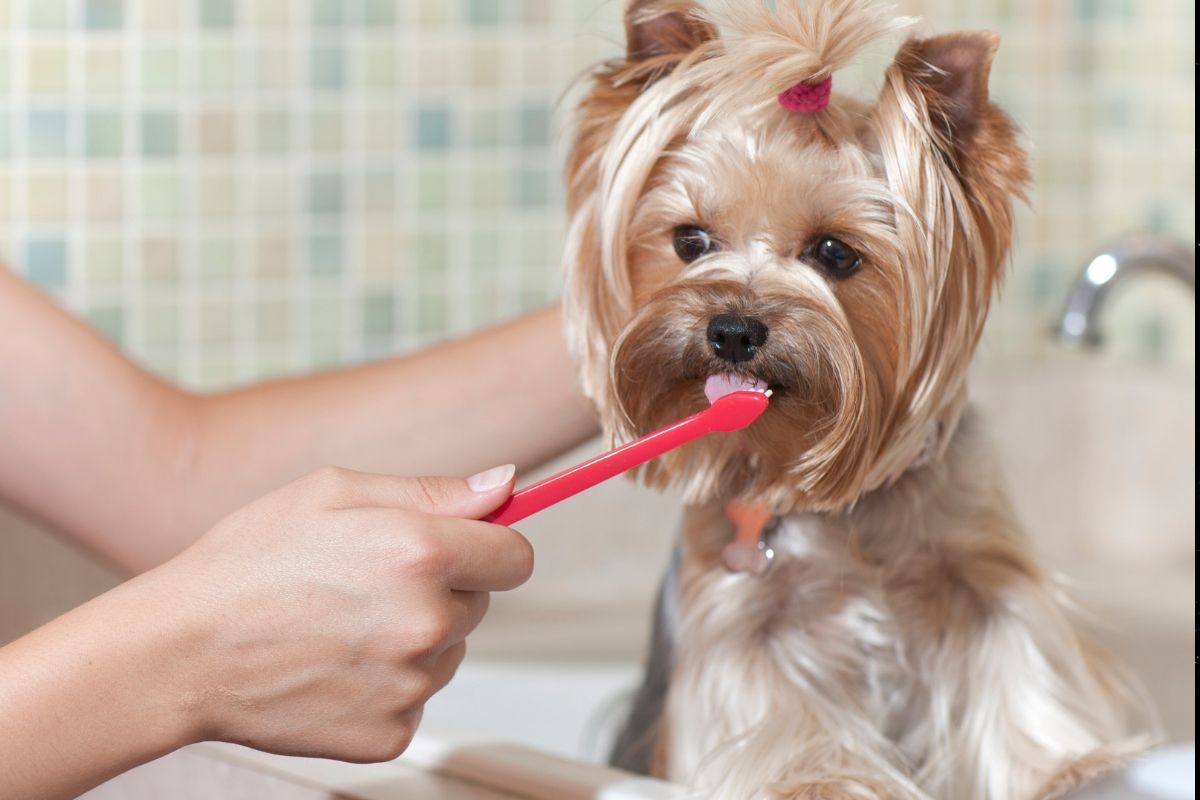
Two or three times a week, minimum. Ease in: little circles on his lips, 30 to 60 seconds a day. Then dab dog toothpaste there for the taste. Then use the brush at a 45-degree angle, making small circles on the outer surfaces only. His tongue sorts the inside. Never human toothpaste—it foams far too much and upsets his stomach. Chew toys and dental treats can help scrape away soft tartar, but they don’t replace brushing.
Paw Care Through Every Season
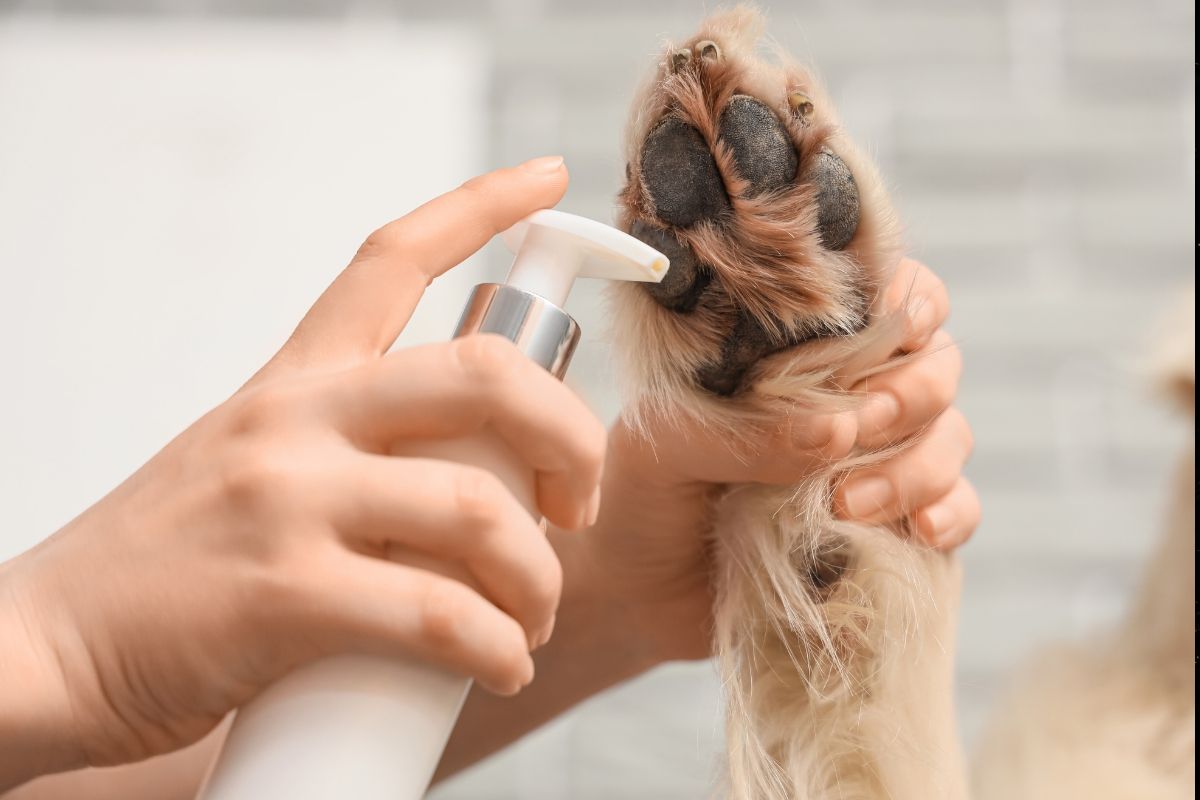
After walks, hands on the pads. Feel for cuts, cracks, pebbles, glass, foxtails, and ticks between his toes. Use tweezers for debris and keep toe hair level with the pads. Cuts under half an inch get an antibacterial rinse and a light bandage. Deeper, see the vet.
Summer rule, five seconds flat: press your hand on the pavement. If it’s too hot for you, it’s too hot for his feet. Winter, rock salt, and chemical ice melt cause sores and blisters, and dogs lick them off, which is worse. Rinse his feet in warm water after walks. Petroleum jelly works as a barrier; booties are better. Pad balm your vet, okay? Never use hand lotion—it softens pads and invites injury.
Also Read – What Dog Has the Strongest Bite Force?
Use Grooming as a Health Check
While you’re there, look. Look for scabs, rashes, bald patches, and hair that slides out too easily. Hot spots are those furious red, wet sores on the head, hip, or chest. They balloon fast. They usually begin with a matted coat or endless licking.
Mange comes from mites. The oddly cheerful bit: roughly 90% of localized demodectic cases in young dogs clear up on their own. Sarcoptic mange, aka canine scabies, is the nastier cousin—it spreads easily and can leave you with a rash of red bumps. Both need a vet. Two things to outsource: tight mats and anal glands. Scissors near a mat are how skin gets sliced, since it pulls up into the knot.
Make Your Dog Like It
Marker training beats sweet-talking. Clicker, or just “yes,” then a treat within a second. Mark your dog sniffing the brush. Then one stroke. Then a lifted paw. Ten minutes tops. Stop while he’s still enjoying it.
FAQs
- How often should I groom my dog overall?
Ans: Brush several times a week, nails every two to four weeks, ears weekly, and teeth two to three times a week.
- Can I use human shampoo on my dog?
Ans: Nope. Human shampoo has a different pH, and the fragrances can leave dogs itchy and dry.
- How do I know if I cut the nail too short?
Ans: Your dog will yelp and bleed. Styptic powder or cornstarch on the tip, pressed firmly for 30 seconds. Still bleeding? Ring your vet.
- Why does my dog smell even after a bath?
Ans: Nine times out of ten it’s the ears or mouth, not the coat. A smell that hangs around with itching or discharge needs a vet.
- Is it safe to shave my double-coated dog in summer?
Ans: Usually not. A shaved double coat can grow back wrong, and the dog loses sun and heat protection.
- When should I see a vet instead of grooming at home?
Ans: Itching that won’t quit, hair loss, strong ear or skin odor, discharge, limping, and spreading sores. Painful grooming counts.
Sources & References:
- ASPCA – Bath every three months at minimum, or more if he’s outdoors or has skin issues.
- Best Friends – You can give your dog a brush burn—actual irritated skin—by leaning in too hard.
- Animal Humane Society – Every two to four months, and flag what people get wrong: wash your dog too often, and you dry his skin and strip his coat’s oils.
- Zigly – If your dog finds every mud puddle within a mile, a three-to-four-week pace for high-energy dogs is a better fit.