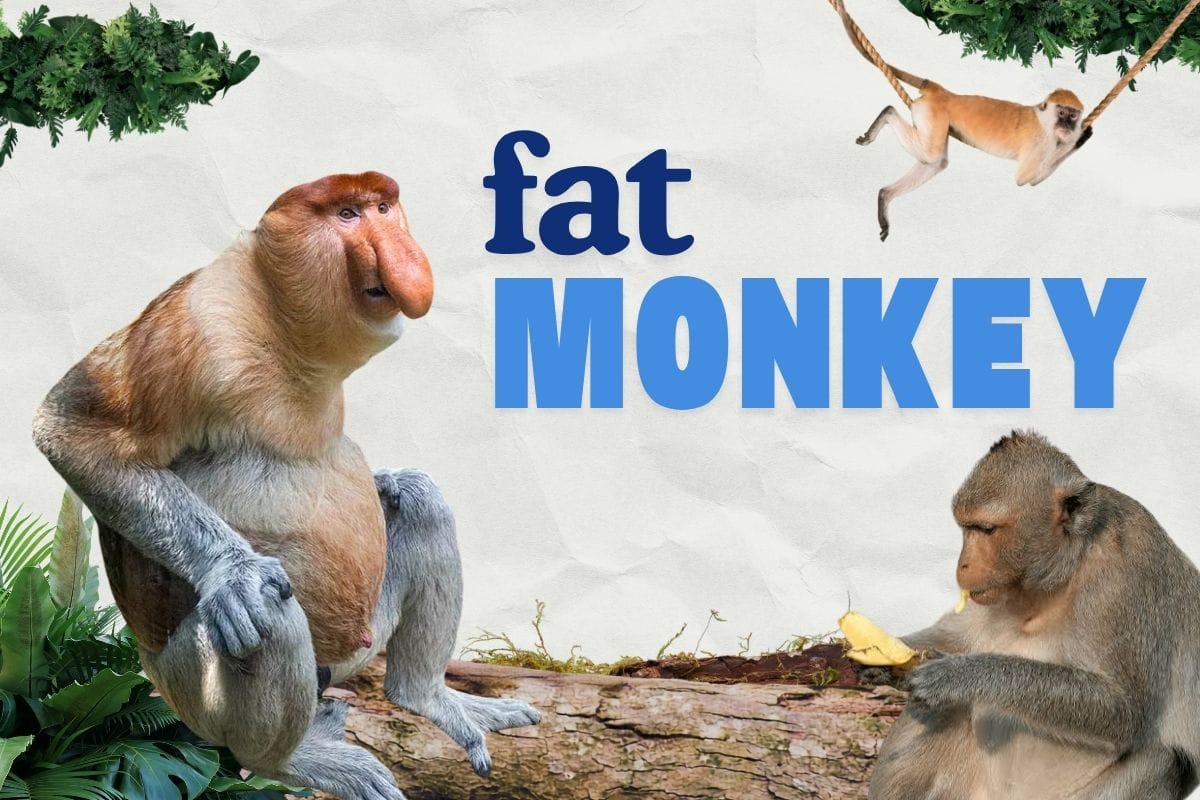
Quick Answer: A chubby primate is rarely funny once you learn the cause. Wild monkeys almost never grow obese. When one did, it usually ate human junk food or lived in captivity on rich chow. Genes, gut bacteria, and readily available calories all shape why some monkeys pack on weight.
One bite of a tourist’s snack can change a whole life. A wild, fat monkey often signals a broken diet, not a healthy one. Scientists now use these animals to learn why people gain weight too. A viral, plump primate always hides real biology behind the belly.
- Wild monkeys stay lean. Obesity shows up mostly in captivity or near humans.
- Genes and gut bacteria help decide which monkeys get fat.
- Humans are not the only “fat primate”. Many species plump up on extra food.
- The proboscis monkey’s big belly is normal digestion, not fat.
Why Do Some Monkeys Get Fat?
Christopher Schmitt, a biological anthropologist, studies vervet monkeys in the wild and in a captive colony at Wake Forest University. He shared results in Bostonia.
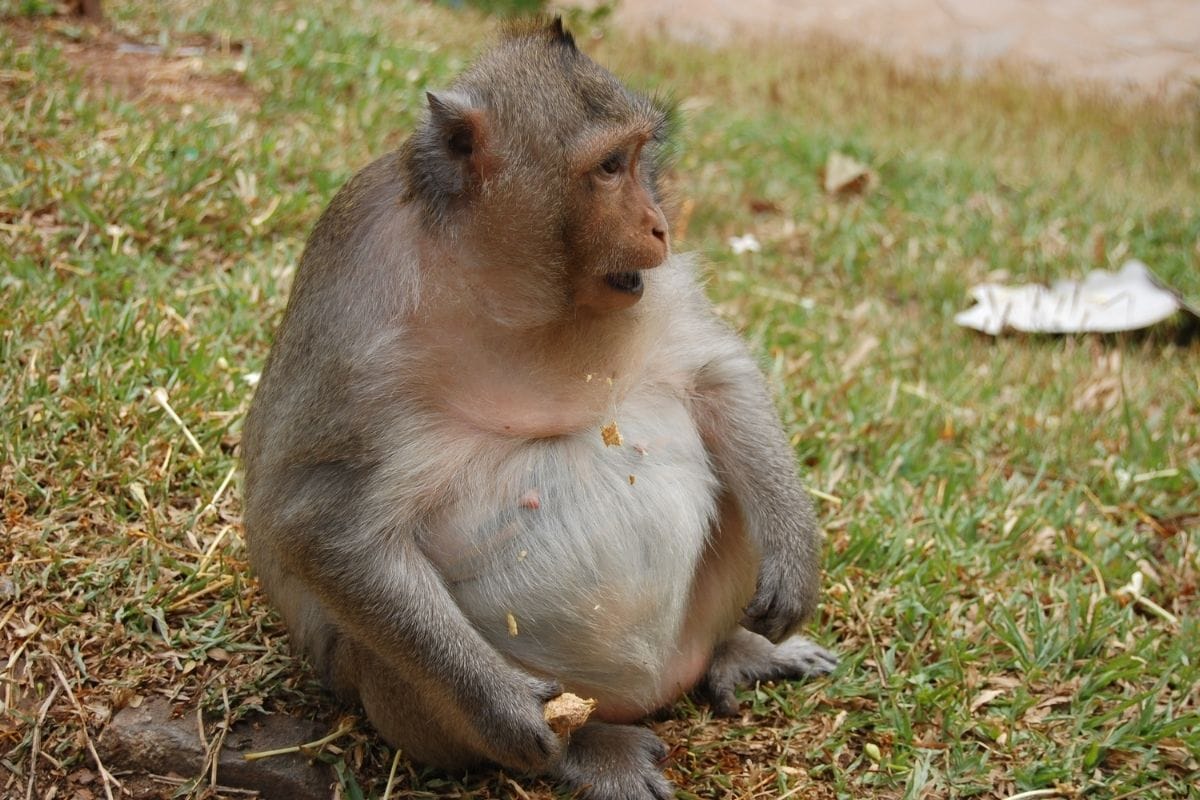
About 16% of captive vervets in the study developed obesity despite receiving the same standard monkey chow, suggesting that individual biological differences can influence susceptibility to weight gain. A smaller share stays obese for years. Schmitt found a genetic component both to becoming obese and to staying that way. Whole genome sequences showed links to regions tied to human metabolic problems.
Gut bacteria matter too. The ratio of two bacterial families, Firmicutes and Bacteroidetes, tracks with body condition in people. Obese humans carry a different mix than lean ones. Schmitt’s team is comparing the gut microbiome of wild and captive vervets to test these findings.
Also Read – What Dog Has the Strongest Bite Force? Top 8 Breeds Ranked by PSI
Humans are Not the Only Fat Primate
For years, experts blamed human weight on “thrifty genes” that store calories well. A large study challenges that. Herman Pontzer of Duke University reviewed weight data on 40 nonhuman primate species, about 3,500 animals, and published it in Philosophical Transactions of the Royal Society B. The journal Science covered the findings.
Many primates grew 50 percent heavier in captivity than their wild cousins. Pontzer then compared 4,400 U.S. adults with people in nine foraging communities.
Americans were also about 50 percent heavier — the same ratio. His point is blunt: humans are not special. Extra food, not carbs, drives the gain. Wild primates eat more carbs than captive ones, yet both burn similar calories daily.
Why Are Humans “The Fat Primate”?
Devi Swain-Lenz of Duke University studied fat samples from humans, chimps, and rhesus macaques. Her paper in Genome Biology and Evolution used a tool called ATAC-seq to read how DNA is packed.
The team found about 780 DNA regions that sit open in chimps and macaques but bunch up in humans. Many help turn white fat into calorie-burning beige fat.
Healthy humans carry 14 to 31 percent body fat, while other primates hold under 9 percent. Swain-Lenz says we are “stuck down the white fat pathway.” Our brain tripled in size over six to eight million years, which may explain the shift.
| Trait | Humans | Other primates |
| Body fat | 14–31% (Generally higher than many other primates) | Under 9% (Varies considerably by species) |
| Fat type | Mostly white (Predominantly white adipose tissue) | More beige/brown (Composition varies among species) |
| Weight gain in captivity | ~50% heavier (Body mass can increase with greater food availability) | ~50% heavier (Many species show increased body mass in captivity) |
Also Read – Best US Travel Destinations
Famous Fat Monkeys
Uncle Fatty, a wild macaque in Bangkok, gorged on soda and junk food from tourists. Reports said Uncle Fatty, a macaque in Bangkok, weighed roughly 26–27 kilograms at his heaviest. The Guardian reported that he even had “minions” bringing him food. Officers caught him, put him on lean protein and vegetables, and released him slimmer.
Kanzi, a famous bonobo who understood spoken English, reached triple his species’ average weight after years of banana and peanut rewards. He also went on a diet. The lesson: simple human food makes wild animals sick.
The Proboscis Monkey: Big Belly, Not Fat
Now, let’s look at a monkey that people wrongly call fat. The proboscis monkey (Nasalis larvatus) lives only on Borneo. National Geographic notes that males can reach 50 pounds, while females are about half that size. Both sexes have round, pot-bellied stomachs.
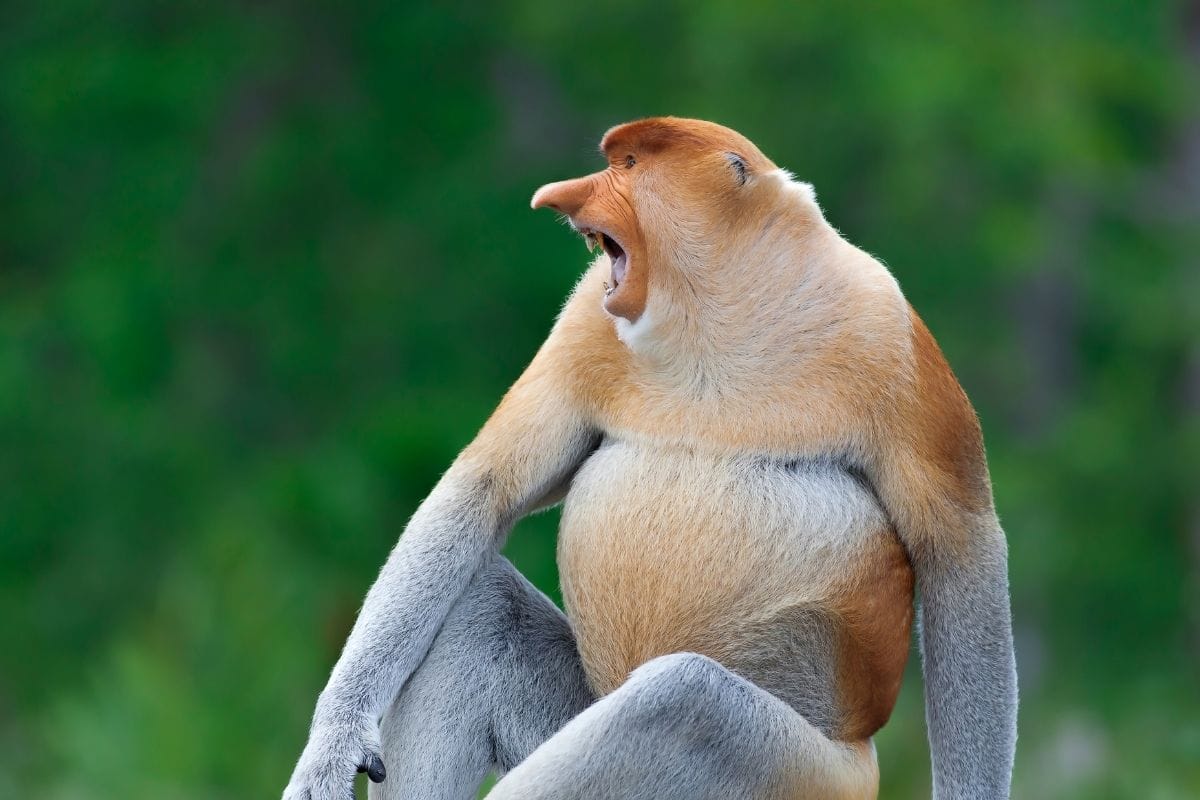
So why are proboscis monkeys fat-looking? They are not fat at all. Their bellies hold a large, chambered stomach full of helpful bacteria. Like a cow, they chew cud and ferment tough leaves. This lets them digest plant toxins in young leaves and unripe fruit. Ripe fruit can cause fatal bloating, so they avoid it.
Males also grow huge noses, over 10 centimetres long. The nose amplifies calls and attracts females, a clear case of sexual selection. Proboscis monkeys commonly live in one-male groups containing several females and their young, although group structure can vary. The monkeys are strong swimmers, using webbed feet to flee crocodiles and clouded leopards.
Also Read – Mediterranean Sea
A Species Under Threat
Sadly, these species are vanishing. The IUCN Red List rates the proboscis monkey as Endangered, with numbers down by more than 70 percent over roughly four decades.
Logging and oil palm plantations have wrecked their mangrove homes. Smithsonian Magazine puts the current wild population at 20,000 to 25,000. They are protected across Borneo and live in at least 16 reserves, yet the decline goes on.
FAQs
- What is the fattest monkey ever recorded?
Reports said Uncle Fatty weighed approximately 26–27 kilograms at his heaviest and became famous after gaining substantial weight while living near Bangkok’s tourist areas. - Are proboscis monkeys actually fat?
Ans: No, their big bellies hold a large, chambered stomach that digests leaves. It is normal anatomy, not stored fat. - Why do monkeys get fat in captivity?
Ans: Rich chow, extra calories, and less need to search for food add up. Genes and gut bacteria also decide who gains weight. - Can wild monkeys become obese?
Ans: Rarely; it mostly happens when they eat human junk food, like snacks and soda, near towns and temples. - Are humans the fattest primates?
Ans: Humans carry 14–31% body fat versus under 9% in most primates. Yet many primates gain weight just as easily on extra food. - What do proboscis monkeys eat?
Ans: Mainly young leaves, seeds, and unripe fruit, plus the odd insect. They skip ripe fruit because its sugar can cause deadly bloating.
Sources & References:
- Bostonia – A study revealed that about 16 per cent of the captive vervets become obese on the same standard monkey chow.
- The Guardian – Uncle Fatty had minions and other monkeys that brought him food.
- National Geographic – Male proboscis monkeys can reach 50 pounds, while females are about half that size.
- Science – Many primates grew 50% heavier in captivity than their wild cousins.