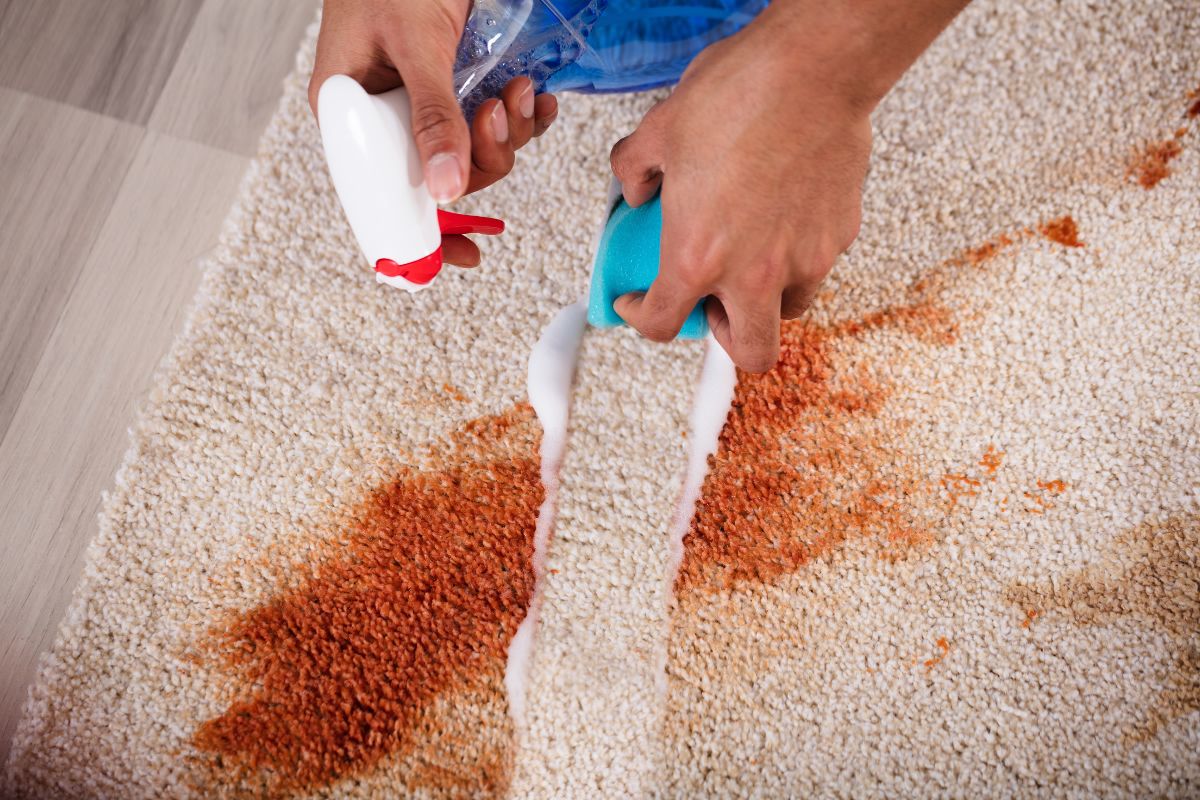
Blot the spot with a white cloth, mix one teaspoon of dish soap into two cups of cool water, then dab from the outside in. Rinse with plain water, press the area dry with a towel, and point a fan at it.
That is how to clean carpet stains when the clock is ticking. Below are each stain type, the drying trick that matters most, and the mistakes that make a mark stick.
- Blot, never rub. Rubbing pushes the stain into the backing.
- Work from the outer edge inward so the spot does not spread.
- Use cool water. Heat sets protein stains like blood and milk.
- Test any cleaner on a hidden patch first.
- Dry time is the real deadline, not cleaning time.
Start the Clock: Your First Five Minutes
Speed beats product. Carpet fibers soak up liquid fast, and once a spill reaches the backing, it becomes a much bigger job. Scoop solids first with a spoon, lifting rather than pressing. Then press a white cloth or a thick stack of paper towels onto the wet area. Stand on it if you need to. Keep moving to a clean section until nothing else is transferred.
Try plain water first. Kärcher estimates around 90 percent of household stains are water-soluble, so a damp cloth solves more spills than people expect.
Also Read – Why Home Robotics and AI Are Moving Into the Everyday Kitchen
Check Your Carpet First
Two minutes here saves a ruined rug. Wool and silk need only low moisture, since soaking shrinks the fibers. Jute and sisal hate liquid, so dry powder and light dabbing work better. Nylon, polyester, and polypropylene handle water-based solutions comfortably.
A guide from Wooden Street makes the same point: match the method to the material instead of grabbing whatever sits on the kitchen shelf. Read the care tag, then test your cleaner on a hidden spot and wait ten minutes for color loss. Wool owners have an extra resource: the WoolSafe Organisation has published carpet care guidance for over twenty years and certifies products that are safe for wool pile.
The Rescue Kit in Your Kitchen
You likely own it all: white cloths or plain paper towels, mild dish soap, white vinegar, baking soda, cornstarch, and rubbing alcohol. Skip colored towels, which bleed dye into damp carpet.
Mix a teaspoon of dish soap and a tablespoon of white vinegar into two cups of warm water for a general stain lifter. Apply it to the cloth, never straight onto the pile. Less liquid means less drying time, and tonight that matters.
How to Clean Carpet Stains by Type
Coffee and tea: Blot until no more liquid lifts, then dab with the soap and vinegar mix. Rinse with a damp cloth and blot dry. If the drink had milk in it, finish with an enzyme cleaner, or the spot turns sour-smelling in a few days.
Red wine: Blot at once, then dab cold water on to dilute what is left. Tapi warns against scrubbing wine, because that spreads the color and damages the pile. If a pink shadow stays, cover it with a paste of baking soda and water, let it dry, then vacuum. Salt also pulls wine from fresh spills, a method Dyson recommends working from the outside in and vacuuming once the grains dry.
The old white wine trick is contested. Some cleaners swear by it, others say it just adds more sugary liquid. With guests arriving, skip it.
Grease and food: Scrape the solids, blot the oil, then bury the mark in baking soda or cornstarch. Give it twenty to thirty minutes, vacuum, and finish with the soap solution.
Pet accidents: Blot hard, rinse with cold water, then use an enzyme cleaner. Enzymes break down the organic matter that causes odor, and soap alone will not. Rug Doctor notes these formulas work best when kept moist and given twelve to seventy-two hours, so the smell keeps fading tomorrow. Avoid ammonia-based cleaners, since urine contains ammonia and pets return to the same spot.
Ink: Dab with rubbing alcohol on a white cloth, moving to a clean section as the ink lifts. A cotton swab keeps pen marks contained. Open a window, since alcohol is flammable.
Mud: Let it dry fully, break the crust with a spoon, then vacuum from several directions before adding any liquid.
Wax or gum: Harden it with ice in a freezer bag and chip it off. Lift the last of the wax by laying brown paper over it and pressing briefly with a warm, dry iron.
Blood: Cold water only, and blot repeatedly. Tumble Dry stresses that hot water sets stains permanently.
Also Read – 7 Interesting Facts About Chrysanthemums You May Not Know
Dry It Faster Than It Wants to Dry
A damp patch is as obvious as a stain, so this step decides whether anyone notices. Lay dry towels over the spot and stand on them. Swap in fresh towels and repeat.
Then move air. Open a window, run a fan, and switch on heating or air conditioning for circulation. Bissell advises waiting four to six hours before walking on deep-cleaned carpet, with full drying taking up to twenty-four hours, so spot treatment is the smarter choice tonight. Using a machine? Make extra passes with the spray trigger off to pull moisture back out.
Dry powders are another shortcut. Vanish powder is brushed in and vacuumed up after roughly twenty minutes, with no water involved.
Why Old Stains Come Back?
Ever cleaned a mark, then watched it return a week later? The stain reached the backing, and the wicks went back up as the carpet dried. Use less water, blot hard, and rinse fully. Leftover soap is sticky and attracts dirt.
Last-Minute Cover-Ups
If a faint shadow refuses to budge, buy time. Sprinkle baking soda over the area, leave it as long as you can, then vacuum before guests arrive. It neutralizes odor too.
Furniture dents lift with steam. Lay a damp cloth over the dent, hover a steam iron above it briefly, and the fibers will swell back. And there is no shame in sliding an ottoman over the spot tonight.
Also Read – Everything About Traditional Mexican Hacienda-Style Homes
When to Stop and Call a Professional
Some stains are not DIY jobs. Dye, paint, burn marks, and anything on antique, silk, or valuable wool rugs need expert hands. Stop too if the stain spreads wide, the backing feels soaked, or the carpet smells musty, which can point to mold.
One habit prevents most of these problems: entry mats catch a large share of outdoor dirt, and a no-shoes rule does the rest.
FAQs
- What removes carpet stains the fastest?
Ans: Dish soap in cool water, applied to a white cloth and blotted from the outside in. It handles coffee, food, juice, and most everyday spills in minutes.
- Can I use vinegar and baking soda on carpet?
Ans: Yes, on most synthetic carpets. Sprinkle baking soda, mist with equal parts white vinegar and water, wait ten minutes, then blot and vacuum once dry.
- Does hot water remove carpet stains better?
Ans: No. Hot water sets protein stains like blood, milk, and vomit. Use cool or lukewarm water, and keep hot water away from wool entirely.
- How do I dry a wet carpet spot quickly?
Ans: Press dry towels into it with your body weight, then run a fan and open a window. Small spot treatments usually dry in one to two hours.
- Is bleach safe on carpet?
Ans: No. Bleach strips color from most carpets and leaves a permanent pale patch. Only some 100 percent polypropylene carpets tolerate diluted bleach.
- Why does my carpet stain keep reappearing?
Ans: The stain soaks into the backing and wicks upward as the carpet dries. Use less water, blot thoroughly, and rinse out every trace of soap.
Sources & References:
- Karcher – Around 90 percent of household stains are water-soluble, so a damp cloth solves more spills than people expect.
- Wooden Street – Match the method to the material instead of grabbing whatever is on the kitchen shelf.
- Bissell – Wait four to six hours before walking on deep-cleaned carpet, as full drying takes up to twenty-four hours.
- Tumble Dry – Hot water sets stains permanently.