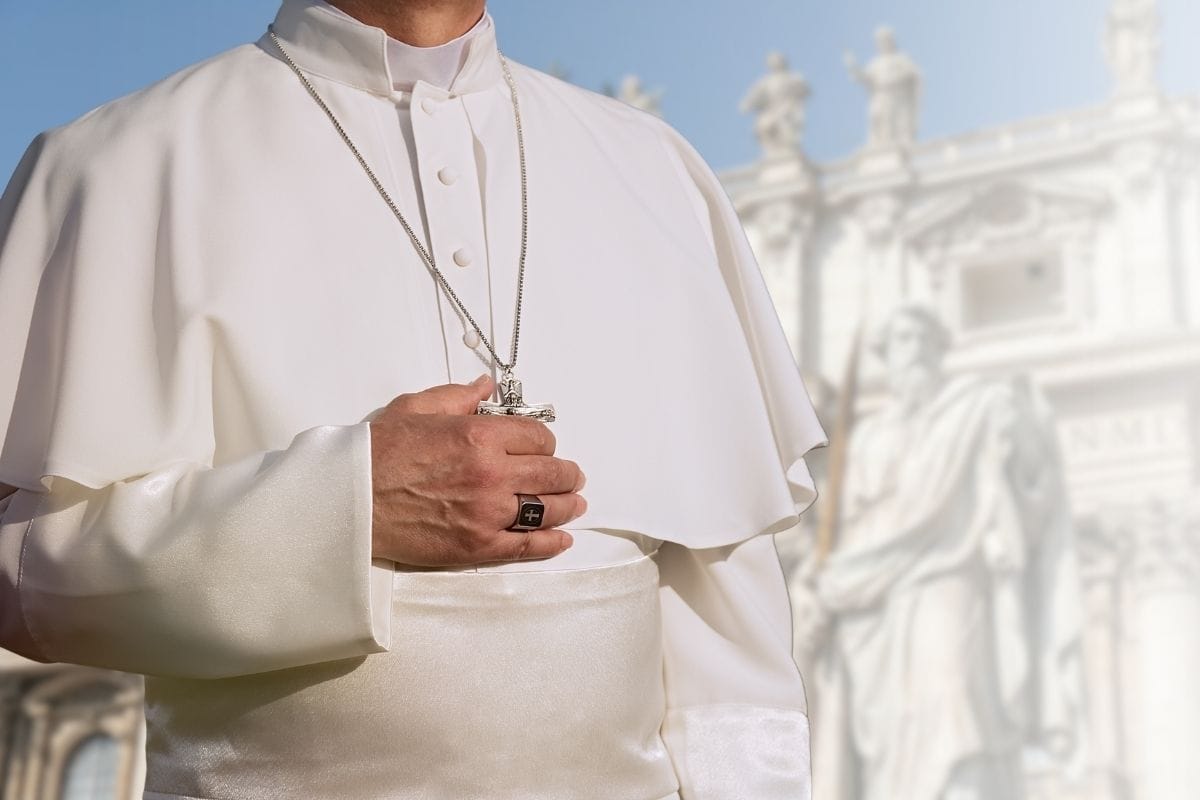
Quick Summary: The pope holds three jobs at once, and most descriptions collapse them into one. He is the bishop of a single diocese in Italy. He is the spiritual leader of roughly 1.4 billion Catholics worldwide. And he is the sovereign of a 0.49 square kilometre state with its own diplomatic corps, currency arrangements, and army.
The current holder is Pope Leo XIV, born Robert Francis Prevost in Chicago in 1955, elected on 8 May 2025 as the 267th pope and the first American to hold the office, following the process that determines how a pope is elected by the College of Cardinals.
Below are the three roles and the one feature of the office that most descriptions get wrong.
What Are the Three Main Roles of the Pope?
| Role | What the Pope Does | Main Responsibility |
|---|---|---|
| Bishop of Rome | Oversees the Diocese of Rome | Local Church leadership |
| Head of the Catholic Church | Teaches, governs and leads the Church | Global Catholic leadership |
| Sovereign of Vatican City | Exercises authority over Vatican City | Government and administration |
1. Bishop of Rome
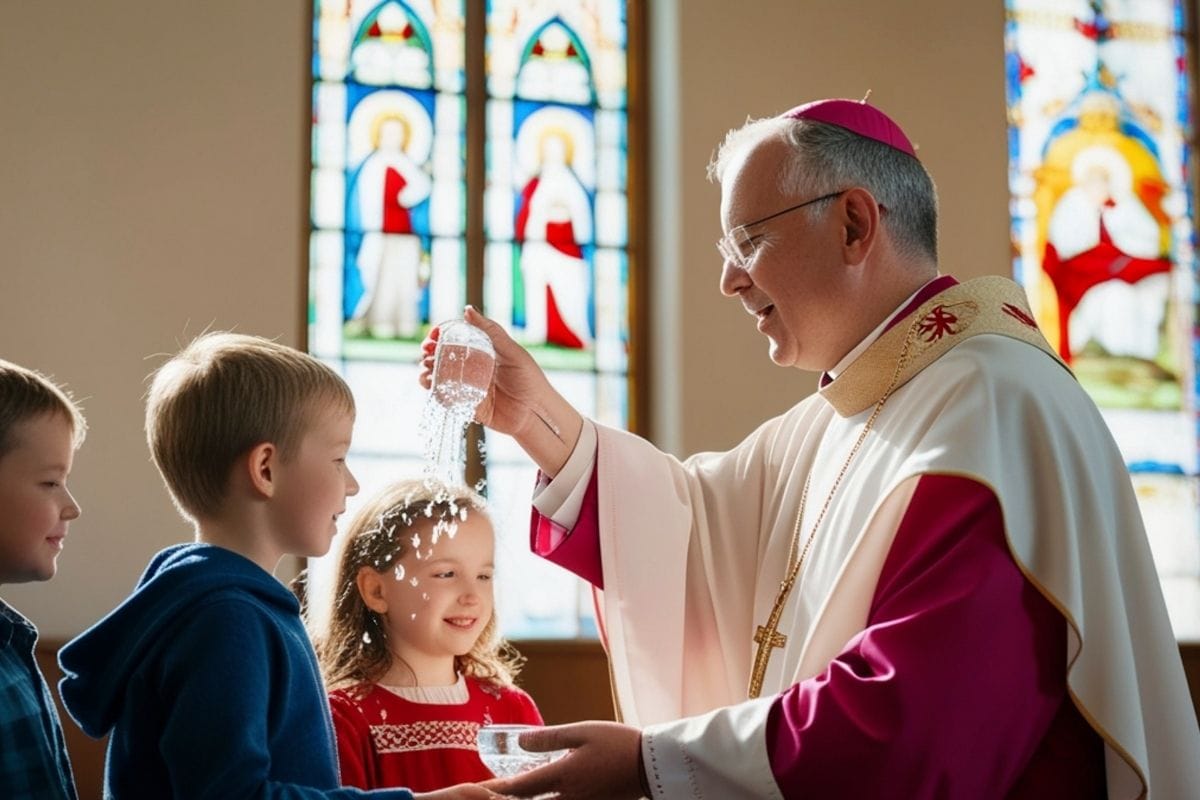
This is the foundational title and the one everything else derives from. Catholic teaching holds that the pope is the successor of the Apostle Peter, who is regarded as the first Bishop of Rome. Every other papal title exists because of that one.
In practice, the pope delegates most day-to-day running of the Roman diocese to a vicar general, but he remains its bishop.
2. Head of the Catholic Church
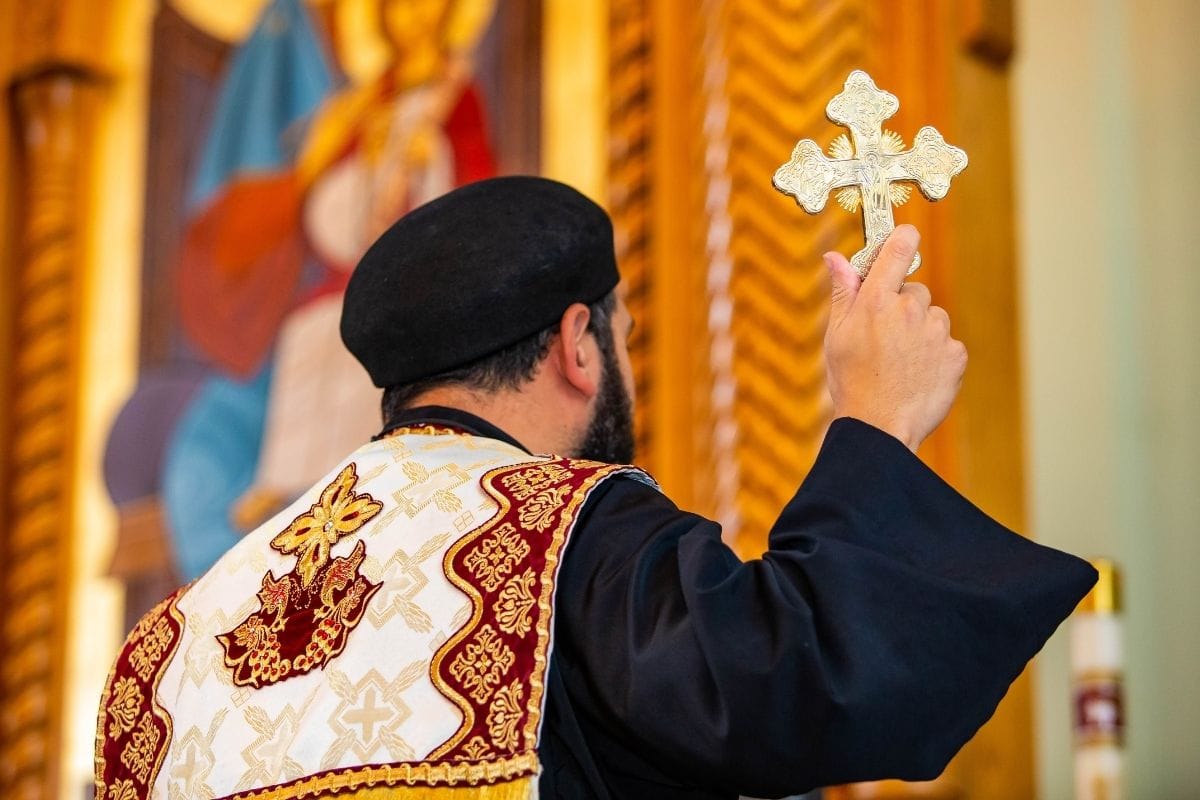
The pope holds supreme authority over the Church’s teaching, governance, and worship, an institution whose history also explains the much broader question of how old the Catholic Church is.
Teaching. Popes issue encyclicals, letters addressed to the whole Church on doctrine or social questions. Leo XIV signed a document on 15 May 2026, deliberately choosing the anniversary of Rerum Novarum, the 1891 encyclical of Leo XIII on industrial labour that his chosen name points back to. He is also expected to publish a major social teaching document on artificial intelligence. Beyond encyclicals, popes issue apostolic exhortations, apostolic constitutions, and motu proprio, each carrying different weight.
Governing. The pope appoints the world’s Catholic bishops, creates cardinals at gatherings called consistories, and runs the Roman Curia, the Church’s central administration; these senior church officials are also central to understanding what a cardinal is and the role the College of Cardinals plays in the Church.
Sanctifying. He presides at major liturgies, canonises saints, and sets the Church’s liturgical direction.
3. Sovereign of Vatican City State

The pope is an absolute monarch of the smallest country in the world, holding legislative, executive, and judicial authority over it, while his residence is in Vatican City — one reason the question Where does the pope live is closely tied to the geography of the Holy See.
Separately from the state, the Holy See is the legal entity that conducts diplomacy. It maintains formal relations with more than 180 countries and holds permanent observer status at the United Nations. The distinction matters: the Holy See signs treaties and sends nuncios, and Vatican City is the territory that guarantees its independence.
The Thing People Get Wrong About Infallibility
Papal infallibility carries no guarantee that a pope is right in general, and it does not cover his opinions, his interviews, his political comments or most of his teaching.
The First Vatican Council defined the doctrine in 1870. It applies only when the pope speaks ex cathedra, meaning he formally and explicitly defines a doctrine on faith or morals as binding on the whole Church. The conditions are narrow, and the power has been used sparingly. The clearest undisputed exercise since 1870 is Pius XII’s 1950 definition of the Assumption of Mary.
Everything a pope says in an airplane press conference, a homily, or a book falls outside it.
The Weekly Rhythm
The public parts of the job run on a fixed calendar:
- Wednesday general audience in St Peter’s Square or the Paul VI Audience Hall, with a catechesis delivered in stages across a theme
- Sunday Angelus from the window of the Apostolic Palace overlooking the square
- Major liturgies at Christmas, Holy Week and Easter, including the Urbi et Orbi blessing
- Apostolic journeys, the international trips that occupy a growing share of a modern papacy
Leo XIV’s 2026 travel has included Africa and a visit to Spain in June, the first papal visit there since 2011, with a trip to Uruguay, Argentina, and Peru announced for November. Peru carries personal weight for him: he spent years there as an Augustinian missionary and later as a bishop.
How Has the Pope’s Role Changed Over Time?
Then your existing section about the Papal States, 1870, the Lateran Treaty and modern communication fits perfectly underneath.
The modern papacy is a fraction of what it was territorially and vastly larger in reach. Until 1870, the pope governed the Papal States, a territory covering much of central Italy. Italian unification took it, and the Lateran Treaty of 1929 replaced it with the 49 hectares of Vatican City.
Global communication replaced territorial power. A nineteenth-century pope addressed the Church through bishops and printed letters. Leo XIV reaches 1.4 billion Catholics directly, and his statements on migration, labour and war are reported worldwide within minutes.
Frequently Asked Questions
Who is the pope now?
Pope Leo XIV, born Robert Francis Prevost, was elected on 8 May 2025. He is the first American and the first Augustinian to hold the office.
Is the pope infallible?
Only in narrowly defined circumstances, when formally defining doctrine on faith or morals ex cathedra. His ordinary statements and opinions are not covered.
Is the Pope a head of state?
Yes. He is the sovereign of Vatican City State, and the Holy See maintains diplomatic relations with more than 180 countries.
Can a pope resign?
Yes. Canon law permits it, provided the resignation is freely made and properly manifested. Benedict XVI resigned in 2013, the first pope to do so in nearly six centuries.
How many Catholics are there?
Roughly 1.4 billion worldwide, the largest single religious denomination.
Who elects the pope?
The College of Cardinals, restricted to those under 80, meets in a conclave.
The Bottom Line
The pope runs a diocese, leads a global church of 1.4 billion people, and governs a country the size of a large park. The infallibility that dominates popular understanding of the office applies to a handful of formal declarations and nothing else. The rest of the job is teaching, appointing, travelling and, since 1929, doing it from the smallest sovereign territory on Earth.
Sources
Holy See press office and vatican.va official documents; First Vatican Council, Pastor Aeternus, 1870; Code of Canon Law; Lateran Treaty, 1929; Encyclopaedia Britannica biography of Leo XIV; Catholic News Service and Associated Press reporting on the 2025 conclave and the 2026 papal calendar.