Quick Answer: Hurricane season in the Caribbean runs from 1 June to 30 November every year. It peaks between late August and October, and 10 September is the statistical midpoint of the Atlantic season. Most of these months have sunshine, cheap flights, and half-empty beaches.
Before you cancel anything or panic-book a fortnight in Tenerife, read the guide instead.
- Official window: 1 June to 30 November.
- Peak danger: late August, September, and October. Midpoint is 10 September.
- The Caribbean falls within the Atlantic hurricane season.
- The sea is about a million square miles wide. One storm can’t cover it.
- Aruba, Bonaire, and Curaçao are located outside the hurricane belt.
- The 2026 forecast is below normal because of a strong El Niño.
When is Hurricane Season in the Caribbean?
It is six months. The National Hurricane Center defined the hurricane season as running from 1 June to 30 November in 1965, and it has never really needed to change, because this period accounts for over 97% of everything the Atlantic throws out.
Storms don’t read calendars. May has produced a few. That’s why forecasters now start publishing tropical outlooks from 15 May instead of twiddling their thumbs until June.
Belize With Alvin states that the Caribbean falls within the Atlantic hurricane season. The basin swallows the ocean, the Gulf and the Caribbean Sea, so the same six-month window applies to every island.
Which Months Carry the Most Risk?
| Month | Usually Affected | Risk |
| June | Western Caribbean, Belize, Cuba, Mexico | Low to moderate |
| July | Lesser Antilles, Puerto Rico, Hispaniola | Moderate |
| August | Eastern and central Caribbean, Jamaica, Cuba | High |
| September | Everywhere, Bahamas included | Very high |
| October | Western Caribbean, Jamaica, Caymans | High |
| November | Western Caribbean, southern Bahamas | Moderate |
| December to May | Rare off-season storms only | Very low |
The hotspot changes with time. June storms lean west. Come August and September, nowhere’s off limits. Late ones swing westward again, which is why Belize keeps getting clobbered in the back half of the season: Hattie on 31 October 1961, Iris on 8 October 2001, and Lisa on 2 November 2022.
Some islands are just unluckier by geography. Roughly 10% of Atlantic landfalls hit the Bahamas and Turks and Caicos, about 9% Cuba, 8% the Dominican Republic and Haiti, 7% Puerto Rico, and 6% Jamaica. Belize? Only around 3%.
Why is the Caribbean So Prone to Hurricanes?
Most of these things start as scruffy clusters of thunderstorms moving along the West African coast near Cape Verde. Then they drift west over bathwater-warm sea, and that’s where the trouble begins. Warm water plus soggy air equals fuel. The hot air rockets upwards, whips up the surface, and suddenly you’ve got walls of water and winds that flatten roofs.
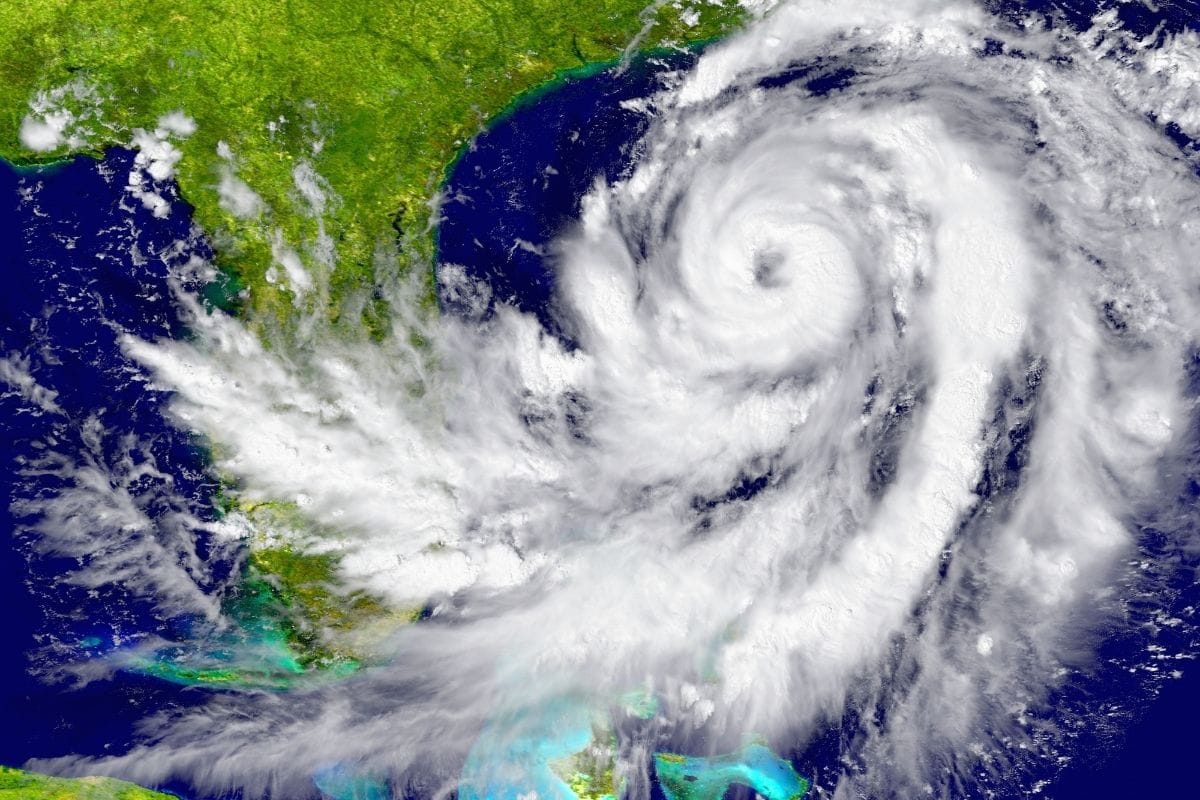
A hurricane is basically a massive group of thunderstorms spinning as one. Two things can stop them. Dry Saharan dust smothers baby storms before they get going. Land finishes the job, because no warm water means no engine. As Responsible Travel notes, that’s why little islands surrounded by tepid sea cop it worst.
Also Read – How Big Is Vatican City?
Tropical Storm or Hurricane? Know the Difference
It is wind speed. If the wind speed is between 39 and 73 mph, it’s a tropical storm. If it’s 74 mph, it’s a hurricane, and then it gets ranked with a Saffir–Simpson category from 1 to 5. It is called a typhoon in the northwest Pacific and a tropical cyclone across the Indian Ocean and South Pacific. Rain and flooding wreck more than wind does.
What is Happening in the 2026 Season?
Honestly? Not much, and that’s excellent news for your booking. NOAA has forecast a below-normal season and then trimmed it further in August: 7 to 13 named storms, 2 to 6 hurricanes, and 0 to 2 major ones, with a 75% chance of below-normal activity.
The culprit is a strong El Niño, which floods the Atlantic with wind shear and shreds storms before they can organise. Every single strong El Niño since 1950 has coincided with a below-normal Atlantic season. By early September we’d seen five named storms, from Arthur through Edouard, and not one had become a hurricane. Seasonal storm energy is running about 90% under par.
In 2025, there were 13 named storms, five hurricanes, and four of which were major. Melissa hit Jamaica on 28 October as a Category 5 storm packing 185 mph winds, the strongest hurricane ever to make landfall in the Atlantic basin, and left over $12 billion in damage behind.
Also Read – Things to Know Before Planning Your Trip to Puglia, Italy
How Dire Can It Get?
The deadliest Atlantic storm on record ripped through the Lesser Antilles in 1780 and killed more than 20,000 people.
For context, a typical season serves up 14 named storms, seven hurricanes, and three majors. The record year was 2020, with 30 storms. 2005 produced 15 hurricanes. And 1914 managed a total of one.
The direction of travel isn’t comforting: Category 4 and 5 hurricanes have become far more common since 2000, and billion-dollar Atlantic hurricanes nearly doubled from the 1980s to the 2010s.
Where to Go to Dodge the Worst
Go south. The ABC islands (Aruba, Bonaire, and Curaçao) are located below the belt, and so are Barbados, Grenada, Trinidad and Tobago, St Vincent and the Grenadines, plus San Andrés and Providencia. Curaçao hasn’t taken a direct hit since 23 September 1877, when locals nicknamed the monster Orkan Grandi.
Below the belt isn’t a force field. Beryl tore into Grenada’s Carriacou as a Category 4 on 1 July 2024. Prefer the mainland? Panama sits outside the belt and Belize is relatively sheltered.
Should You Book During Hurricane Season?
December to April is glorious. Dry, calm, barely any rain, near-zero storm risk. It’s also rammed and the priciest time of year.
June to November changes all of that. Nobody markets “hurricane rates”, as AFAR points out, but flights and hotels quietly tumble and the beaches empty. July is often eerily calm. November’s usually fine too. May turns hot and sticky in the southern islands.
Two warnings. August and September bring the heaviest rain of the year. And loads of hotels shut for weeks of maintenance during the off-season, so check before you hand over a deposit.
Also, rain doesn’t automatically ruin things. In the Dominican Republic, May and November are the wettest months, but most of the rain falls after dark, so the days stay bright. Just don’t go hiking. Wet trails turn treacherous fast.
Also Read – Europe Freezes US Travel
Practical Advice
Buy your insurance before a storm gets named. Afterwards, you’re too late. Check if tropical storms and official weather warnings are actually covered. Stan Sandberg of Travel Insurance says you can get “high-quality coverage for what amounts to the cost of a nice dinner out,” and the cover typically runs at 3 to 10% of your trip cost.

Book ATOL-protected. Read the FCDO advice for your island. Set a flight alert, as deals are always available out of season. Track live warnings on the National Hurricane Center site, which updates tropical conditions throughout the season. Pack a rain jacket and a dry bag for your phone.
Cruising is arguably the cleverest move. World of Cruising explains that ships simply steer around trouble. When Irma and Maria struck in September 2017, Key West shut, and more than 136 sailings were reshuffled rather than risked.
What If a Storm is Forecast While You are There?
These islands have done this for centuries. They share a four-stage flag system: a red flag when something might threaten within 72 hours, a red flag with a black dot at 36 hours, two flags at 24 hours, and a green flag when it’s over.
Governments and hotels watch every system forming, and they’ll shift guests inland or shelter them in-house. Staff tend to look after people so well that guests often come away impressed.
Airlines and hotels usually drop change fees when something serious approaches. Ask when you book. Ask again if it looks hairy.
FAQs
- When is hurricane season in the Caribbean?
Ans: 1 June to 30 November, every year. Late August to October is the busy stretch, and 10 September marks the statistical peak of the whole season. - What’s the safest month to visit?
Ans: December through April is the safest and driest. Travelling in season? July is normally the quietest month for storms. - Is anywhere in the Caribbean hurricane-free?
Ans: Nowhere is totally safe. But Aruba, Bonaire, Curaçao, Barbados, Grenada and Trinidad sit outside the main belt and get hit far less often. - Is September a stupid time to book?
Ans: Not stupid, just riskier. You’ll get the lowest prices of the year. Pick a southern island, book flexible fares and insure early. - Does a hurricane hit the whole Caribbean?
Ans: Almost never. The region’s enormous, so a storm batters a small cluster while everywhere else carries on sunbathing. - Will insurance cover a hurricane cancellation?
Ans: Only if bought before the storm was named. Then most policies cover cancellation, delays, and accommodation that’s no longer safe.
Sources & References:
- AFAR – Nobody markets “hurricane rates”, but flights and hotels quietly tumble and the beaches empty.
- Responsible Travel – Small islands surrounded by tepid sea, cop hurricane worst.
- Belize With Alvin – The Caribbean falls within the Atlantic hurricane season.
- World of Cruising – When Irma and Maria struck in September 2017, Key West shut, and more than 136 sailings were reshuffled rather than risked.