Ask this question in a pub in San Marino, and you will get one answer. Ask it in Cairo, Kyoto, or Lisbon, and you will get three more, each with evidence behind it. The disagreement is not about history. It is about what the word country means, and every ranking you find online has quietly picked a definition without telling you.
Below are the six serious contenders, the claim each one rests on, and which survives the most scrutiny.
The Short Summary
San Marino has the strongest claim to being the oldest continuously sovereign state, dating its founding to 301 AD.
Egypt has the strongest claim to being the oldest state, unified around 3100 BC, if you accept that the modern republic and the ancient kingdom count as the same entity on the same land.
Both statements are widely repeated as fact. Both are defensible. Neither is the whole answer.
The Contenders
San Marino, 301 AD
The republic dates its founding to a stonemason named Marinus who, according to tradition, fled persecution and settled on Monte Titano. San Marino has governed itself since, surviving the Papal States, Napoleon, and Italian unification without being absorbed by any of them. The smallest country in the world is also one of the strongest candidates when the test is continuous sovereignty.

Its case rests on continuity rather than antiquity. No other state can show an unbroken run of self-government of comparable length, and its Statutes of 1600 make it the oldest surviving constitutional republic. Napoleon reportedly offered to expand its territory in 1797, and the republic declined, which is part of why it still exists.
The weakness: the 301 AD founding date comes from tradition rather than documentary evidence, and the earliest reliable records date from several centuries later.
Egypt, around 3100 BC

Upper and Lower Egypt were unified under a single ruler, traditionally named Narmer, more than five thousand years ago. That produced what most historians treat as the world’s first territorial state with a central administration, a bureaucracy, and defined borders.
The weakness: Egypt was ruled by Persians, Greeks, Romans, Arabs, Ottomans, the French, and the British across the intervening millennia. The modern Arab Republic of Egypt dates to 1953. Continuity of place is not continuity of state.
China, around 2070 BC

Chinese civilisation traces a continuous cultural and administrative thread from the Xia and Shang dynasties, with a written language that has evolved rather than been replaced. This long linguistic history also helps explain the global reach of the most spoken language in the world.
The imperial system, the bureaucracy, and the philosophical tradition persisted through dynastic changes that would have ended most states.
The weakness: the People’s Republic dates to 1949, and dynastic succession involved conquest and collapse rather than continuous sovereignty.
Japan, traditionally 660 BC

Japan holds the world’s oldest continuous hereditary monarchy. The imperial line is traditionally dated to Emperor Jimmu in 660 BC, and the current emperor is counted as the 126th in that succession.
The weakness: the early dates are legendary rather than documented, and historians generally treat the verifiable line as beginning much later.
Iran, 550 BC
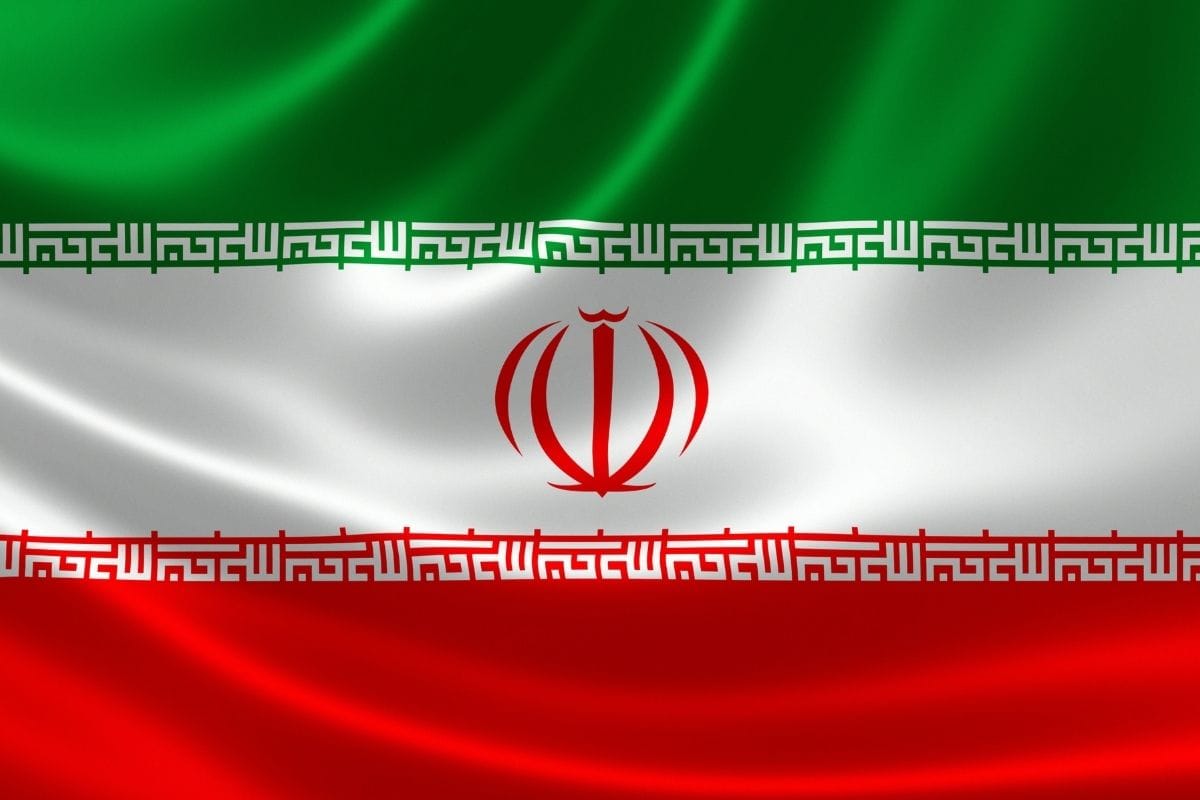
The Achaemenid Empire under Cyrus the Great established a Persian state with a continuous cultural and linguistic identity that survived Alexander, the Arab conquest, and the Mongols.
Portugal, 1139 or 1297

Portugal is usually named as the European country with the longest-standing borders. Afonso Henriques was proclaimed king in 1139, and the Treaty of Alcañices in 1297 fixed frontiers that have barely moved since. That makes it a strong candidate for the oldest nation-state in the modern sense: a defined territory, a stable border, and a continuous national identity.
So, Which Is It?
It depends entirely on the test you apply.
| Test | Winner |
| Oldest continuous sovereignty | San Marino, 301 AD |
| Oldest state on the same territory | Egypt, around 3100 BC |
| Oldest continuous civilisation | China |
| Oldest continuous monarchy | Japan |
| Oldest largely unchanged borders | Portugal, 1297 |
| Oldest continuous empire-to-state identity | Iran, 550 BC |
The useful move is to state the test first. A page that announces one winner and moves on has made a choice it did not disclose. Country records explained can help put these rankings into context.
Note also that “country” in the modern sense is recent. The idea that the world divides into sovereign states with fixed borders and exclusive authority is usually traced to the Peace of Westphalia in 1648. Applying that framework to 3100 BC is an anachronism, which is part of why the question has no clean answer.
Frequently Asked Questions
What is the oldest country in the world?
San Marino, founded by tradition in 301 AD, has the strongest claim to continuous sovereignty. Egypt has the oldest state on the same territory, dating to around 3100 BC.
Is San Marino the oldest republic?
It is the oldest surviving constitutional republic, with statutes dating from 1600 and self-government traced to 301 AD. The founding date rests on tradition rather than documents.
Is Egypt or China older?
Egypt’s unification around 3100 BC predates the earliest Chinese dynasties by roughly a thousand years. China has the stronger claim to unbroken cultural continuity.
What is the newest country in the world?
South Sudan, which gained independence from Sudan in July 2011.
Which country has the oldest borders?
Portugal, whose frontiers were substantially fixed by the Treaty of Alcañices in 1297.
Why do sources disagree on this?
Because they use different definitions of country: continuous sovereignty, continuous civilisation, stable borders, and continuous monarchy, each produces a different winner.
The Bottom Line
San Marino for continuous independence, Egypt for the oldest state on the same ground, Japan for the monarchy, and Portugal for the borders. Anyone who gives you a single name without naming the test has skipped the interesting half of the question.
Sources:
Republic of San Marino official state information; UNESCO World Heritage Centre listing for San Marino and Monte Titano; Encyclopaedia Britannica entries for Egypt, China, Japan, Iran and Portugal; Treaty of Alcañices, 1297; United Nations member state records.
Reviewed against UNESCO, Encyclopaedia Britannica and United Nations reference sources. Founding dates for San Marino and Japan rest on tradition and are noted as such. Last reviewed 12 August 2026.