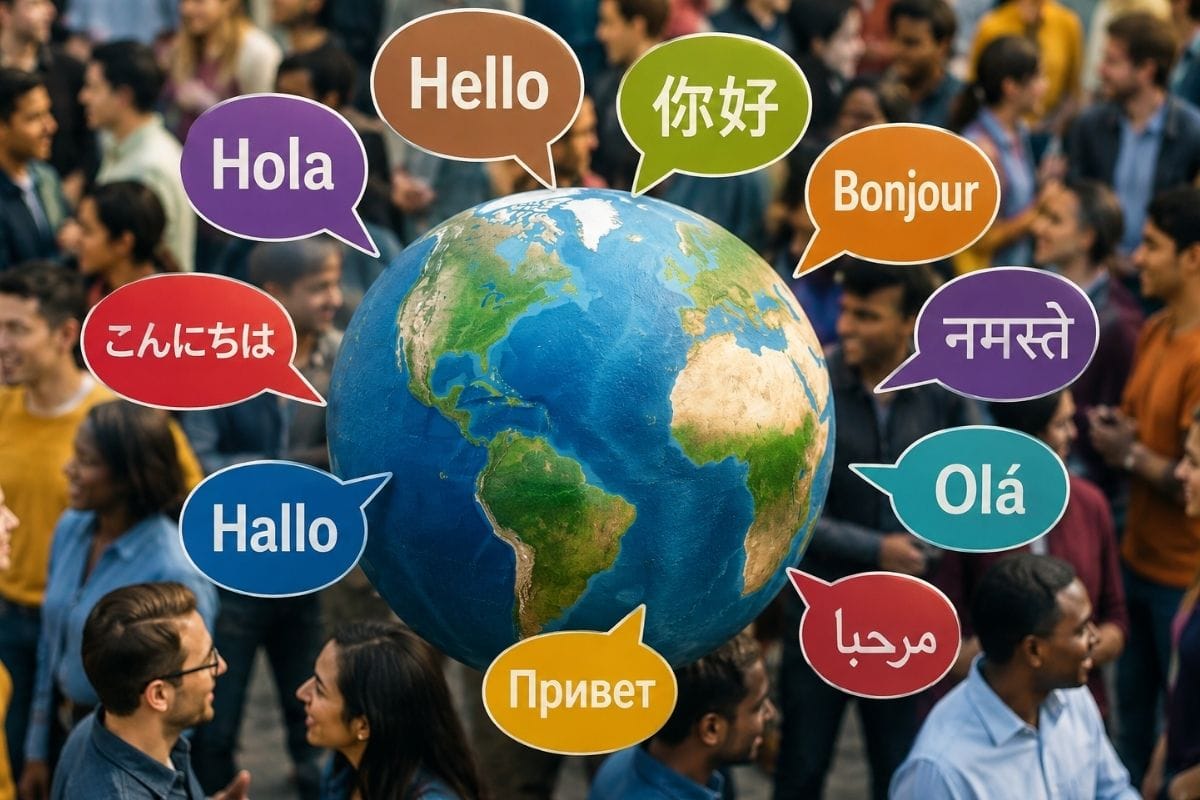
Two people can answer this question correctly and speak different languages. English wins on total speakers. Mandarin Chinese wins among native speakers, and it is not close. Almost every page that ranks for this question picks one measure, states it as a fact, and leaves out the other.
Both numbers are below, along with the reason the gap between them is so wide.
The Short Summary
By total speakers, English leads with roughly 1.5 billion people, counting speakers at any level, including second-language speakers.
Among native speakers, Mandarin Chinese leads with around 941 million. English drops to third on that measure, behind Spanish.
Total Speakers: The Top Ten
Figures come from Ethnologue, the reference catalogue of the world’s living languages, in its most recent editions. They combine first-language and second-language speakers.
| Rank | Language | Total speakers |
| 1 | English | ~1.5 billion |
| 2 | Mandarin Chinese | ~1.18 billion |
| 3 | Hindi | ~611 million |
| 4 | Spanish | ~561 million |
| 5 | Standard Arabic | ~335 million |
| 6 | French | ~312 million |
| 7 | Bengali | ~274 million |
| 8 | Portuguese | ~267 million |
| 9 | Russian | ~253 million |
| 10 | Indonesian | ~252 million |
For readers interested in broader geographical comparisons, Country records can provide useful context for understanding how countries and populations differ.
Native Speakers: A Different Table
Strip out second-language speakers, and the ranking rearranges.
| Rank | Language | Native speakers |
| 1 | Mandarin Chinese | ~941 million |
| 2 | Spanish | ~486 million |
| 3 | English | ~390 million |
| 4 | Hindi | ~345 million |
| 5 | Arabic (all varieties) | ~360 million combined |
Around 1.14 billion English speakers, close to three-quarters of the total, learned it as a second language. That is what puts English on top of the first table and third on the second one. No other language depends on learners to any extent like the same degree.
Why Did English Spread, And Mandarin Did Not
Mandarin has more native speakers than any language on Earth and remains concentrated. Roughly four in five Mandarin speakers live in China. Ethnologue records it as present in dozens of countries, but its role as a language people learn in order to work with others outside their own region stayed limited.
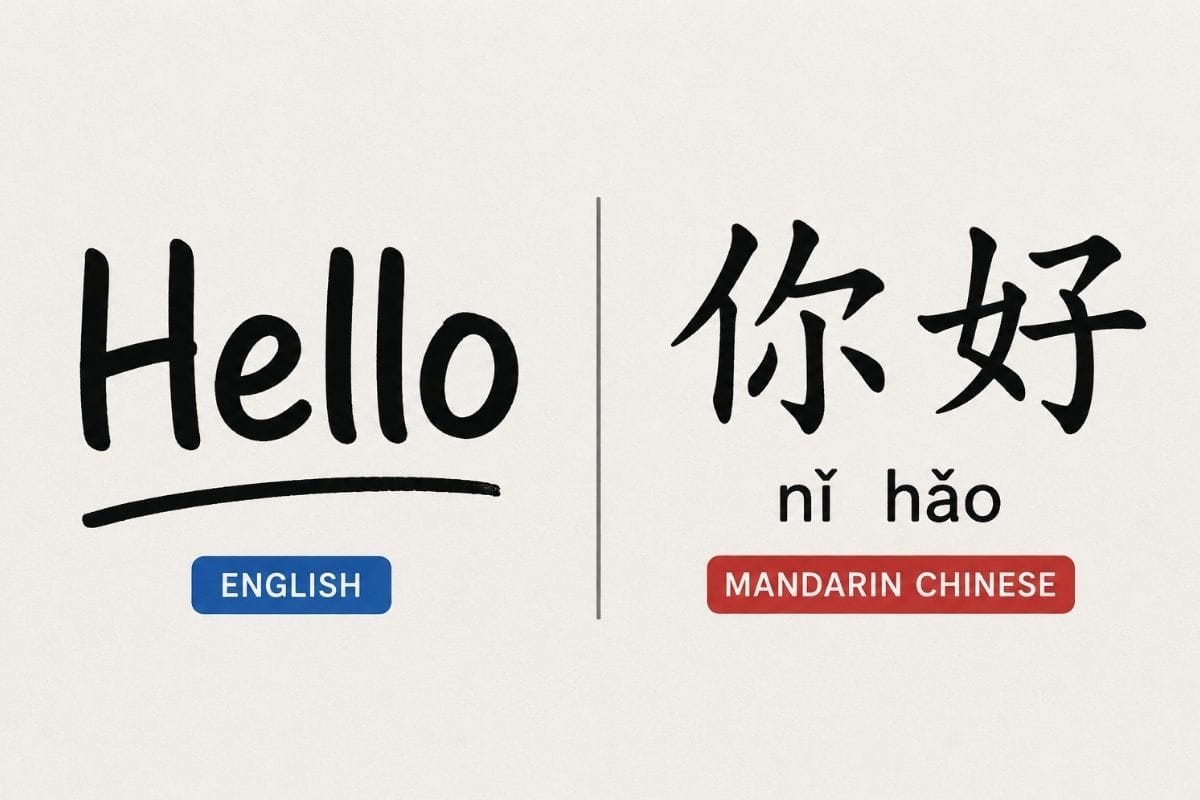
English travelled by empire first and by commerce, aviation, science and the internet afterwards. It is spoken in around 188 countries, and it functions as the default working language of international business and academic publishing.
The gap shows most starkly online. English accounts for close to half of all website content. Chinese sits near one percent despite having over a billion speakers. Hindi and Bengali together carry hundreds of millions of speakers and under half a percent of web content between them.
Two Problems With All of These Numbers
Chinese and Arabic are not single languages. Ethnologue treats both as macrolanguages, umbrella categories covering varieties that speakers cannot understand from each other. Mandarin and Cantonese share a written form and diverge completely in speech. Moroccan and Omani Arabic speakers can read the same classical text and struggle to order lunch in each other’s countries. Grouping them inflates the totals in a way that grouping English does not.
Sources disagree. Ethnologue, the CIA World Factbook, Statista, and national censuses publish different figures for the same language, and the counts shift between editions. Mandarin totals range from roughly 1.1 to 1.2 billion across reputable sources. Arabic ranges much wider depending on whether a source counts Modern Standard Arabic alone or every variety. Treat any single precise number, including the ones above, as an estimate.
For another example of how rankings can depend on the definition being used, see the oldest country in the world.
The Languages Disappearing
Roughly 7,160 living languages remain. Around 43 percent of them, close to 3,000, are classified as endangered. The Catalogue of Endangered Languages estimates that one language dies roughly every forty days. Oceania carries the heaviest concentration of endangered languages of any region.
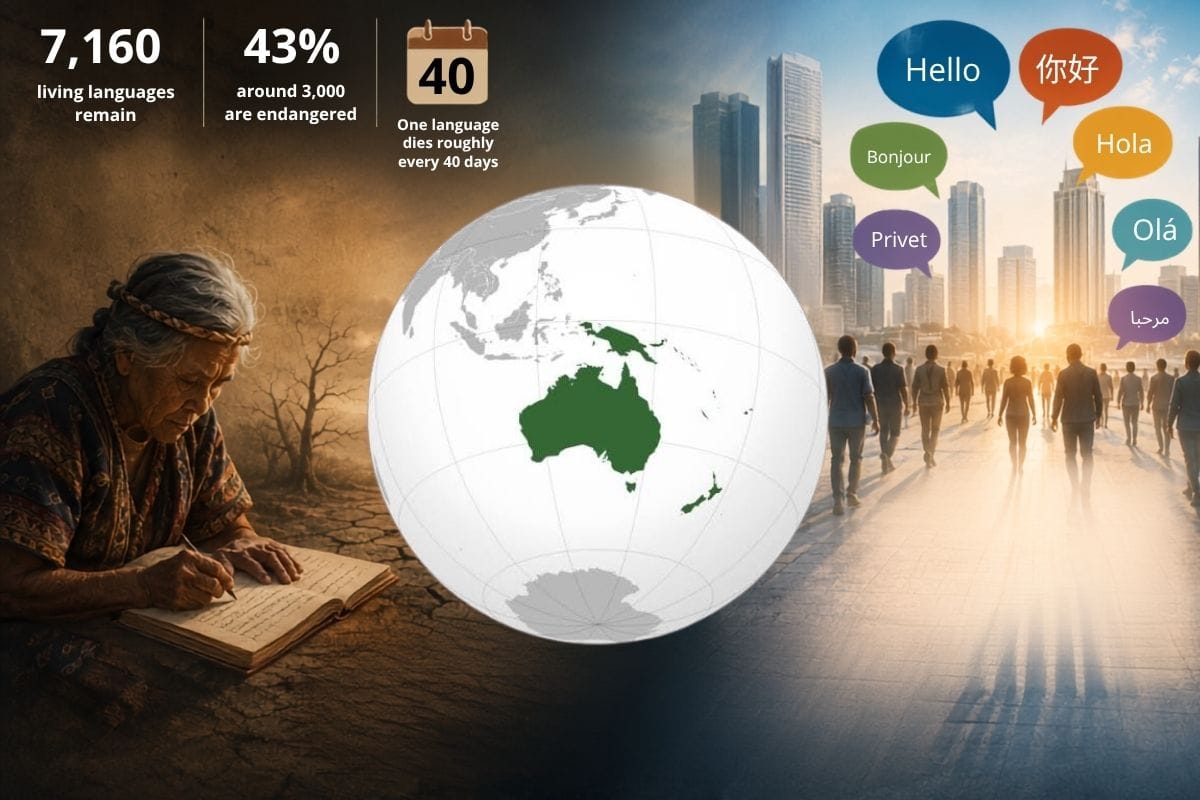
That decline runs alongside the growth of the top ten, and the two are connected: as a dominant regional language absorbs speakers, smaller languages lose their last fluent generation.
What Comes Next
Demographers expect the table to keep moving. Hindi and Bengali are growing in the South Asian population. French is growing fastest in West and Central Africa, and some projections put it among the most widely spoken languages by 2100 on that basis alone, despite having fewer than 80 million native speakers today.
Language rankings can also produce some surprisingly specific geographical records. For example, the longest country name in the world shows how seemingly simple ranking questions can depend on exactly what is being measured.
Frequently Asked Questions
What is the most spoken language in the world?
English, with around 1.5 billion total speakers. Mandarin Chinese has roughly 941 million native speakers.
Is Mandarin or English more spoken?
English has more total speakers; Mandarin has more native speakers. Both statements are accurate.
How many people speak English as a second language?
Around 1.14 billion, close to three-quarters of all English speakers.
How many languages are there in the world?
Roughly 7,160 living languages, with around 43 percent classified as endangered.
Which language has the most native speakers?
Mandarin Chinese, at approximately 941 million.
Why do sources give different numbers?
Counting methods differ, censuses are taken in different years, and macrolanguages such as Chinese and Arabic bundle mutually unintelligible varieties into one figure.
The Bottom Line
English is the most spoken language because most of its speakers chose to learn it. Mandarin is the largest native language because China is large. The two facts describe different things, and a page that gives you only one of them has answered half the question.
Sources
Ethnologue, Languages of the World; Catalogue of Endangered Languages; W3Techs web content language survey; CIA World Factbook; Visual Capitalist analysis of Ethnologue data, 2026.